Eugène Faure: A Painter of Shadows and Light
Eugène Faure, a name perhaps less familiar than those of his Impressionist contemporaries, remains a profoundly evocative figure in French art history. Born in 1822 in Seyssinet-Platel, near Grenoble, he wasn’t initially destined for the artistic life. His early years were marked by a strong intellectual and political bent, nurtured within a family deeply involved in progressive thought – his uncle Élisée Reclus was a renowned geographer and anarchist, while another uncle, Élie Reclus, was a prominent ethnologist. This environment instilled in Faure a critical eye and a deep engagement with the social and philosophical currents of his time. He initially pursued medicine, becoming an anesthesiologist, but it was through a passionate love for art that he truly found his voice, immersing himself in the world of Parisian salons and forging connections with some of the most influential artists of the era.
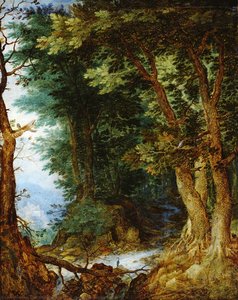
Faure’s artistic journey began somewhat later than many of his peers, influenced by a deliberate rejection of academic realism. He eschewed the grand narratives and heroic subjects favored by the established Salon, instead gravitating towards intimate scenes, psychological portraits, and evocative landscapes imbued with a sense of melancholy and introspection. His early works, such as “Portrait de Madame Eugène Faure” (1863) and "Paysage" (1878), demonstrate this shift immediately. The portrait is not a straightforward likeness but rather a study in mood and atmosphere, capturing the quiet dignity of his wife with subtle shifts in light and shadow – a hallmark of his style. “Paysage,” a dark Romantic oil painting depicting a forest hunt, showcases loose brushwork and dramatic lighting, hinting at an underlying tension and a fascination with the darker aspects of human experience. These early pieces established a foundation for his distinctive approach: a focus on capturing fleeting moments, exploring emotional depth, and employing a muted palette dominated by browns, greys, and blues – colors that would become synonymous with his work.
Faure’s artistic development was significantly shaped by his intellectual pursuits. He was an avid reader of philosophy, particularly the works of Henri Bergson, whose ideas about intuition and subjective experience profoundly influenced his approach to painting. He also maintained close ties with literary circles, engaging in discussions with prominent writers and intellectuals of the time. This intellectual ferment fueled his artistic explorations, leading him to delve into themes of memory, dreams, and the complexities of human relationships. His portraits, in particular, are not merely representations of physical appearance but rather attempts to capture the inner lives of his subjects – their hopes, fears, and unspoken emotions. The “Portrait de Ravanat (Th.), peintre grenoblois” (1878), a poignant depiction of an elderly artist, exemplifies this approach, revealing a deep understanding of the subject’s character through subtle gestures and expressions.
Despite achieving recognition within certain artistic circles, Faure's career was tragically cut short by illness in 1879 at the age of 56. However, his legacy endures through a body of work characterized by its emotional intensity, psychological depth, and masterful use of light and shadow. He wasn’t a flamboyant figure like Monet or Renoir; instead, he offered a quieter, more contemplative perspective on the world – a painter of shadows and light, capturing the subtle nuances of human experience with remarkable sensitivity. His influence can be seen in the works of later artists who embraced a more introspective and emotionally charged approach to painting.
Beyond his individual achievements, Faure’s life and work are intertwined with broader historical currents. The late 19th century was a period of profound social and political upheaval in France, marked by industrialization, urbanization, and the rise of socialist movements. Faure's engagement with these issues is reflected in his art, which often explores themes of poverty, alienation, and the struggles of ordinary people. Furthermore, his connections to intellectual circles – including figures like Bergson and Reclus – demonstrate the vibrant cultural life of Paris during this era. The fact that he was also a medical doctor, working amongst the poor, adds another layer to his understanding of human suffering and resilience.
Key Works and Artistic Style
Faure’s oeuvre is relatively modest compared to some of his contemporaries, but each work reveals a distinctive artistic vision. Notable paintings include:
- “Portrait de Madame Eugène Faure” (1863) – A study in domestic tranquility and subtle emotion.
- “Paysage” (1878) – A dramatic landscape capturing the atmosphere of a forest hunt.
- “Portrait de Ravanat (Th.), peintre grenoblois” (1878) – A poignant portrait of an elderly artist, revealing his character through gesture and expression.
- "Dreams of Youth" (1857) - An allegorical painting exploring themes of innocence and aspiration.
His artistic style is characterized by:
- A muted palette dominated by browns, greys, and blues.
- Loose brushwork and a focus on capturing fleeting moments.
- An emphasis on psychological depth and emotional intensity.
- A subtle use of light and shadow to create atmosphere and mood.
Historical Significance and Legacy
Eugène Faure’s contribution to French art is often overlooked, yet his work deserves greater recognition for its originality and emotional power. He represents a bridge between the academic traditions of earlier generations and the more subjective approach of the Impressionists and Symbolists. While he never fully embraced the radical innovations of these movements, he shared their desire to explore the inner lives of individuals and capture the complexities of human experience. His paintings continue to resonate with viewers today because they offer a glimpse into a world of quiet contemplation, emotional vulnerability, and profound beauty. His work serves as a reminder that art can be both intellectually stimulating and deeply moving – a testament to the enduring power of the human spirit.
Further Research
- Wikipedia Article: https://en.wikipedia.org/wiki/Eug%C3%A8ne_Faure
- Artprice Database: https://www.artprice.com/artiste/45678/eugene-faure







 プレビュー
プレビュー
 プリントを購入
 シェアする
シェアする シェアする
シェアする
 詳細を見る
詳細を見る

 ダウンロード
 似ている作品
 X線調査
X線調査 スライドショー
 詳細を見る
詳細を見る