
 Impressionism
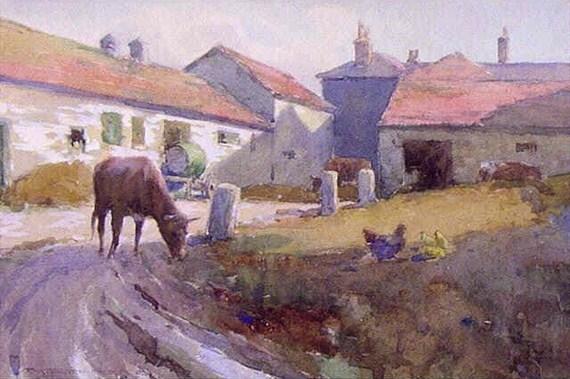
 1892
1892 18.0 x 27.0 cm
当社のアーティストが、お客様のご希望のサイズと額縁に合わせて、キャンバスに手描きで制作する油彩画です。 ( プリント版に切り替え デジタル画像販売へ切り替え)
作品のオリジナル比率に合わせた、当店の規定サイズからお選びください。

特定のフレームやスペースに合わせて、ご希望のサイズをご入力いただけます。選択されたサイズが元の画像の比率と異なる場合、アートワークをトリミングするか、手描きで要素を追加して絵画を拡張いたします。デジタルモックアップ を制作し、制作開始前にご確認(承認)をいただきます。
画面上のプレビューは、実際のトリミングや拡張を正確に反映しているものではありません。最終的な構図は、モックアップによってのみ正確にご確認いただけます。
カスタムサイズもご利用いただけますが、元の比率を維持するためには、あらかじめ用意されたリストからサイズを選択することをお勧めいたします。

Untitled
複製画のサイズ

In the annals of Canadian art history, few names evoke the salt-sprayed romance of the Atlantic coast as poignantly as Farquhar McGillivray Knowles. A master of light and atmosphere, Knowles possessed a rare ability to translate the restless energy of the sea into the delicate medium of watercolor. Born on May 22, 1859, in the quiet Elora Village, Ontario, his heritage was deeply rooted in the traditions of Scottish immigrant farmers. This lineage provided him with a foundational discipline and an eye for meticulous detail, yet it was the maritime legacy of his grandfather, Thomas Knowles—a renowned Royal Hibernian Marine artist—that truly ignited his creative spirit. The sea was not merely a subject for Farquhar; it was a familial inheritance, a rhythmic force that would define his life's work.
His journey toward artistic mastery was marked by unexpected turns and profound transformations. While his early ambitions leaned toward the disciplined world of military service at West Point Academy, a serious accident during his fourth year of study redirected his destiny from the artillery to the easel. This pivot led him to the vibrant, bustling studios of New York City, where he honed his technical precision through the art of photographic retouching. It was here that he began to understand the subtle interplay of light and shadow, a skill he later brought back to Canada to work with the prestigious William Notman and John Fraser photographic studios. By adding delicate color to portrait photographs, Knowles bridged the gap between the emerging technology of photography and the timeless beauty of fine art, developing a sensitivity to tone that would become his hallmark.
The evolution of Knowles’s style was significantly enriched by his extensive travels through Europe during the late 1880s and early 1890s. Seeking to transcend local traditions, he immersed himself in the prestigious studios of Paris and beyond, studying under luminaries such as Sir Hubert von Herkomer and Jean-Paul Laurens. These encounters with European masters introduced him to new stylistic innovations, allowing him to infuse his Canadian landscapes with a sophisticated, Impressionistic sensibility. He learned to capture not just the physical form of a coastline, but the very breath of the wind and the shifting moods of the sky.
Upon returning to Canada, Knowles established himself as a cornerstone of the Toronto art scene. His life and work became deeply intertwined with those of his fellow artists, most notably through his marriage to Elizabeth Annie Beach, a talented landscape painter and niece of the celebrated Frederic Marlett Bell-Smith. Together, they fostered a vibrant artistic community, establishing a school of art in Toronto that served as a sanctuary for students eager to master the nuances of Canadian Impressionism. His studio became a place where the boundaries between nature and canvas blurred, attracting those who sought to capture the ephemeral beauty of the natural world.
The enduring significance of Farquhar McGillivray Knowles lies in his ability to elevate the seascape from mere documentation to emotional experience. His works are characterized by a profound sense of movement—the churning foam of a breaking wave, the tranquil stillness of a sheltered harbor, and the hazy, atmospheric perspective of a distant shoreline. Through his masterful use of watercolor, he achieved a luminosity that few of his contemporaries could replicate, making the paper itself seem to glow with reflected sunlight.
As we reflect on his contributions, several key elements of his legacy emerge:
Though he passed away in Toronto in 1932, the works of Knowles continue to resonate with a timeless vitality. He remains a pivotal figure who helped define a uniquely Canadian approach to Impressionism, ensuring that the fleeting moments of coastal life are preserved forever in the amber of his exquisite artistry.

Discover the profound serenity of timeless pastoral landscapes. From Impressionist masterpieces to bespoke oil commissions, explore how curated fine art brings the enduring beauty and tranquility of nature into your luxury home interior.
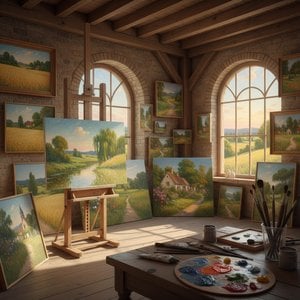
Discover the profound tranquility of rural art through an expert exploration of Impressionist landscapes. From pastoral scenes to textured oil masterpieces, learn how timeless nature-inspired artworks bring enduring elegance and serenity to sophisticated collectors.

 プレビュー
プレビュー
 シェアする
シェアする シェアする
シェアする
 詳細を見る
詳細を見る ガイド
ガイド

 ダウンロード
 似ている作品
 X線調査
X線調査 スライドショー
 統計情報
統計情報 詳細を見る
詳細を見る






































 ガラスオプションは、110cm未満のサイズでのみご利用いただけます。


