スピーディーな制作と多彩な仕上げオプションが魅力の、ミュージアムクオリティなジークレー・キャンバスプリント。 ( 手描きの複製画を注文する デジタル画像販売へ切り替え)
作品のオリジナル比率に合わせた、当店の規定サイズからお選びください。

特定のフレームやスペースに合わせて、ご自身でサイズを指定することも可能です。選択されたサイズが元の画像の比率と一致しない場合、作品をトリミングするか、鏡面反射または単色での塗りつぶしによって画像を拡張いたします。制作を開始する前に、ご確認用のデジタルモックアップをお送りいたします。
画面上のプレビューには、実際のトリミングや拡張は反映されませんのでご注意ください。最終的な構図を正確に確認できるのは、モックアップのみとなります。
カスタムサイズも承っておりますが、元の比率を維持するためには、あらかじめ用意されたリストからサイズを選択することをお勧めいたします。

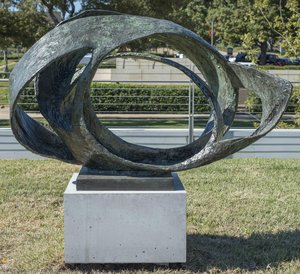
Repetition Nineteen III
複製画サイズ一覧
To stand before Repetition Nineteen III is to encounter not merely an arrangement of objects, but a meditation on persistence and the beautiful imperfection of being. Eva Hesse’s work from this period pulses with a quiet, almost visceral energy. The sculpture presents a constellation of roughly hewn, organic forms resting upon a grounding plane of warm wood. These pieces, cast in a muted, pale green material—perhaps resin or fiberglass—reject the clean lines of industrial design for something far more intimate: the texture of natural decay and slow growth. There is an immediate sense of touchability here; one imagines running a hand over the uneven surfaces, tracing the subtle ridges that speak of time passing.
Hesse’s genius lay in her ability to elevate humble, yielding materials into profound statements. The forms themselves are profoundly curvilinear, eschewing any rigid geometry for shapes that suggest roots pushing through earth or stones weathered by unseen currents. This commitment to the organic is central to understanding the piece's emotional resonance. It speaks against the polished perfection often demanded by art history, embracing instead the beautiful vulnerability found in things that are incomplete, yielding, and inherently alive. The repetition across the composition—the recurrence of similar yet never identical shapes—creates a visual rhythm, a gentle pulse that draws the eye deeper into the arrangement.
Understanding Hesse requires acknowledging the profound currents of her personal life and the artistic climate she navigated. Emerging from a background marked by displacement and deep personal loss, her art became an eloquent language for fragility itself. Repetition Nineteen III carries this weight; it is not a celebration of permanence, but rather a careful documentation of variation within a pattern. The slight asymmetry in the placement prevents the work from settling into predictable order, mirroring the unpredictable, yet deeply patterned, nature of memory and human experience.
For the collector or designer seeking an anchor piece that transcends mere decoration, this sculpture offers depth without demanding attention. Its muted palette—the soft green against the rich brown wood—allows it to harmonize with sophisticated interior schemes, whether minimalist modernism or organic contemporary design. When considering a reproduction of Repetition Nineteen III for your space, consider its role as a focal point that encourages contemplation. It whispers stories of process and time, inviting viewers to slow their pace and observe the subtle dialogue between form, void, and material.


1936 - 1970 , ドイツ

フェルナン・レジェの傑作25選。機械美と色彩が織りなすキュビズムの世界を紐解きます。WahooArtで、フランス絵画の巨匠レジェの作品を高精細プリントで。インテリアアートやギフトにも最適です。全コレクションはこちら: WahooArt.com

Journey through art history with 10 legendary bronze sculptures – from Michelangelo's David to Rodin’s Thinker. Explore the stories, techniques & timeless beauty of these masterpieces. Find museum-quality reproductions & elevate your home decor on WahooArt.com.

Journey through art history with our Top 10 bronze sculptures! Explore masterpieces by Rodin, Michelangelo & more. Discover stories behind iconic statues and find museum-quality reproductions for your home decor at WahooArt.com.

モンドリアン、マレーヴィチ…幾何学的抽象絵画を代表する傑作10選。各作品の背景や色彩構成、アーティストの情熱に迫ります。美術館品質の複製画はWahooArt.comで。オンラインでアートコレクションをご覧ください。

Journey through Wassily Kandinsky's 25 most iconic abstract paintings. Explore his revolutionary use of color, form & spiritual expressionism. Find museum-quality Kandinsky reproductions and elevate your home decor with WahooArt.com. Discover all masterpieces on WahooArt.com!


 送る
送る シェア
シェア
 詳細情報
詳細情報 ガイドを表示

 画像をダウンロード
 似ている作品
 スライドショー
 統計情報
統計情報


 続きを読む
続きを読む






































 ガラスオプションは、110cm未満のサイズでのみご利用いただけます。