A Delicate Revival: The Life and Art of Eulabee Dix
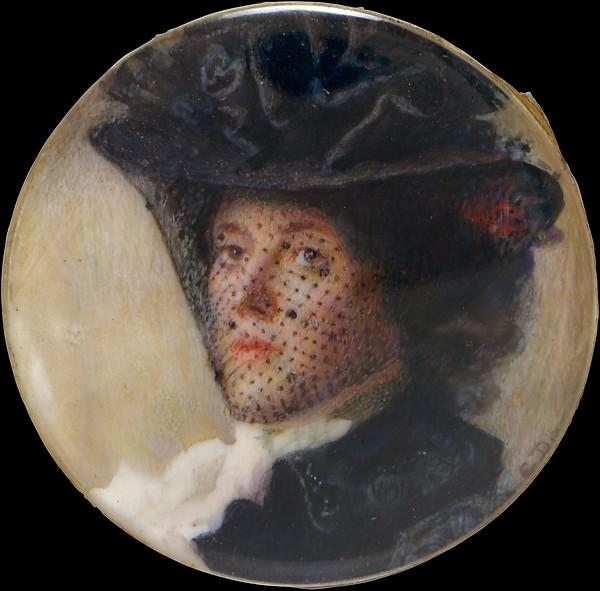
Eulabee Dix Becker, a name perhaps less instantly recognizable than those of her contemporaries, nevertheless occupies a significant place in the history of American art. Born in Greenfield, Illinois, in 1878, she emerged during a period ripe for rediscovery – a time when the exquisite intimacy of portrait miniatures was experiencing a remarkable resurgence. While larger-scale painting dominated the artistic landscape, Dix dedicated herself to this demanding and delicate craft, becoming one of its most celebrated practitioners. Her story is not merely that of an artist mastering technique; it’s a narrative interwoven with ambition, social navigation, and a determined pursuit of recognition in a world often resistant to female achievement. From humble beginnings marked by financial instability and relocation, Dix's early life instilled within her a resilience that would prove crucial throughout her career. Her parents, recognizing and nurturing her artistic inclinations from a young age, provided the foundational encouragement that propelled her forward. A period spent with family in St. Louis afforded her formal training at Washington University and the St. Louis School of Fine Art, where she quickly distinguished herself, earning accolades for her burgeoning talent.
New York Studies and the Mastery of Miniature
The move to New York City in 1899 marked a pivotal moment. Dix sought instruction from William Merritt Chase, but found his focus on oil painting and differing artistic philosophies incompatible with her own vision. This brief encounter underscored her commitment to miniature work. She soon found mentorship with George Bridgman at the Art Students League, and crucially, with William J. Whittemore and Isaac A. Josephi – both founding members of the American Society of Miniature Painters (ASMP). It was under their tutelage that Dix truly honed her technique, mastering the intricacies of painting on ivory, a medium demanding precision, patience, and an unparalleled command of detail. Her studio, a modest space high above Carnegie Hall, became a hub of activity, attracting commissions from New York’s elite. This location wasn't merely practical; it placed her within a vibrant artistic community, fostering connections with fellow artists like Frederick S. Church and Theodora Thayer, who offered both camaraderie and inspiration. Dix understood the importance of self-promotion, cultivating a fashionable image and hosting gatherings to showcase her work – a savvy approach for a woman navigating a male-dominated art world.
Transatlantic Success and Notable Sitters
Dix’s talent soon transcended national borders. A friendship with Minnie Stevens Paget, a close confidante of the British Royal Family, opened doors to London society and a stream of prestigious commissions. This transatlantic connection proved transformative, establishing Dix as a sought-after portraitist among European nobility and prominent figures. Her sitters read like a who’s who of the era: actresses Ethel Barrymore and Ellen Terry, fashion designer Countess Fabricotti, and countless others eager to capture their likeness in her exquisitely rendered miniatures. Exhibitions at the Fine Art Society in London, the Royal Academy, and the Walker Art Gallery solidified her reputation. Back in America, she had the distinct honor of painting the last portrait from life of Samuel Langhorne Clemens, better known as Mark Twain – a testament to her growing stature within the artistic community. Even prominent artists recognized her skill; Robert Henri painted two portraits of Dix herself, capturing her strength and individuality.
Personal Life and Lasting Legacy
Dix’s personal life was marked by both joy and hardship. Her marriage in 1910 to lawyer Alfred Leroy Becker initially seemed promising, producing two children, Philip and Joan. However, the union proved strained, hampered by conflicting ambitions and ultimately ending in divorce in 1925. This period of upheaval led her to travel extensively between Europe and America, continuing to paint and exhibit her work. She received a medal at the Paris Salon in 1927, further cementing her international acclaim. Though her later years saw a decline in widespread recognition, her contribution to the revival of miniature painting remains undeniable. Eulabee Dix passed away in 1961, leaving behind a body of work that exemplifies technical brilliance, artistic sensitivity, and a remarkable ability to capture not just likenesses, but also the essence of her subjects. Her miniatures are now treasured by museums and collectors alike, serving as enduring reminders of a gifted artist who breathed new life into an ancient art form.
Her dedication to detail and mastery of watercolor on ivory continue to inspire artists today.
Dix’s legacy is one of quiet determination and artistic excellence – a testament to the power of talent, perseverance, and a unwavering commitment to her craft.
Influences and Artistic Style
- Early Influences: Dix's initial exposure to art came through encouragement from her parents and early training in oil painting and life drawing at the St. Louis School of Fine Art.
- Mentorship: The guidance of William J. Whittemore and Isaac A. Josephi, both prominent miniaturists, was crucial in developing her technique on ivory.
- Artistic Circle: Connections with artists like Frederick S. Church, Robert Henri, and John Butler Yeats broadened her artistic horizons and provided valuable networking opportunities.
- European Masters: Her travels to Europe allowed her to study historical miniatures firsthand, influencing her style and technique.
- Distinctive Style: Dix’s work is characterized by meticulous detail, delicate brushwork, and a subtle use of color. She excelled at capturing the personality and character of her sitters, creating intimate and lifelike portraits.

 プリント版に切り替え

 設置イメージを表示
 シェアする
シェアする シェアする
シェアする
 詳細を見る
詳細を見る ガイドを表示

 ダウンロード
 似ている作品
 X線調査
X線調査 スライドショーを表示
 Q&A
Q&A
 統計情報
統計情報
 詳細を表示
詳細を表示


