
x































作品のオリジナル比率に合わせた、当店の規定サイズからお選びください。

特定のフレームやスペースに合わせて、ご希望のサイズをご入力いただけます。選択されたサイズが元の画像の比率と異なる場合、アートワークをトリミングするか、手描きで要素を追加して絵画を拡張いたします。デジタルモックアップ を制作し、制作開始前にご確認(承認)をいただきます。
画面上のプレビューは、実際のトリミングや拡張を正確に反映しているものではありません。最終的な構図は、モックアップによってのみ正確にご確認いただけます。
カスタムサイズもご利用いただけますが、元の比率を維持するためには、あらかじめ用意されたリストからサイズを選択することをお勧めいたします。

Backyard
複製画のサイズ

Ernest Charles Walbourn, a British landscape painter active primarily in the late 19th and early 20th centuries, possessed a remarkable ability to capture the serene beauty and quiet dignity of rural England. Born in Dalston, Middlesex, on February 16, 1872, into a family with connections to Tasmania, Walbourn’s artistic journey began not as a predetermined path but as a personal pursuit against his father's initial reservations. His early life, marked by a supportive environment and access to art training, laid the foundation for a career dedicated to depicting scenes of idyllic countryside life – a genre deeply rooted in Victorian sensibilities yet imbued with a subtle romanticism.
Walbourn’s artistic development was significantly shaped by his relocation to Chingford, Essex, in 1895. This move provided him with a studio within the family home and crucial financial support, allowing him to fully dedicate himself to painting. His early exhibitions at the Royal Institute of Oil Painters and subsequently at the Royal Academy established a solid reputation, attracting collectors who appreciated his meticulous detail and evocative use of light and color. He skillfully blended academic techniques with a distinctly personal style, creating works that resonated with a longing for simpler times – a sentiment particularly poignant during an era of rapid industrialization and social change.
Walbourn’s work is firmly situated within the broader context of Barbizon School painting. Like his contemporaries, including Charles-François Daubigny, he prioritized direct observation of nature and a rejection of overly polished academic styles. However, Walbourn's approach was characterized by an even greater emphasis on capturing atmospheric effects – the subtle shifts in light and shadow that define the English countryside. His paintings are not merely representations of landscapes; they are imbued with a sense of mood and atmosphere, conveying a feeling of tranquility and timelessness.
The influence of Charles Darwin is also subtly present in Walbourn’s work. His depictions of rural life often portray a harmonious relationship between humanity and nature – a reflection of the Victorian fascination with natural history and the belief in the inherent goodness of the natural world. This connection to the land, combined with his technical skill, resulted in paintings that were both aesthetically pleasing and intellectually engaging.
Several of Walbourn’s works stand out for their exceptional quality and evocative power. “Backyard,” a particularly compelling example, captures the quiet beauty of a rural setting with remarkable realism and attention to detail. The painting's warm tones and subtle lighting create a sense of intimacy and serenity, inviting the viewer to step into another world. Similarly, his depictions of farm scenes – often featuring young women tending to livestock or gathering flowers – are imbued with a gentle charm and a nostalgic quality.
Walbourn’s technical skill is evident in his masterful use of color, brushwork, and composition. He employed loose, expressive brushstrokes to capture the textures of foliage, soil, and water, while carefully balancing light and shadow to create depth and atmosphere. His ability to render the subtle nuances of natural light was particularly noteworthy, contributing significantly to the overall mood and impact of his paintings.
Despite facing challenges during his lifetime – including a lack of formal artistic training and the initial disapproval of his father – Ernest Charles Walbourn achieved considerable recognition for his work. His paintings were exhibited at prestigious venues, sold to discerning collectors, and included in the collections of notable museums, such as the Bolton Museum and the Herbert Art Gallery & Museum. His legacy endures through his evocative depictions of English pastoral life, which continue to resonate with viewers today.
Walbourn’s story serves as a testament to the power of perseverance and the enduring appeal of art that celebrates the beauty and tranquility of the natural world. His paintings offer a glimpse into a bygone era – a time when rural England was viewed with both admiration and nostalgia, and when artists sought to capture its essence on canvas.

1872 - 1927 , United Kingdom
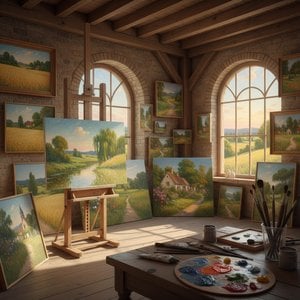
Discover the profound tranquility of rural art through an expert exploration of Impressionist landscapes. From pastoral scenes to textured oil masterpieces, learn how timeless nature-inspired artworks bring enduring elegance and serenity to sophisticated collectors.

Discover the profound serenity of timeless pastoral landscapes. From Impressionist masterpieces to bespoke oil commissions, explore how curated fine art brings the enduring beauty and tranquility of nature into your luxury home interior.

Explore the profound beauty of village scene art. From Impressionist light to pastoral realism, discover how timeless landscapes capture nostalgia through expert artistry and historical depth. Perfect for collectors seeking evocative, museum-quality landscape inspirations.


最新の美術ニュース、限定オファー、そしてインテリアのアイデアをいち早くお届けします。
お客様のプロジェクトについてお聞かせください。当社の美術専門家が、お客様に合わせた3つのパーソナライズされた芸術提案をご提供いたします。
あなたにぴったりの3作品を無料で厳選いたします


 プレビュー
プレビュー
 プリントを購入
 シェアする
シェアする シェアする
シェアする
 詳細を見る
詳細を見る

 ダウンロード
 似ている作品
 X線調査
X線調査 スライドショー
 詳細を見る
詳細を見る









 ガラスオプションは、110cm未満のサイズでのみご利用いただけます。


