
x


 Oil On CanvasWallArt
 1918Modern
 26.0 x 36.0 cm
 Fitzwilliam College




























作品のオリジナル比率に合わせた、当店の規定サイズからお選びください。

特定のフレームやスペースに合わせて、ご希望のサイズをご入力いただけます。選択されたサイズが元の画像の比率と異なる場合、アートワークをトリミングするか、手描きで要素を追加して絵画を拡張いたします。デジタルモックアップ を制作し、制作開始前にご確認(承認)をいただきます。
画面上のプレビューは、実際のトリミングや拡張を正確に反映しているものではありません。最終的な構図は、モックアップによってのみ正確にご確認いただけます。
カスタムサイズもご利用いただけますが、元の比率を維持するためには、あらかじめ用意されたリストからサイズを選択することをお勧めいたします。

Blue and Gold
複製画のサイズ
In the quiet corners of art history, certain works possess the rare ability to suspend time, inviting the viewer into a realm where reality and myth softly intertwine. Ernest Board’s 1918 masterpiece, "Blue and Gold," is precisely such a work. This exquisite oil on canvas, measuring a delicate 26 x 36 cm, serves as a window into an era of profound introspection and aesthetic splendor. At first glance, the eye is immediately drawn to the striking interplay of color—the deep, regal blues contrasted against shimmering golds—which establishes an atmosphere of immediate luxury and sophisticated grace. The painting does not merely depict a scene; it evokes a mood of serene, almost sacred, contemplation.
The composition centers on a woman whose presence is both commanding and ethereal. Dressed in attire that suggests a bygone era of grandeur, she stands poised beside two statues of angels, her gaze captured by the reflection within a handheld mirror. This act of looking inward—both literally through the glass and metaphorically through the soul—imbues the piece with a sense of mysticism. The presence of the angelic figures adds a layer of spiritual weight to the scene, suggesting that the woman’s self-reflection is not merely vanity, but a profound moment of existential inquiry. As she gazes at her own image, the viewer is invited to join her in this silent dialogue between the physical self and the divine.
Ernest Board was an artist of remarkable versatility, a pioneer who bridged the gap between the rigorous precision of scientific illustration and the emotive power of fine art. Having studied at the prestigious Slade School of Fine Art under the influence of Pre-Raphaelite ideals, Board brought an unparalleled attention to detail to his canvases. In "Blue and Gold," this technical mastery is evident in the way light dances across the fabric of the woman's clothing and how the textures of the stone angels are rendered with tactile sensitivity. His ability to manipulate bold colors while maintaining intricate, fine-lined details allows the painting to feel both structurally sound and dreamlike.
The setting, an outdoor space featuring a subtle bench in the background, provides a grounded, tranquil backdrop that prevents the more symbolic elements from feeling untethered. This balance of naturalism and symbolism is what makes Board's work so enduringly captivating for modern collectors. For those looking to integrate such a piece into a curated interior, "Blue and Gold" offers a versatile focal point. Its rich palette can anchor a room with a sense of historical weight, while its themes of reflection and serenity provide a calming influence in contemporary living spaces. Whether viewed as a triumph of early 20th-century technique or as a poetic exploration of the human spirit, this painting remains a breathtaking testament to Board's unique artistic vision.

In the grand tapestry of late Victorian and Edwardian art, where many masters sought the ethereal light of landscapes or the romanticized grandeur of portraits, Ernest Board (1877–1934) carved a unique and vital niche. He was an artist who found profound beauty in the empirical, a man whose brush served as both a creative instrument and a scientific tool. As a pioneer of scientific illustration, Board possessed the rare ability to marry the meticulous accuracy required by the burgeoning medical sciences with the aesthetic grace of the fine arts. His work does not merely observe; it illuminates, bringing clarity to the complex structures of life and the monumental moments of human discovery.
Board’s artistic foundation was laid in the vibrant intellectual atmosphere of London, where he studied at the prestigious Slade School of Fine Art. It was here that he walked alongside luminaries such as William Holman Hunt and John Ruskin, figures whose devotion to the Pre-Raphaelite ideal of "truth to nature" would deeply inform his professional ethos. From these mentors, Board inherited a reverence for minute detail and an uncompromising commitment to observational accuracy. This influence is evident in his refusal to rely on mere stylistic embellishment, choosing instead to let the inherent complexity of his subjects—be they anatomical or historical—speak through precise tonal subtlety and structural integrity.
The true brilliance of Board’s career lay in his ability to navigate the intersection of the laboratory and the studio. During the Edwardian era, as scientific understanding expanded at a breathtaking pace, there arose a desperate need for visual communication that could transcend the limitations of early photographic technology. Board rose to this challenge with unparalleled skill, securing prestigious commissions from seminal scientific journals such as Nature and The Lancet. His illustrations were far more than decorative accompaniments; they were essential pedagogical instruments that allowed surgeons and researchers to visualize the unseen.
His mastery of the medium allowed him to transform daunting anatomical diagrams into captivating visual narratives. Whether rendering the intricate layers of human musculature or the precise mechanics of surgical instruments, Board imbued his subjects with a sense of vitality. This period of his work represents a significant achievement in the history of medical illustration, as he helped foster public and professional comprehension of groundbreaking medical advancements through images that were as educationally rigorous as they were visually arresting.
Beyond the microscopic and the anatomical, Board’s repertoire extended into the realm of historical and scientific commemoration. He possessed a remarkable talent for capturing the "eureka" moments of history, painting scenes that celebrated the giants of science with a Neoclassical dignity. His work often focused on pivotal discoveries that altered the course of human knowledge, such as:
Through these works, Board ensured that the triumphs of the intellect were preserved within the canon of fine art. His legacy remains a testament to the idea that science and art are not opposing forces, but rather two different languages describing the same magnificent reality. In an age of rapid industrial and scientific change, Ernest Board provided a visual anchor, documenting the evolution of human understanding with a steady, masterful hand.

1877 - 1934
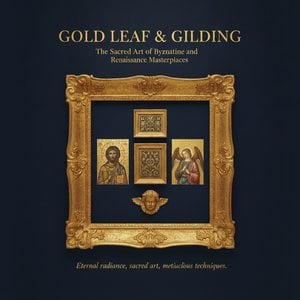
Explore the divine mastery of Byzantine gold leaf and gilding. Discover how ancient artisans used gold ground and mosaics to create celestial light, a timeless legacy of spiritual splendor and technical excellence in sacred art history.

Embark on a visual journey through the world's most radiant masterpieces. Discover how gold leaf, impasto textures, and gilded tones define luxury in fine art, from Byzantine icons to modern abstracts. Explore the eternal allure of gold in curated, museum-quality art collections.
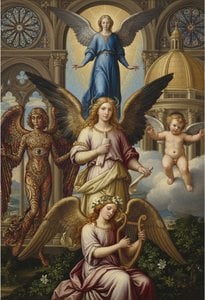
Explore the profound beauty of angelic figures in art history. From Renaissance masterpieces to celestial symbolism, our expert guide offers a sophisticated journey through the divine imagery of the Old Masters for discerning collectors and art enthusiasts.


最新の美術ニュース、限定オファー、そしてインテリアのアイデアをいち早くお届けします。
お客様のプロジェクトについてお聞かせください。当社の美術専門家が、お客様に合わせた3つのパーソナライズされた芸術提案をご提供いたします。
あなたにぴったりの3作品を無料で厳選いたします


 プレビュー
プレビュー
 プリントを購入
 シェアする
シェアする シェアする
シェアする
 詳細を見る
詳細を見る

 ダウンロード
 似ている作品
 X線調査
X線調査 スライドショー
 詳細を見る
詳細を見る









 ガラスオプションは、110cm未満のサイズでのみご利用いただけます。


