ウェブ上のプレビューを遥かに凌駕する、印刷に最適なファイルをご提供します。当サイトで販売しているすべてのデジタル画像は、弊社のデータベース内にある高解像度のマスターデータ(通常、幅5,000〜15,000ピクセル)から作成されています。そのため、大判印刷やタイトなクロップ、細部まで緻密な再現も、安心してお楽しみいただけます。
当スタジオから送り出される画像は、すべて丁寧に加工されています。デジタルエキスパートが原画と照らし合わせて色調を精査し、必要に応じて補正を行った上で、プロ仕様のリタッチツールを用いて鮮明さと細部を向上させます。その際、アーティストの筆致やスタイルに忠実であることを常に追求しています。その結果、単なるスキャン画像にフィルターをかけたようなものではなく、まるで本物の絵画を見ているかのような仕上がりを実現しています。
仕上がりをご確認いただいてから完了となります。専門スタッフが、ご確認用の画像を72時間以内にメールでお送りいたします。もしご満足いただけない場合は、修正や改善のご要望を承るほか、品質が基準に満たない場合には返金も可能です。
出版社、デザインスタジオ、ギャラリー、そして印刷所から信頼される品質です。
個人での鑑賞、印刷、クリエイティブなプロジェクトにご利用いただける高解像度ファイルをダウンロードできます。 ( プリント版に切り替え 手描きの複製画を注文する)
WahooArt.com を選ぶことは、単に画像を手に入れることではありません。プロの手によって精密に仕上げられ、満足保証が付いた高品質なデジタルアートワークを受け取ることを意味します。ご注文いただいた際に自動的に付随する内容は、以下の通りです:
ご注文から72時間以内に、高解像度のデジタル画像ファイルをメールでお送りいたします。お手元に届き次第、すぐにご利用いただけます。
お客様の作品は、高度なAI技術と専門家による手作業を組み合わせてプロフェッショナルに最適化されており、細部のディテール、鮮明さ、そして正確な色再現性を最大限に引き出しています。
ファイルを誤って削除したり、紛失してしまったりしましたか?ご安心ください。いつでも無料で再送いたします。
関税や手数料、配送料を気にすることなく、お気に入りのアートワークをすぐにお楽しみいただけます。デジタルダウンロードは常に免税です。
プロ仕様のツールとカラーマネジメント技術を用いることで、デジタル画像が元の色を最大限に忠実に再現することを保証いたします。
ご購入いただいたデジタル画像にご満足いただけない場合は、100日以内であれば、理由を問わず修正または100%の返金対応をさせていただきます。
ご満足いただけない場合は、デジタルファイルを受け取ってから100日以内であれば、理由を問わず全額返金いたします。
3枚購入で10%OFF、5枚購入で15%OFF、10枚以上のご購入で20%OFF。クリエイティブなプロジェクトやギャラリー、エージェンシーに最適です。
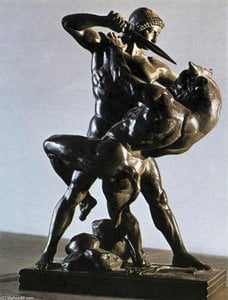
In the heart of the bronze medium lies a raw, unyielding energy that few artists can capture with such visceral precision as Émile Antoine Bourdelle. His sculpture, Heracles, is not merely a depiction of a mythological feat; it is a breathtaking embodiment of tension, movement, and the eternal struggle between civilization and the wild. As one gazes upon this powerful work, the eye is immediately drawn into the kinetic dance of the hero and the beast. The composition centers on the muscular, Herculean figure mid-action, his body a study in anatomical perfection and concentrated force. With his bow drawn and arrow aimed with lethal intent, Heracles represents the pinnacle of human resolve, while the massive lion below serves as a formidable, earthbound shadow of primal danger.
The artistry of Bourdelle shines through the masterful use of lost-wax casting, a technique that allows for an extraordinary level of detail and texture. The bronze surface is far from smooth; instead, it bears the intentional, rugged marks of the sculptor’s hand, creating a play of light and shadow that breathes life into the metal. These visible tool marks and deep undulations provide a sense of volume and realism that makes the musculature appear to pulse with blood. The interplay between the geometric strength of the lion's base and the fluid, rounded forms of the human anatomy creates a sophisticated visual rhythm, bridging the gap between classical stability and modern dynamism.
Rooted deeply in the traditions of Greek mythology, Heracles evokes the legendary triumph over the Nemean Lion, a story that has resonated through centuries of human storytelling. However, Bourdelle transcends mere illustration. Drawing inspiration from the monumental style of ancient Greek art, he utilizes strong, defined lines and a sense of architectural construction to elevate the subject matter. This is not just a scene from a myth; it is a symbolic representation of strength, courage, and the indomitable human spirit facing insurmountable adversity. For the discerning collector or interior designer, this piece offers more than decoration; it provides a focal point of profound emotional weight and historical gravity.
To possess a high-quality reproduction of such a significant work is to invite a sense of timelessness into a space. Whether placed in a grand library, a sophisticated study, or as a centerpiece in a contemporary gallery setting, the sculpture commands attention through its sheer presence. The rich, dark tones of the bronze and the dramatic silhouette of the figures create an atmosphere of intellectual depth and classical elegance. It serves as a constant reminder of the beauty found in struggle and the enduring power of heroic ideals, making it an incomparable addition to any curated collection of fine art.
Émile Antoine Bourdelleは、1909年に「Heracles」を制作した際、48歳でした。この年齢は、アーティストの誕生年である1861年から算出されています。
「Heracles」の明暗のコントラストはBoldと記録されています。コントラストとは、明るい部分と暗い部分がどの程度強く異なっているかを表す指標です。

Born in the historic landscape of Montauban in 1861, Émile Antoine Bourdelle emerged as a titan of French sculpture, a master who bridged the gap between the romantic fluidity of the nineteenth century and the structured rigor of modernism. His journey began not in the grand academies of Paris, but amidst the tactile reality of wood and grain, working as a woodcarver in his father’s cabinet-making shop from the tender age of thirteen. This early immersion in the physical properties of material would later define his sculptural language, imbuing his works with an inherent sense of structural integrity and a profound understanding of volume and mass.
After honing his drawing skills under the guidance of the founder of the Ingres Museum, Bourdelle sought formal training in Toulouse before securing a prestigious scholarship to the École des Beaux-Arts in Paris. It was in the vibrant, competitive atmosphere of the capital that his artistic identity truly began to crystallize. Working within the atelier of Alexandre Falguière and finding inspiration in the studio of Jules Dalou, Bourdelle developed a style that moved away from mere imitation toward a more profound, architectural expression. His 1888 sculptures of Beethoven served as a definitive turning point, showcasing an authoritative command over form that emphasized order, geometric spirit, and a revolutionary approach to construction.
The trajectory of Bourdelle’s career was irrevocably altered when he joined the studio of Auguste Rodin in 1893. While many viewed him simply as an assistant, the relationship was one of profound mutual respect; Rodin himself became a great admirer of Bourdelle's unique ability to infuse monumental figures with both heroic strength and rhythmic grace. This period allowed Bourdelle to absorb the expressive vitality of Rodin while simultaneously carving out his own path toward a more structured, classical aesthetic. He did not merely follow the impressionistic textures of his mentor; instead, he sought a return to the permanence of ancient Greek and Roman archetypes, filtered through a twentieth-century lens.
As a teacher, Bourdelle’s influence was nothing short of monumental. His studio became a crucible for future generations of sculptors, where he imparted a philosophy that prioritized the internal logic of the sculpture over superficial detail. His pedagogical reach ensured that his emphasis on geometry, invention, and monumentality would ripple through the decades, influencing the development of Art Deco and the broader movement toward modern abstraction.
Throughout his later years, Bourdelle’s work became synonymous with the public spirit of France. He received numerous prestigious commissions for war memorials and civic monuments, works that demanded a sense of timelessness and collective memory. His recognition by the French state was profound, marked by his elevation to Knight, Officer, and eventually Commander of the Legion of Honor. Beyond the borders of France, his participation in the landmark 1913 Armory Show in New York introduced his powerful, rhythmic compositions to an international audience, cementing his status as a pioneer of twentieth-century monumental sculpture.
The legacy of Bourdelle is preserved not only in bronze and stone scattered across the globe but also within the very walls of the Musée Bourdelle in Paris. This museum, housed in his former studio, serves as a sanctuary for his creative spirit, allowing visitors to walk through the space where he shaped the modern sculptural landscape. Though he passed away in 1929, his contribution to the evolution of form remains an indelible part of art history, characterized by:

1861 - 1929


 送る
送る シェア
シェア
 詳細情報
詳細情報 ガイドを表示

 画像をダウンロード
 似ている作品
 スライドショー
 Q&A
Q&A 統計情報
統計情報


 続きを読む
続きを読む