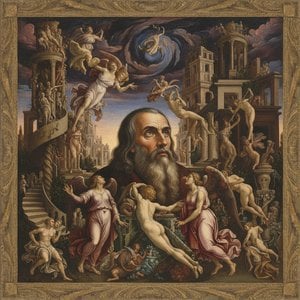
The Disrobing of Christ: A Testament to Faith and Artistic Innovation
Doménikos Theotokópoulos, universally known as El Greco – “the Greek” – stands apart in the annals of European art history. Born in Crete in 1541, his artistic journey was marked by a restless spirit that propelled him from Venice to Rome before ultimately anchoring him in Toledo, Spain—a city steeped in religious fervor and profoundly influential on his distinctive vision. El Greco wasn’t merely responding to prevailing trends; he forged an entirely new aesthetic path, anticipating the expressive power of Expressionism and the fractured perspectives of Cubism centuries ahead of their time. His formative years within the Byzantine tradition instilled a meticulous attention to detail and a deep understanding of religious iconography—a foundation that wouldn't confine him to established conventions. He signed his works in Greek, appending “Krḗs” – Cretan – as a proud declaration of his origins, even as he embraced experimentation and pushed boundaries. The genesis of El Greco’s singular style lies in the interplay between Eastern Orthodox spirituality and Western Renaissance humanism—a synthesis that resulted in an unparalleled visual language.
- Subject Matter: The painting depicts Jesus Christ being stripped naked by a group of figures representing his disciples, marking a pivotal moment preceding his crucifixion. This scene transcends mere depiction; it embodies the profound theological significance of humility and vulnerability before divine judgment.
- Style: El Greco’s style is characterized by elongated figures, distorted proportions, and ethereal coloring—a deliberate departure from realistic representation. These stylistic choices serve to heighten emotional intensity and convey spiritual transcendence rather than literal accuracy.
- Technique: Employing oil on canvas, El Greco utilized a glazing technique that layered translucent pigments over opaque undercoats, creating luminous surfaces and conveying an otherworldly atmosphere. This meticulous layering contributes significantly to the painting’s dramatic impact and enduring beauty.
Historical Context & Significance
Created in 1583 during the Spanish Habsburg reign, “The Disrobing of Christ” reflects the anxieties and aspirations of its time—a period marked by religious reformations and a fervent desire for spiritual contemplation. The painting’s commission underscores the importance of religious iconography within the artistic landscape of the era and speaks to the broader humanist preoccupation with portraying human emotion and psychological complexity. Its placement in Toledo Cathedral, a bastion of Catholicism, reinforces its symbolic resonance as an emblem of faith and repentance.
Symbolism & Emotional Impact
The figures surrounding Jesus—representing his disciples—are rendered with palpable sorrow and apprehension, mirroring the viewer’s own contemplation on mortality and divine grace. The deliberate distortion of human anatomy serves not merely as stylistic flourish but as a vehicle for conveying spiritual anguish—a profound expression of vulnerability before God's majesty. The stark contrast between light and shadow amplifies this emotional drama, drawing attention to Jesus’ exposed flesh and symbolizing the stripping away of earthly adornments in preparation for ascension.
Legacy & Reproduction
“The Disrobing of Christ” remains a cornerstone of El Greco's oeuvre and continues to inspire artists and scholars alike. Its enduring fascination stems from its masterful blend of artistic innovation and spiritual profundity—a testament to El Greco’s ability to capture the essence of human experience within a framework of religious symbolism. At WahooArt, you can acquire high-quality reproductions that faithfully preserve the painting's luminous beauty and emotive power, bringing this iconic masterpiece into your home or studio. Learn more about “The Disrobing of Christ”
here.
Q&A
「キリストの脱衣」は、エル・グレコが繰り返し描いてきた主題の中でどのような位置を占めているのでしょうか?
エル・グレコの作品に繰り返し現れるテーマにはビザンティンとルネサンスの伝統の融合, 磔刑の苦しみを描いた劇的な描写, 信仰と人間の感情の強烈さの探求, 精神的な変容を反映する象徴的なイメージ, 脆弱性と神の恩寵の象徴性, 宗教的な物語の力の強調がありますが、「キリストの脱衣」では宗教画, キリスト像, 聖書の場面, 人体解剖学, 感情, 古典的な構図, ルネサンスの影響に焦点を当てています。
エル・グレコ作「キリストの脱衣」のスライドショーはありますか?
エル・グレコ作「キリストの脱衣」は、作品のスライドショーページにてスライドショーとしてご覧いただけます。
エル・グレコ作「キリストの脱衣」は、バロックの作品の中でも、特に需要の高いものなのでしょうか?
カタログ内のバロックの作品の中で、「キリストの脱衣」は象徴的な存在と記録されています。