アート相談を無料で

x
手描き複製画を注文する 手描き複製画を注文する画像を 購入する 画像を 購入する シェアするシェアする
詳細を見る詳細を見る お気に入りに追加 お気に入りに追加 ダウンロードダウンロード 似ている作品似ている作品 X線X線 スライドショースライドショー

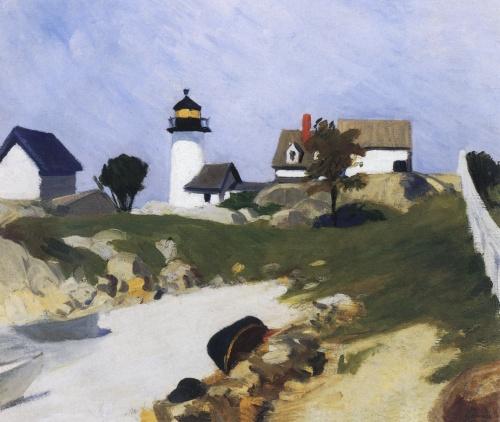
Squam Light

Explore Edward Hopper’s "Houses of Squam Light" (1923). A serene watercolor capturing a New England coastal scene – realism, solitude & timeless beauty. Discover its symbolism and artistic technique.

アメリカンリアリズムの巨匠、エドワード・ホッパー。孤独な都市生活と光影を巧みに捉え、『Nighthawks』や『日曜日の午後』など、時代を超越した傑作群で知られます。20世紀アメリカ社会の深層心理を映し出す芸術家。

ジークレー/アートプリント

迅速な制作と多彩な仕上げオプションを備えた、ミュージアムクオリティのジークレーまたはキャンバスプリント。

P118B $10
P118H $10
P118W $10
P438Z $10
P508JH $12
P508YH $12
P805H $10
P805Z $10
P919BZ $10
P919G $10
P919XJ $10
P959ZH $10
P968JZ $12
W106C $8
W218G $10
W218JH $8
W218Y $10
W307PJ $10
W316G $10
W316PJ $8
W316Y $10
W398PJ $8
W4111J $10
W500HY $15
W500JH $15
W692G $12
W849H $8
W940BG $15
W953PJ $8

Standard
custom
CM
INCH

作品のオリジナル比率に合わせた、当店の規定サイズからお選びください。

高さ

特定のフレームやスペースに合わせて、ご自身でサイズを指定することも可能です。選択されたサイズが元の画像の比率と一致しない場合、作品をトリミングするか、鏡面反射または単色での塗りつぶしによって画像を拡張いたします。制作を開始する前に、ご確認用のデジタルモックアップをお送りいたします。

画面上のプレビューには、実際のトリミングや拡張は反映されませんのでご注意ください。最終的な構図を正確に確認できるのは、モックアップのみとなります。

カスタムサイズも承っておりますが、元の比率を維持するためには、あらかじめ用意されたリストからサイズを選択することをお勧めいたします。

世界中への配送()は、標準の4〜5週間ではなく、2週間でお届けいたします。(4 7月)

why_choose_icon
世界中へ無料エクスプレス配送
why_choose_icon
高品質なリネンキャンバス
why_choose_icon
配送時完全保険付
why_choose_icon
関税・輸入税の払い戻し保証
why_choose_icon
忠実な色彩再現保証
why_choose_icon
60日間返品保証(製造上の欠陥のみ)
why_choose_icon
100% 全額返金保証
why_choose_icon
まとめ買い割引のご案内

合計金額

-

reproduction

Squam Light

ジークレー/アートプリント

複製画のサイズ

-

合計金額

-

作品詳細

  • Artist: Edward Hopper
  • Year: 1912
  • Notable elements or techniques: Light and Shadow Play
  • Movement: New Realism
  • Subject or theme: Coastal Landscape
  • Medium: Oil on Canvas
  • Location: Private Collection

アート・クイズ

各質問の正解は1つだけです。

問題 1:
What artistic movement is Edward Hopper’s ‘Squam Light’ primarily associated with?
問題 2:
The painting depicts a coastal scene featuring what prominent architectural element?
問題 3:
What is the predominant color palette used in ‘Squam Light’?
問題 4:
Based on its description, what feeling does ‘Squam Light’ evoke?
問題 5:
In addition to the lighthouse and houses, what other element contributes to the overall atmosphere of this artwork?

作品詳細説明

Squam Light: A Study in Coastal Isolation

Edward Hopper’s “Squam Light,” painted in 1912, stands as a quintessential emblem of American Modernism—a deceptively simple depiction that speaks volumes about the pervasive sense of solitude and contemplation characteristic of the era. Captured in New Realism style, this artwork transcends mere representation; it's an invitation to delve into the psychological landscape of its subject matter. The photograph accompanying this description showcases the painting’s luminous quality, highlighting the masterful use of light—a hallmark of Hopper’s artistic vision.
  • Subject Matter: The scene unfolds on a rugged New England coastline, dominated by a solitary lighthouse perched atop a rocky outcrop. Below, nestled amongst scrubby vegetation, are two modest houses – one positioned closer to the viewer and another receding into the distance—creating a carefully constructed tableau of domestic life against the grandeur of nature.
  • Style: Hopper’s New Realism eschews romantic idealism, opting instead for an unflinching portrayal of everyday existence. The figures within the houses are rendered with quiet dignity but also palpable detachment, embodying the emotional core of the piece.
The painting's technique is notable for its meticulous attention to detail and its subtle tonal gradations. Hopper employed oil paints on canvas, applying thin layers of pigment to build up texture and luminosity—a deliberate choice that contributes significantly to the artwork’s atmospheric effect. Observe how the artist skillfully captures the diffused glow emanating from the lighthouse lamp, casting elongated shadows across the rocks and illuminating the interiors of the houses with a warm, inviting light. This interplay of illumination and darkness underscores the painting's thematic preoccupation with psychological states. Historical Context: Painted during the burgeoning artistic movement of Modernism—a reaction against Impressionism’s focus on fleeting sensations— “Squam Light” reflects the broader cultural anxieties surrounding urbanization and industrialization. Hopper’s depiction of rural America speaks to a yearning for authenticity amidst the rapid pace of societal change, capturing a moment frozen in time yet brimming with unspoken emotion. The painting resonates powerfully with themes explored by writers like Ernest Hemingway and Gertrude Stein—artists who similarly wrestled with questions of identity and experience in an increasingly fragmented world.
  • Symbolism: The lighthouse itself serves as a potent symbol of guidance, resilience, and unwavering vigilance – qualities projected onto the human figure within the house. Its solitary presence emphasizes the individual’s struggle for connection and meaning in a vast expanse of space.
  • Emotional Impact: “Squam Light” evokes a profound sense of melancholy—a quiet contemplation of solitude that lingers long after viewing. Hopper's masterful composition invites viewers to consider their own relationship with place, time, and the human condition. It’s an artwork designed not merely to be observed but felt.
Ultimately, “Squam Light” remains a testament to Hopper’s ability to distill complex emotions into deceptively understated visual language—a timeless masterpiece that continues to captivate audiences today. Its enduring appeal lies in its capacity to resonate with our own experiences of isolation and longing—a poignant reminder of the beauty found within quiet contemplation.

関連作品


アーティストの略歴

Edward Hopper: A Master of American Realism, Capturing Solitude and Urban Life With Evocative Light & Shadow

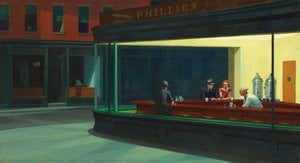
Edward Hopper, a name inextricably linked to the quietude and subtle melancholy that permeated 20th-century American life, wasn’t simply a painter of scenes; he was a poet of light and shadow, a chronicler of modern isolation. Born in Nyack, New York, in 1882, to middle-class parents of Dutch ancestry, Hopper's early years provided a stable upbringing that nurtured his artistic inclinations. From childhood sketches meticulously dated and signed, it became evident that keen observation and an innate talent for drawing were central to his being. Though initially encouraged towards commercial illustration – a pragmatic suggestion from his parents – Hopper’s ambitions leaned toward fine art, leading him to the New York School of Art where he studied under William Merritt Chase and Robert Henri. These formative years instilled not only technical skill but also an appreciation for realism and a commitment to depicting the world as he saw it—unvarnished and honest. The writings of Ralph Waldo Emerson resonated deeply with Hopper, reinforcing his sense of individualism and acute observation – qualities that would become hallmarks of his artistic vision. Early travels to Paris exposed him to Impressionism, yet Hopper quickly diverged from its fleeting brushstrokes, forging a path uniquely his own. Early Life and Artistic Beginnings Edward Hopper was born in Nyack, New York, a yacht-building center on the Hudson River north of New York City, to Elizabeth Griffiths Smith and Garrett Henry Hopper, a dry-goods merchant. He possessed an exceptional aptitude for drawing from a young age, diligently documenting his surroundings with sketches signed and dated—a habit that would characterize his entire artistic career. Encouraged by his parents’ support for his creative pursuits, Hopper pursued studies at the New York School of Art under William Merritt Chase and Robert Henri, where he absorbed the principles of realism championed by Henri and honed his technical skills. These formative influences instilled in him a profound respect for observation and an unwavering dedication to portraying reality with uncompromising honesty—a stance that would define his artistic approach throughout his life. The philosophical ideas of Ralph Waldo Emerson profoundly impacted Hopper’s worldview, bolstering his belief in individualism and fostering a deep appreciation for the subtleties of human experience. Finding His Voice: Realism and the American Scene Hopper's artistic journey wasn’t immediate or effortless. He wrestled with discovering his distinctive voice, experimenting with various styles before settling into the realism that would become his hallmark. This wasn’t mere replication of reality; it was a distillation of its essence, stripping away extraneous detail to reveal underlying emotional truths. His paintings began to focus on everyday scenes—houses, diners, offices, hotel rooms—imbued with a sense of stillness and often, loneliness. He possessed an extraordinary ability to capture the psychological states of his subjects, hinting at narratives without explicitly stating them. Hopper’s technique involved careful consideration of composition and masterful manipulation of light and shadow – elements he believed were crucial for conveying mood and emotion. This approach distinguished him from many of his contemporaries who embraced abstraction, prioritizing instead a profound engagement with the visual world. Influences and Artistic Style Hopper's artistic sensibilities were shaped by several key influences. Impressionism, particularly the work of Edgar Degas and Édouard Manet, instilled in him an appreciation for capturing fleeting moments of beauty and conveying atmosphere—though he rejected its characteristic brushstrokes in favor of a more deliberate style. Robert Henri’s insistence on portraying the American landscape with unflinching honesty served as inspiration for Hopper's depictions of rural America, while William Merritt Chase encouraged him to develop his skills in portraiture and tonal painting. These influences combined to forge a unique artistic vision characterized by its quiet contemplation, understated emotion, and meticulous attention to detail. His paintings often featured solitary figures inhabiting sparsely populated spaces—a motif that became synonymous with Hopper’s oeuvre and resonated deeply with audiences across generations. Iconic Visions: Nighthawks and Beyond Hopper achieved recognition in the 1920s through his work as an illustrator, securing commissions for advertising agencies and publications. However, it was his paintings—particularly *Nighthawks* (1942)—that cemented his place in art history. This iconic image captures the pervasive sense of alienation experienced by individuals navigating urban life at night—a scene bathed in stark fluorescent light that evokes both unease and melancholy. The figures within are lost in their own thoughts, disconnected from one another despite their proximity—a poignant commentary on the human condition. Hopper’s masterful use of composition and tonal painting created a dramatic effect that captivated viewers and established him as a pioneer of American Realism. His enduring legacy lies not only in the beauty of his paintings but also in their ability to provoke reflection on themes of solitude, isolation, and the complexities of modern existence—a testament to Hopper’s profound understanding of human psychology and his unwavering commitment to portraying reality with uncompromising honesty.
  • His meticulous attention to detail—from the textures of brick walls to the subtle gradations of light—elevated ordinary subjects into moments of contemplative beauty.
  • Hopper's ability to convey emotion through visual cues—particularly light and shadow—transformed his paintings into powerful expressions of psychological truth.
  • The enduring fascination with Hopper’s work stems from its exploration of universal themes—loneliness, isolation, and the search for connection—that continue to resonate with audiences today.
Edward Hopper's unwavering dedication to realism and his distinctive artistic vision ensured his place as one of America’s most celebrated artists—a figure whose paintings remain profoundly evocative and intellectually stimulating decades after their creation.
エドワード・ホッパー

エドワード・ホッパー

1931 - 1967 , アメリカ合衆国

基本情報

  • Artistic Movement Or Style: リアリズム
  • Artists Who Influenced This Artist:
    • ウィリアム・ミルトン・チェイス
    • ロバート・ヘンリー
  • Date Of Birth: 1882年7月22日
  • Date Of Death: 1967年5月15日
  • Full Name: Edward Hopper
  • Nationality: アメリカ合衆国
  • Notable Artworks:
    • ナイハウクス
    • 鉄道沿いの家
  • Place Of Birth: ニューヨーク州ナヤック
テーマ、スタイル、特徴別に分類された作品を探索しましょう。