A Dance of Longing: Edvard Munch’s “Attraction”
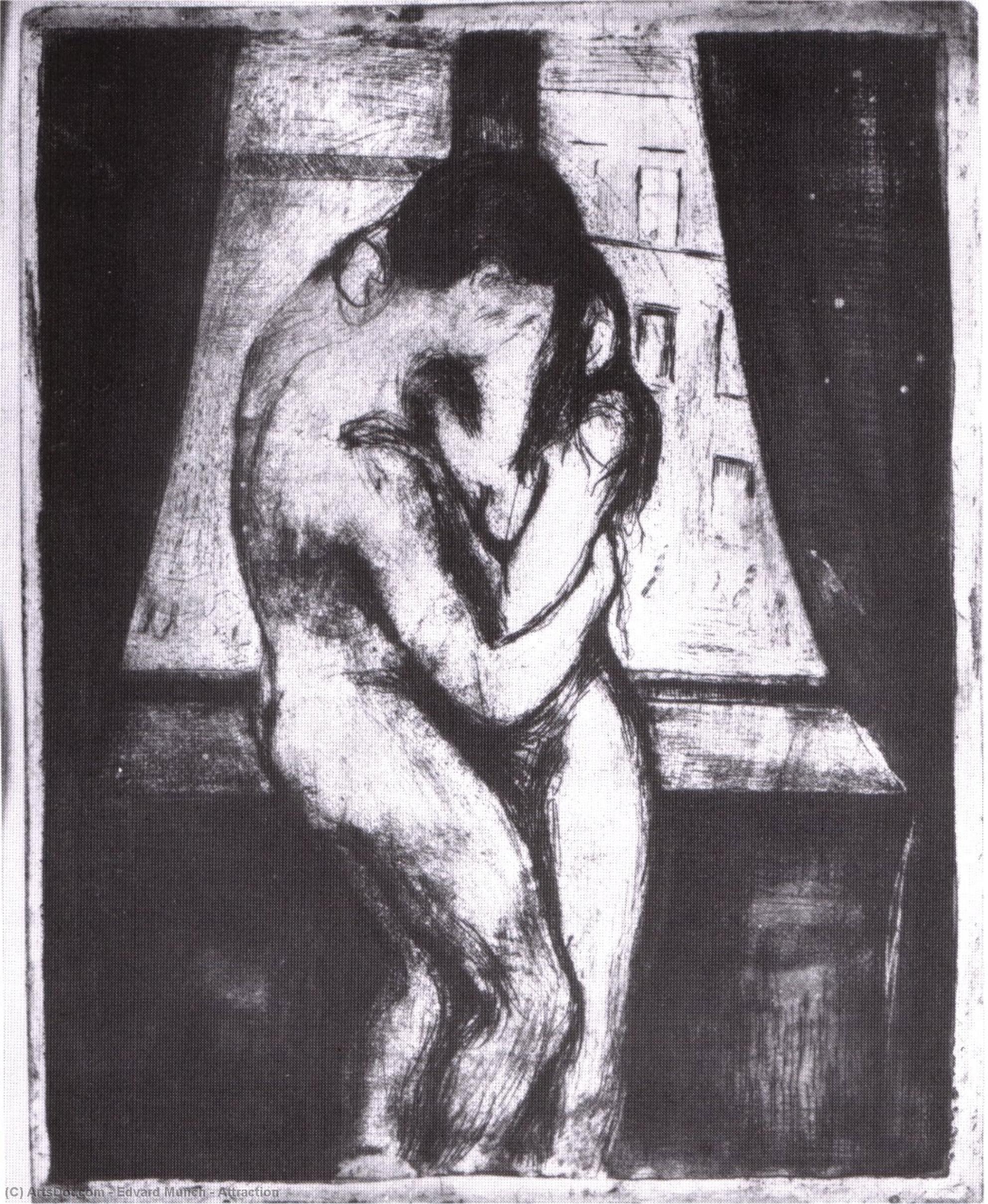
Edvard Munch's "Attraction," created in 1896 during the heart of Expressionism, isn’t merely a depiction of a couple on a beach; it’s a raw and intensely personal exploration of emotional complexity, longing, and the subtle anxieties that simmer beneath the surface of human connection. This lithograph, rendered in stark black and white, captures a moment suspended between intimacy and distance, inviting viewers to contemplate the unspoken tensions within a relationship – a feeling powerfully conveyed through Munch's masterful manipulation of line, color (or lack thereof), and form.
The work’s genesis lies firmly within Munch’s deeply personal world. Born amidst tragedy and shadowed by familial illness—his mother and sister both succumbed to tuberculosis—Munch’s art became a vehicle for confronting his own fears surrounding mortality, sickness, and the fragility of human existence. This biographical context profoundly informs “Attraction,” lending it an almost palpable sense of melancholy and vulnerability. The figures, rendered with a deliberate ambiguity, seem caught in a private drama, their interaction radiating both warmth and a subtle undercurrent of unease.
Expressionist Techniques: A Symphony of Form and Emotion
“Attraction” is a quintessential example of Expressionism’s core tenets. Munch eschews realistic representation in favor of conveying an inner emotional state. The figures are not meticulously detailed; instead, they're suggested through bold, sweeping lines that emphasize their intertwined forms and the dramatic interplay of light and shadow. Notice how the hatching technique—densely packed lines creating a sense of texture and depth—dominates the composition, particularly around the edges of the figures and the window behind them. This creates an almost tactile quality, drawing the viewer into the scene’s emotional intensity.
The lithographic process itself contributes significantly to the artwork's effect. The inherent limitations of printmaking – the need for scraping away areas to reveal the white paper beneath – result in a deliberately rough and uneven surface. This textural element amplifies the sense of unease, mirroring the emotional turbulence at play. Furthermore, Munch’s use of stark contrasts between light and dark—a dramatic chiaroscuro—heightens the scene's theatrical quality, focusing attention on the figures and amplifying their psychological drama.
Symbolism and Interpretation: A Silent Dialogue
While seemingly straightforward in its depiction, “Attraction” is rich with symbolic potential. The couple’s positioning – facing away from each other—immediately establishes a sense of detachment and unspoken communication. The woman's averted gaze speaks volumes about her emotional state; she seems lost in thought or perhaps deliberately avoiding the man’s attention. The window behind them acts as a barrier, separating the figures from the outside world and suggesting a confinement within their own relationship.
Some art historians interpret the embrace itself as representing both intimacy and vulnerability. The intertwined forms suggest a deep connection, yet the lack of direct eye contact hints at unresolved tensions or unspoken desires. The overall mood is one of poignant longing—a yearning for something just beyond reach. Munch’s masterful use of line and composition creates an atmosphere of quiet drama, inviting viewers to project their own interpretations onto this evocative image.
A Legacy of Emotional Intensity
"Attraction" stands as a powerful testament to Edvard Munch's ability to translate personal anguish into universal emotional experiences. Its enduring appeal lies in its raw honesty and its exploration of the complexities of human relationships. Reproductions, like those offered by WahooArt.com, allow us to appreciate the nuances of this remarkable work, bringing its haunting beauty and profound psychological depth into our homes and spaces. It’s a piece that continues to resonate with viewers today, reminding us of the enduring power of art to capture the most intimate and challenging aspects of the human condition.



 プレビュー
プレビュー
 手描きの絵画を購入
 シェアする
シェアする シェアする
シェアする
 詳細を見る
詳細を見る

 ダウンロード
 似ている作品
 X線調査
X線調査 スライドショー

 詳細を見る
詳細を見る






































 ガラスオプションは、110cm未満のサイズでのみご利用いただけます。








