x































作品のオリジナル比率に合わせた、当店の規定サイズからお選びください。

特定のフレームやスペースに合わせて、ご希望のサイズをご入力いただけます。選択されたサイズが元の画像の比率と異なる場合、アートワークをトリミングするか、手描きで要素を追加して絵画を拡張いたします。デジタルモックアップ を制作し、制作開始前にご確認(承認)をいただきます。
画面上のプレビューは、実際のトリミングや拡張を正確に反映しているものではありません。最終的な構図は、モックアップによってのみ正確にご確認いただけます。
カスタムサイズもご利用いただけますが、元の比率を維持するためには、あらかじめ用意されたリストからサイズを選択することをお勧めいたします。

Christ aux anges
複製画のサイズ
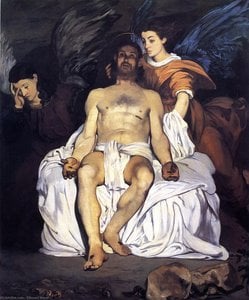
Édouard Manet's “Christ aux Anges” (Christ with Angels), painted in 1864, isn’t merely a depiction of biblical sorrow; it’s a profound meditation on suffering, faith, and the unsettling beauty found within moments of intense emotional vulnerability. This work, deeply rooted in the aftermath of Christ's crucifixion, transcends simple narrative to become a poignant exploration of human experience under divine scrutiny. Manet, already challenging the conventions of academic painting with his burgeoning realism, here employs a restrained palette and masterful use of line to convey an atmosphere of quiet desperation and profound contemplation.
The composition immediately draws the eye to Christ’s central figure, seated on the ground, bound by unseen restraints. His posture—a subtle curve of the spine, a downward gaze— speaks volumes about his ordeal. Flanking him are two angels, not as triumphant messengers but as witnesses to his agony, their faces etched with solemnity and perhaps even a touch of sorrow. The pyramidal structure, a hallmark of Renaissance art, is subtly subverted here; it’s less a symbol of stability and more an anchor for the weight of Christ's suffering. The figures are tightly framed, creating an intimate space around them—a stage set for this private drama.
Manet’s technique is characterized by a deliberate simplicity that belies the emotional depth he achieves. He eschews elaborate detail in favor of carefully rendered lines, utilizing hatching and cross-hatching to build up tonal values and create texture. The graphite or charcoal—the medium of choice for this piece—allows for a remarkable degree of control, enabling Manet to capture the subtle nuances of light and shadow with astonishing precision. Notice how the darker areas aren’t simply black; they are built from layers of closely spaced lines, suggesting depth and volume. The lighter areas, conversely, are defined by sparser strokes, creating an illusion of airiness and highlighting Christ's form.
The flattened perspective—a departure from the traditional Renaissance emphasis on spatial realism—further contributes to the painting’s emotional intensity. It forces the viewer to confront the figures directly, intensifying the sense of immediacy and vulnerability. The background is deliberately minimal, serving only to amplify the drama unfolding in the foreground. This deliberate reduction focuses all attention on the central narrative – Christ's suffering and the angels’ silent vigil.
“Christ aux Anges” resonates with layers of symbolic meaning. The binding represents not just physical restraint but also spiritual confinement—the weight of sin and sacrifice. The angels, often interpreted as messengers of God, here seem to be grappling with the enormity of Christ’s suffering, their faces reflecting a mixture of compassion and perhaps even bewilderment. The scene draws heavily on iconography associated with the Passion of Christ, particularly depictions of Christ after his crucifixion—a moment of profound vulnerability and acceptance. The overall mood is one of quiet contemplation, inviting viewers to reflect on themes of faith, redemption, and the nature of suffering.
Manet's work was revolutionary for its time, challenging the established norms of academic painting. “Christ aux Anges” exemplifies his willingness to explore contemporary subjects with a frankness that shocked many critics. His use of line and shadow, combined with his focus on human emotion, paved the way for Impressionism and subsequent movements in modern art. Reproductions of this powerful image continue to resonate today, offering a timeless meditation on faith, sorrow, and the enduring mysteries of the human condition. The painting’s stark beauty and emotional honesty remain profoundly moving, solidifying Manet's place as a pivotal figure in the history of Western art.


1832 - 1883 , フランス

Elevate your artistry with this definitive expert guide to mastering charcoal. Designed for art students, learn professional techniques for capturing profound depth, intricate textures, and dramatic shadows through advanced blending and chiaroscuro methods.

Elevate your artistic practice with this expert guide to mastering the line. Discover advanced techniques in graphite, charcoal, and contour drawing designed for art students seeking technical precision and expressive depth in their fine art studies.

Explore the profound artistry of graphite drawing. Discover professional techniques for mastering depth, texture, and detail through a lens of art history, from classical sketches to modern masterpieces. Elevate your understanding of the pencil medium with our expert guide.

Discover the sophisticated mastery of graphite drawing. Explore expert techniques for achieving profound depth, intricate texture, and hyper-realistic detail through the alchemy of carbon, curated for the discerning art enthusiast and professional collector.

Explore the profound beauty of religious processions in art history. From Baroque drama to spiritual transcendence, discover how masters captured faith. WahooArt.com offers exquisite, hand-painted oil reproductions for discerning collectors seeking timeless grandeur.


最新の美術ニュース、限定オファー、そしてインテリアのアイデアをいち早くお届けします。
お客様のプロジェクトについてお聞かせください。当社の美術専門家が、お客様に合わせた3つのパーソナライズされた芸術提案をご提供いたします。
あなたにぴったりの3作品を無料で厳選いたします


 プレビュー
プレビュー
 プリントを購入
 シェアする
シェアする シェアする
シェアする
 詳細を見る
詳細を見る

 ダウンロード
 似ている作品
 X線調査
X線調査 スライドショー

 詳細を見る
詳細を見る









 ガラスオプションは、110cm未満のサイズでのみご利用いただけます。