


x

作品のオリジナル比率に合わせた、当店の規定サイズからお選びください。

特定のフレームやスペースに合わせて、ご自身でサイズを指定することも可能です。選択されたサイズが元の画像の比率と一致しない場合、作品をトリミングするか、鏡面反射または単色での塗りつぶしによって画像を拡張いたします。制作を開始する前に、ご確認用のデジタルモックアップをお送りいたします。
画面上のプレビューには、実際のトリミングや拡張は反映されませんのでご注意ください。最終的な構図を正確に確認できるのは、モックアップのみとなります。
カスタムサイズも承っておりますが、元の比率を維持するためには、あらかじめ用意されたリストからサイズを選択することをお勧めいたします。

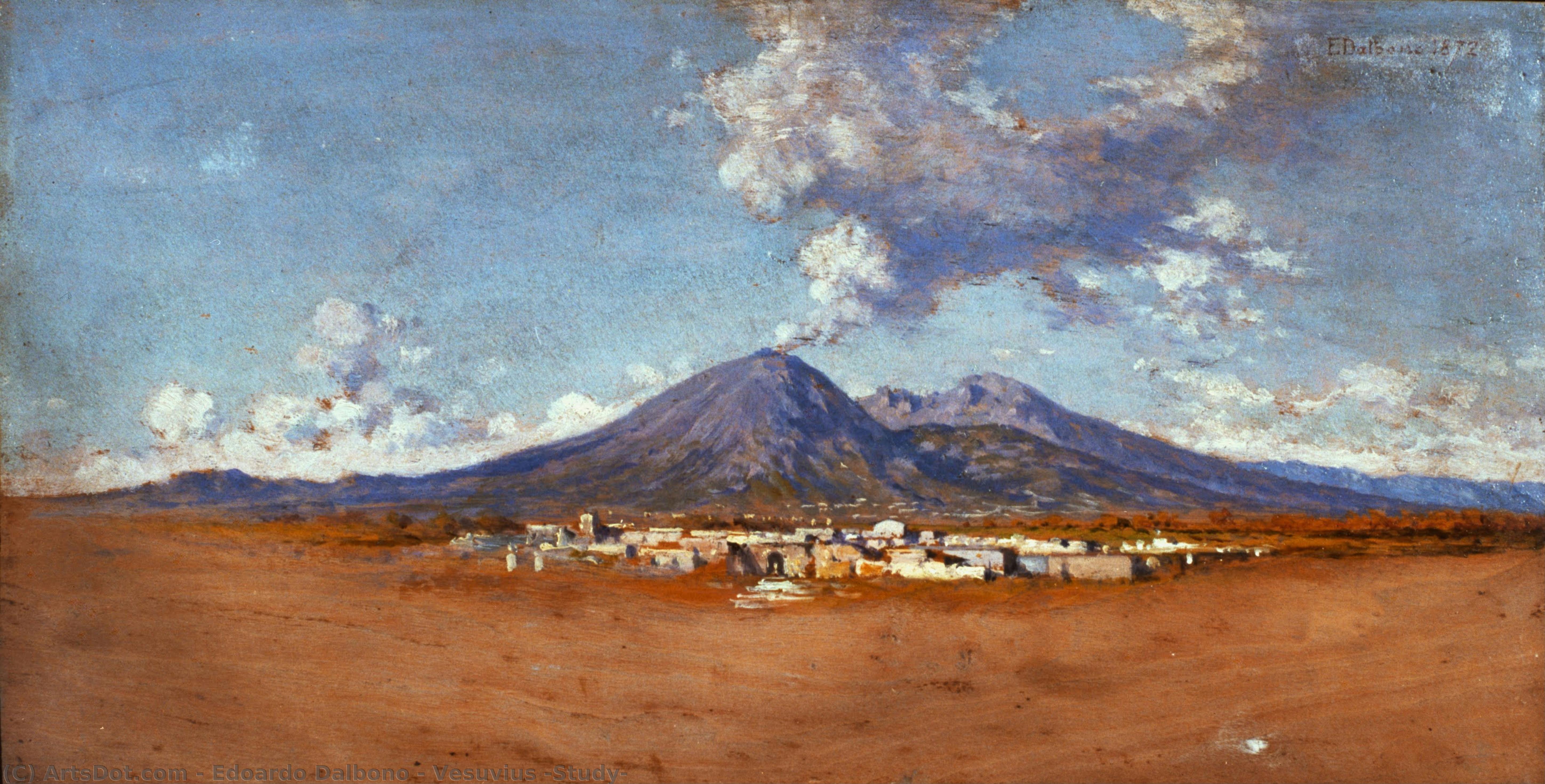
Vesuvius (Study)
複製画のサイズ
Edoardo Dalbono (10 December 1841 – 23 August 1915) was an Italian painter born in Naples, a city that profoundly shaped his artistic vision. His legacy resides primarily in the luminous landscapes he created—particularly those depicting the Bay of Naples and its surrounding hills—and in evocative scenes capturing the spirit of Neapolitan life during the late Romantic era.
Born into a family steeped in intellectual pursuits – his father was a writer and art critic, and his mother a poet – Dalbono’s formative years were marked by exposure to artistic discourse. He enrolled at the Royal Institute of Fine Arts in Naples in 1853 but quickly abandoned formal training for the mentorship of Nicola Palizzi, establishing himself within the influential Scuola di Resina movement.
This school championed a revolutionary approach to painting, prioritizing direct observation of nature and employing *macchie*—patches of color—to convey emotion and atmosphere. Dalbono embraced this method wholeheartedly, rejecting academic conventions in favor of capturing the immediacy of experience. His artistic journey was fueled by an unwavering fascination with the natural world, particularly the dramatic vistas of Mount Vesuvius.
Dalbono’s prolific output included numerous landscapes, portraits, and genre scenes that offer a glimpse into the social fabric of Naples during his time. He gained recognition for his skill in portraying light and color—characteristics that define his distinctive style. His works are celebrated for their sensitivity to detail and their ability to evoke profound emotional responses.
Among Dalbono’s notable achievements were awards at prestigious exhibitions, including the silver medal at the Mostra di Belle Arti in Naples in 1859 and the bronze medal at the Vienna International Exhibition of 1873. He also established himself as a respected teacher at the Naples Academy, nurturing the talents of future artists like Carlo Brancaccio.
His artistic explorations extended beyond Neapolitan landscapes; he spent considerable time in Paris during the 1870s and 1880s, collaborating with fellow artist Giuseppe De Nittis and gaining access to the vibrant Parisian art scene. This period solidified his commitment to capturing the beauty of nature and experimenting with innovative techniques.
Dalbono’s artistic influence can be discerned in the works of subsequent generations of Italian painters who adopted his luminous palette and expressive brushwork. He remains a pivotal figure in Neapolitan art history, embodying the spirit of Romantic idealism and demonstrating the transformative power of observation.


最新の美術ニュース、限定オファー、そしてインテリアのアイデアをいち早くお届けします。
お客様のプロジェクトについてお聞かせください。当社の美術専門家が、お客様に合わせた3つのパーソナライズされた芸術提案をご提供いたします。
あなたにぴったりの3作品を無料で厳選いたします
 手描き複製画を注文する
 シェアする
シェアする シェアする
シェアする
 詳細を見る
詳細を見る

 ダウンロード
 似ている作品
 X線調査
X線調査 スライドショー
 詳細を見る
詳細を見る






































 ガラスオプションは、110cm未満のサイズでのみご利用いただけます。


