

 Mixed MediaWallArtContemporary Design
 36.0 x 28.0 cm
 Vancouver Art Gallery
このページに掲載されている作品は著作権法によって保護されており、当社の許可なく同一の複製物を制作または販売することは法律で禁じられています。この保護は、以下のような国際条約に基づき執行されます。 ベルヌ条約 および、以下の条項に定められたものを含む各国の法律により、 米国著作権法 第17編。
この手法は、著作権で保護された作品の複製や複写を伴わないため、著作権法に完全に準拠しています。これは単なる模倣ではなく、創造的な再解釈です。元の作品からインスピレーションを受けつつも、それとは異なる、全く新しい絵画を生み出すものです。
スピーディーな制作と多彩な仕上げオプションが魅力の、ミュージアムクオリティなジークレー・キャンバスプリント。 ( 手描きの複製画を注文する デジタル画像販売へ切り替え)





























作品のオリジナル比率に合わせた、当店の規定サイズからお選びください。

額縁や壁のスペースに合わせて、ご希望の幅と高さを入力してください。プリントはカットすることは可能ですが、元の画像より大きくすることはできないため、異なる比率のサイズを選択された場合は、画像の一部が欠けることになります。印刷を開始する前に、内容を確認していただくためのデジタルモックアップをお送りいたします。このページに表示されている画像は、実際のカット後の状態を示すものではありません。実際の仕上がりはモックアップにてご確認ください。
God
複製画サイズ一覧
Douglas Coupland's "God," a striking collage dominated by Joseph Conrad’s “Lord Jim,” isn’t merely a reproduction; it’s an interrogation. The artwork, rendered in meticulous detail and layered with a potent visual language, embodies the anxieties of a generation adrift – a sentiment deeply resonant with Coupland’s own experience as a chronicler of Gen X. At its core lies a deliberate dismantling of traditional notions of faith, presented not through overt religious iconography but through a carefully constructed juxtaposition of the familiar and the unsettling.
The foundation is undeniably Conrad's novel, its weighty cover acting as an anchor within the composition. However, Coupland doesn’t simply replicate; he actively disrupts. The colossal, stylized orange and black ‘D’ – a bold, geometric letter – dominates the foreground, immediately asserting itself as a disruptive force. This isn’t a playful graphic element; it feels like a primal scream against the established order, a visual embodiment of doubt and disorientation. Beneath this assertive shape, a stark black-and-white portrait of an older gentleman emerges from the negative space, his face partially obscured, suggesting a lost figure, perhaps representing the fading authority of traditional belief systems.
Coupland’s mastery lies in his ability to seamlessly blend photographic realism with graphic design principles. The book cover itself is reproduced with astonishing accuracy, capturing every subtle detail – the Penguin logo, the “Complete” and “Unabridged” designations, even the slight imperfections of the printed text. This fidelity creates a jarring contrast with the aggressively modern ‘D’, highlighting the tension between the past and the present, tradition and disruption. The use of dark brown/black wood for the frame further anchors the piece in a sense of solidity and permanence, while simultaneously hinting at the weight of history and unresolved questions.
The composition is deliberately unbalanced, creating a dynamic visual rhythm. The ‘D’ pulls the eye towards the right side of the image, while the portrait subtly directs it back to the left. This interplay generates a sense of unease, mirroring the emotional complexity of the artwork's subject matter. The lighting, seemingly studio-based, is sharp and precise, emphasizing textures and creating strong shadows – contributing to the overall feeling of controlled tension.
The ‘D’ itself is a potent symbol, open to multiple interpretations. It could represent the protagonist of “Lord Jim,” embodying both ambition and moral ambiguity; it might symbolize the digital age, with its overwhelming flow of information and fragmented identities; or perhaps, most powerfully, it represents the absence of God – a void left by the decline of traditional faith. The portrait within the negative space adds another layer of complexity, suggesting a lost figure grappling with similar uncertainties. The inclusion of text fragments from the book cover subtly reinforces the artwork’s central theme: the collision between narrative and reality, belief and doubt.
“God” isn't simply an artistic exercise; it’s a poignant reflection on the anxieties of contemporary life. Coupland captures the pervasive sense of alienation and spiritual emptiness that characterizes much of modern society – a feeling exacerbated by rapid technological change, consumerism, and the erosion of shared values. The artwork speaks to a generation struggling to find meaning in a world seemingly devoid of inherent purpose. It’s a powerful reminder that faith isn't necessarily found in grand pronouncements or established institutions, but often emerges from confronting uncomfortable truths and embracing the complexities of human experience. Reproductions of this piece offer a compelling visual dialogue with these enduring themes, inviting viewers to contemplate their own relationship with belief, doubt, and the search for meaning in an increasingly fragmented world.
「God」は、ダグラス・クプランドのContemporaryを象徴する作品です。
ダグラス・クプランド作「God」は、Mixed Mediaの技法とContemporary Designの様式を融合させた作品です。技法(テクニック)は制作手法を、様式(ムーブメント)はその作品のスタイルを表しています。
「God」は、Calmな雰囲気を纏っています。


1961 - , カナダ
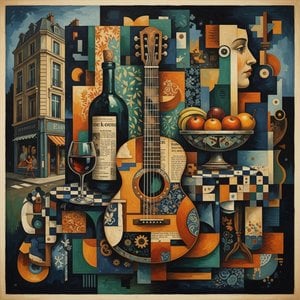
Master the vibrant world of Synthetic Cubism with our expert guide. Explore the revolutionary techniques of Picasso and Braque, from collage to color, and discover how this movement redefined modern art for collectors and connoisseurs alike.

Elevate your artistic practice with our expert guide to mastering mixed media art. Discover professional techniques for layering, material integration, and creating structural depth to transform your creative vision into sophisticated, multi-dimensional masterpieces.

Explore the profound impact of Pop Art on modern aesthetics. From Warhol’s icons to Lichtenstein's bold dots, discover how mass media redefined the masterpiece and continues to inspire sophisticated art collectors and contemporary interior design.

Elevate your digital artistry with our expert guide to mastering collage. Learn professional techniques for layering textures, blending imagery, and creating profound visual narratives through advanced digital composition and modern creative workflows.

 設置イメージを確認
 送る
送る シェア
シェア
 詳細情報
詳細情報 ガイドを表示

 画像をダウンロード
 似ている作品
 X線調査
X線調査 スライドショー
 統計情報
統計情報 続きを読む
続きを読む









 ガラスオプションは、110cm未満のサイズでのみご利用いただけます。


