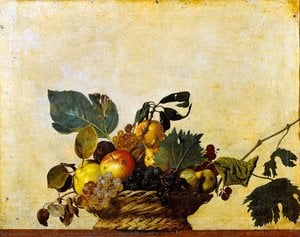
Oil On CanvasWallArtContemporary Realism
 50.0 x 50.0 cm
 Juan Cabré Museum
このページに掲載されている作品は著作権法によって保護されており、当社の許可なく同一の複製物を制作または販売することは法律で禁じられています。この保護は、以下のような国際条約に基づき執行されます。 ベルヌ条約 および、以下の条項に定められたものを含む各国の法律により、 米国著作権法 第17編。
敬意を払った法的な代替手段として、私たちはオリジナルにインスピレーションを与えられた、カスタムの手描きアートワークを提供しています。私たちの熟練したプロのアーティストは、元の作品が持つスタイル、情緒、そして芸術的なエッセンスを注意深く研究し、独自の創作物でありながら、同じ感性を呼び起こすような、新しくユニークな作品を作り上げます。
この手法は、著作権で保護された作品の複製や複写を伴わないため、著作権法に完全に準拠しています。これは単なる模倣ではなく、創造的な再解釈です。元の作品からインスピレーションを受けつつも、それとは異なる、全く新しい絵画を生み出すものです。
当社のアーティストが、お客様のご希望のサイズと額縁に合わせて、キャンバスに手描きで制作する油彩画です。 ( プリント版に切り替え デジタル画像販売へ切り替え)





























作品のオリジナル比率に合わせた、当店の規定サイズからお選びください。

フレームや壁のスペースに合わせて、ご希望の幅と高さを入力してください。本作品は手描きのため、異なる比率のサイズをご希望の場合、絵画の周囲を少し広げて描くか、あるいは端を少しカットして調整することが可能です。お客様のご要望に合わせます。制作を開始する前に、仕上がりを確認するためのデジタルモックアップをお送りいたします。このページに表示されている画像は完成品の実物ではなく、あくまでモックアップによるイメージです。
La Plie
複製画サイズ一覧
David Solís’s "La Plie" invites the viewer into an intimate moment of quiet contemplation. This exquisite still life transcends a mere arrangement of objects; it is a carefully orchestrated visual poem. Upon viewing the canvas, one is immediately drawn to the bounty presented on the plate—the rich, varied forms of two apples nestled centrally, balanced by the graceful curve of a single banana positioned to the right. These fruits, rendered with such palpable realism, seem almost ready to yield their sweetness to the touch.
Yet, the composition’s narrative depth is enhanced by the inclusion of the two spoons. One rests delicately in the upper left quadrant, while its counterpart anchors the bottom left corner. These implements are not incidental; they suggest a recent gathering, an interrupted moment of pleasure, lending the entire scene a sense of lived-in elegance.
David Solís’s artistic journey itself mirrors the sophisticated balance found within this painting. Trained initially in architecture and later immersed in the European art traditions of Marseille, his work is defined by a remarkable synthesis—a dialogue between the structural rigor learned from classical forms and the vibrant, soulful spirit inherent to Latin American culture. In "La Plie," this duality manifests through meticulous observation. The solidity of the fruit against the smooth curve of the plate speaks to an understanding of underlying structure, while the overall warmth and rich tonality imbue it with a distinctly passionate, Panamanian light.
His technique allows for hyper-realistic rendering without ever becoming cold or academic. Instead, the paint seems to breathe, capturing the subtle sheen on the apple skins and the gentle weight of the banana against the porcelain surface.
Still life paintings have always been repositories of deeper meaning, and "La Plie" is no exception. The fruit itself often symbolizes abundance, ripeness, and the fleeting nature of earthly beauty—a beautiful memento mori rendered with vibrant color. The apples, traditionally symbols of knowledge or temptation, paired with the universally appealing sweetness of the banana, create a rich tapestry of sensory suggestion. The spoons hint at shared moments, suggesting that the pleasure captured here is meant to be savored slowly, perhaps in conversation.
For the collector or designer, this piece offers more than just decoration; it offers an atmosphere. It suggests a well-appointed table, a moment paused between laughter and repose.
Owning a reproduction of "La Plie" is to invite a piece of David Solís’s unique vision into your personal space. Whether displayed in a formal dining room or a sunlit drawing-room nook, the painting acts as an anchor of sophisticated calm. It speaks to those who appreciate technical mastery—the flawless depiction of texture and light—while simultaneously connecting with a narrative that celebrates cultural fusion. It is art that feels both timelessly classical and vibrantly contemporary.
David Solís作「La Plie」に描かれているテーマには、still life, fruit arrangement, apples, banana, spoons, tabletop still life, food artなどがあります。これらが合わさることで、本作の主題を構成しています。
原画のDavid Solís作「La Plie」のサイズは50 x 50 cmです。
Contemporary Realismのムーブメントにおいて、「La Plie」はCalmなトーンで描かれています。

David Solís, born in Panama City in 1953, embodies a fascinating artistic synthesis—a life spent bridging the vibrant cultural heritage of Latin America with the established traditions of European art. His journey began with formal studies in architecture at the University of Panama, a foundation that instilled within him a deep appreciation for form, structure, and spatial relationships. However, Solís’s creative spirit soon led him across the Atlantic to Marseille, France, where he immersed himself in the world of fine arts, further refining his skills and broadening his artistic horizons.
This period proved pivotal. While deeply rooted in Panamanian identity, Solís didn't seek simply to replicate it on a foreign canvas. Instead, he embarked on a path of fusion, absorbing the lessons of European masters while simultaneously exploring the unique aesthetic qualities inherent in Latin American culture. His work began to reflect this duality—a delicate balance between the precision and order often associated with European artistic principles and the organic vitality characteristic of his homeland.
Solis's architectural background is undeniably present in his art, even those pieces that appear purely abstract. He approaches each composition with a sense of deliberate construction, carefully considering the interplay of lines, planes, and volumes. This isn’t merely about replicating buildings; it’s about understanding the fundamental principles that govern spatial perception and using them to create evocative visual experiences. His early works often hinted at architectural motifs—fragmented facades, soaring arches, and geometric patterns—but gradually evolved into more abstract explorations of form itself.
The influence of Art Deco is also apparent in his style, particularly in its emphasis on streamlined shapes, bold colors, and a sense of elegant modernity. However, Solís transcends simple imitation, infusing these elements with a distinctly Latin American sensibility—a warmth and vibrancy that sets his work apart. He doesn’t merely borrow from these traditions; he transforms them, creating something entirely new.
Over time, Solís developed a signature style often referred to as “La Plie” (The Fold). This technique involves the manipulation of surfaces—folding, bending, and layering materials—to create dynamic compositions that play with light and shadow. These works are not static objects; they seem to exist in a state of perpetual motion, inviting viewers to contemplate their form from multiple perspectives.
His sculptures, in particular, demonstrate the power of “La Plie.” They often resemble abstract landscapes or architectural fragments, evoking a sense of both familiarity and mystery. The use of color is also crucial—rich, saturated hues that reflect the tropical palette of Panama. Solís’s work isn't about representing reality; it’s about creating an emotional response through form, color, and texture.
David Solís has received critical acclaim for his innovative approach to art, earning him awards such as the second prize at the II Bienal de Arte de la Cervecería Nacional de Panamá in 1994. His work has been exhibited internationally, captivating audiences with its unique blend of European sophistication and Latin American passion.
More than just an artist, Solís is a cultural ambassador—a figure who embodies the power of artistic fusion. He demonstrates that it’s possible to honor one's heritage while simultaneously embracing new ideas and perspectives. His legacy lies not only in his beautiful and thought-provoking artworks but also in his ability to inspire others to explore their own creative potential, bridging cultures and celebrating the richness of human expression.

1953 - , Panama

Explore the profound beauty of fruit arrangement masterpieces. From Dutch Golden Age opulence to Baroque chiaroscuro, discover the art history, symbolism, and timeless elegance of classical still life paintings for the discerning collector.
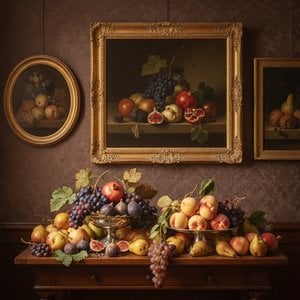
Discover the profound beauty of fruit still life paintings. Explore the rich symbolism, Baroque mastery, and timeless allure of nature's bounty through an art-historical lens, perfect for collectors and enthusiasts of classical fine art.

 設置イメージを確認
 送る
送る シェア
シェア
 詳細情報
詳細情報 ガイドを表示

 画像をダウンロード
 似ている作品
 X線調査
X線調査 スライドショー
 統計情報
統計情報 続きを読む
続きを読む









 ガラスオプションは、110cm未満のサイズでのみご利用いただけます。