

このページに掲載されている作品は著作権法によって保護されており、当社の許可なく同一の複製物を制作または販売することは法律で禁じられています。この保護は、以下のような国際条約に基づき執行されます。 ベルヌ条約 および、以下の条項に定められたものを含む各国の法律により、 米国著作権法 第17編。
この手法は、著作権で保護された作品の複製や複写を伴わないため、著作権法に完全に準拠しています。これは単なる模倣ではなく、創造的な再解釈です。元の作品からインスピレーションを受けつつも、それとは異なる、全く新しい絵画を生み出すものです。
スピーディーな制作と多彩な仕上げオプションが魅力の、ミュージアムクオリティなジークレー・キャンバスプリント。 ( 手描き複製画を注文する デジタル画像販売へ切り替え)





























作品のオリジナル比率に合わせた、当店の規定サイズからお選びください。

額縁や壁のスペースに合わせて、ご希望の幅と高さを入力してください。プリントはカットすることは可能ですが、元の画像より大きくすることはできないため、異なる比率のサイズを選択された場合は、画像の一部が欠けることになります。印刷を開始する前に、内容を確認していただくためのデジタルモックアップをお送りいたします。このページに表示されている画像は、実際のカット後の状態を示すものではありません。実際の仕上がりはモックアップにてご確認ください。
Alaïa Fashion Drawing
複製画サイズ一覧
Claude Parent, a figure both revered and fiercely debated within the architectural landscape of the 20th century, possessed an artistic sensibility that extended far beyond blueprints and building facades. His work, often characterized by its radical disruption of established norms and a profound engagement with the human body in motion, reveals a deep fascination with form, balance, and the inherent dynamism of space. This particular sketch – a study of an Alaïa fashion drawing – offers a compelling glimpse into this unique perspective, revealing Parent’s ability to distill complex ideas into strikingly reductive visual statements.
Created in 2016, shortly before his passing, the piece is not merely a depiction of clothing; it's a carefully constructed exploration of geometric relationships and spatial tension. The stark simplicity of black and white immediately commands attention, forcing the viewer to focus on the essential elements: the powerful diagonal line that bisects the composition, anchoring the garment within a deliberately unbalanced frame, and the meticulously rendered silhouette itself. This isn’t a celebration of detail or texture; rather, it's an exercise in pure form – a distilled essence of shape and movement.
Parent’s philosophy, encapsulated by his concept of the “Oblique Function,” sought to move away from the rigid geometries of Modernism towards a more fluid and responsive architecture. He envisioned spaces that embraced asymmetry, instability, and a sense of perpetual motion – qualities vividly reflected in this sketch. The diagonal line isn't simply a compositional device; it represents Parent’s core architectural principle: the deliberate disruption of static forms to create dynamic tension. It suggests an underlying force, a shifting weight, mirroring the way his buildings interacted with their surroundings.
The choice of Alaïa as the subject is significant. The couturier's designs, known for their sharp tailoring and architectural precision, provided Parent with a perfect vehicle to explore his ideas about form and movement. Alaïa’s garments, like those depicted here, are not static objects; they possess an inherent dynamism, suggesting a sense of action and potential energy. This connection between fashion and architecture highlights Parent's belief that both disciplines share a fundamental concern for the human experience – how we move through space, how we perceive form, and how we interact with our environment.
The execution of this sketch is remarkably precise. Parent employed a dry medium—likely charcoal or graphite—to create strong, defined lines that delineate the garment’s shape with remarkable clarity. The subtle gradations of tone within the fabric suggest a sophisticated understanding of shading and volume, hinting at the texture and materiality of the material without resorting to detailed rendering. The stark contrast between black and white further emphasizes these linear elements, creating a graphic intensity that is both arresting and elegant.
Notably, the piece feels almost deliberately unfinished – the silver line, intended to accentuate the oblique dynamic, is incomplete in places. This imperfection adds a layer of intimacy and immediacy, suggesting that this was not a final product but rather a work in progress, capturing Parent’s thought process as he wrestled with his ideas. The simplicity of the materials—paper and dry medium—underscores the focus on concept over technique, reflecting Parent's commitment to radical innovation.
Beyond its technical merits, this sketch carries a powerful symbolic weight. The starkness of the composition evokes a sense of modernity and sophistication – a deliberate rejection of sentimentality or ornamentation. The diagonal line, acting as both a compositional device and a symbol of disruption, suggests a challenge to established norms and a celebration of dynamism. It’s a visual articulation of Parent's belief that architecture should be provocative, challenging, and ultimately transformative.
Ultimately, Claude Parent’s Alaïa fashion drawing is more than just a study in form; it’s a testament to his radical vision – a bold assertion of the power of geometry, movement, and disruption. It invites us to reconsider our assumptions about architecture and design, and to embrace the beauty of asymmetry and instability.
クロード・パレント作「Alaïa Fashion Drawing」の制作年は2016年です。
「Alaïa Fashion Drawing」の全体的な明るさはbrilliantで、輝度はLuminousです。
Elegantな雰囲気を持つ「Alaïa Fashion Drawing」は、Living Roomに飾るのがおすすめです。


1923 - 2016 , フランス

Elevate your artistic practice with this expert guide to mastering the line. Discover advanced techniques in graphite, charcoal, and contour drawing designed for art students seeking technical precision and expressive depth in their fine art studies.
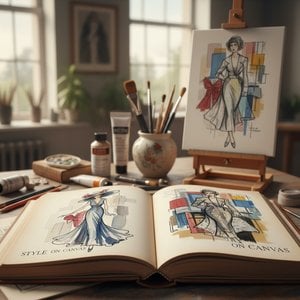
Discover the exquisite world of fashion illustration art. From Art Deco elegance to bespoke oil reproductions, explore how timeless sartorial beauty transforms luxury interiors through masterfully crafted canvas works and curated historical masterpieces.

Embark on a visual journey through the evolution of fashion photography. Discover how masters like Gianfranco Ferré blended geometry, surrealism, and texture to redefine high-fashion art for collectors and connoisseurs of luxury imagery.

Embark on a sophisticated journey through the history of line drawing. From classical mastery to modern minimalism, explore how the power of the line shapes emotion and space in fine art. Discover expert insights for collectors and enthusiasts of graphic elegance.
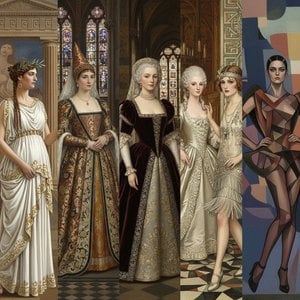
Explore the breathtaking intersection of fine art and high fashion. Discover how iconic masterpieces from Art Deco to Impressionism have shaped the world of luxury couture and timeless design in this curated visual journey.
 設置イメージを表示
 シェアする
シェアする シェアする
シェアする
 詳細を見る
詳細を見る ガイドを表示

 ダウンロード
 似ている作品
 X線調査
X線調査 スライドショーを表示
 Q&A
Q&A
 統計情報
統計情報


 詳細を表示
詳細を表示









 ガラスオプションは、110cm未満のサイズでのみご利用いただけます。


