
当社のアーティストが、お客様のご希望のサイズと額縁に合わせて、キャンバスに手描きで制作する油彩画です。 ( プリント版に切り替え デジタル画像販売へ切り替え)





























作品のオリジナル比率に合わせた、当店の規定サイズからお選びください。

特定のフレームやスペースに合わせて、ご希望のサイズをご入力いただけます。選択されたサイズが元の画像の比率と異なる場合、アートワークをトリミングするか、手描きで要素を追加して絵画を拡張いたします。デジタルモックアップ を制作し、制作開始前にご確認(承認)をいただきます。
画面上のプレビューは、実際のトリミングや拡張を正確に反映しているものではありません。最終的な構図は、モックアップによってのみ正確にご確認いただけます。
カスタムサイズもご利用いただけますが、元の比率を維持するためには、あらかじめ用意されたリストからサイズを選択することをお勧めいたします。

Alaïa Fashion Drawing
複製画のサイズ
Claude Parent’s 2016 “Alaïa Fashion Drawing” isn't merely a depiction of a dress; it’s a distilled essence of modernism, a geometric meditation on form and movement. The drawing immediately commands attention with its stark simplicity – a grayscale world dominated by the assertive presence of Alaïa’s design. It feels both intensely contemporary and deeply rooted in Parent’s pioneering architectural philosophy, particularly his concept of the “Oblique Function,” which sought to liberate architecture from rigid right angles and embrace dynamic, flowing spaces. The image isn't about replicating a photograph; it’s an interpretation, a reduction to its most essential elements – line, shape, and contrast – mirroring Parent’s approach to designing buildings that responded intuitively to the human body in motion.
Understanding this drawing requires acknowledging Claude Parent's broader artistic vision. He wasn’t simply an architect; he was a theorist who questioned conventional design principles, advocating for architecture that anticipated and accommodated human movement. This philosophy is powerfully reflected in the “Alaïa Fashion Drawing.” The dress isn’t just clothing; it’s a study in dynamic form – a visual representation of how a garment can interact with the body in motion. The diagonal line, a recurring motif in Parent's architectural work, symbolizes this fluidity and suggests a continuous, flowing movement.
His background as an apprentice under Ionel Schein, coupled with his early involvement in the Espace group – a collective of artists exploring radical new ideas about space and form – profoundly shaped his approach to design. Parent’s work consistently challenged established norms, pushing boundaries and seeking innovative solutions that prioritized human experience. The drawing embodies this spirit of experimentation and intellectual rigor.
The deliberate use of the diagonal line carries a potent symbolic weight. It can be interpreted as representing disruption, fragmentation, or even a sense of instability – mirroring Parent’s critique of rigid architectural forms. However, it also suggests dynamism and forward momentum, reflecting his belief that architecture should respond to human movement. The simplified representation of the figure itself contributes to this emotional resonance; by stripping away extraneous details, Parent focuses on the essential form, inviting viewers to contemplate the underlying structure and principles at play.
The drawing’s overall effect is one of quiet intensity – a powerful statement about design, movement, and the relationship between form and function. It's not an invitation to romanticize fashion; rather, it’s a rigorous exploration of geometric principles and their application to visual representation.
Created in 2016, this drawing represents a late-career work for Claude Parent, building upon his decades of architectural innovation. It's significant not just as a standalone piece but as a testament to his enduring influence on modern design. Parent’s legacy extends far beyond architecture; his ideas have resonated with artists and designers across various disciplines. The “Alaïa Fashion Drawing” serves as a compelling example of how his principles – emphasizing dynamism, geometric precision, and a critical engagement with established norms – can be applied to seemingly disparate fields.
Further research into Parent’s work reveals a consistent thread of intellectual curiosity and a relentless pursuit of innovative design solutions. The drawing stands as a powerful reminder of his unique vision and its lasting impact on the world of art and architecture.


1923 - 2016 , フランス
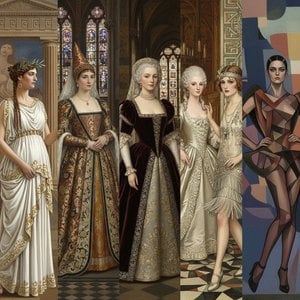
Explore the breathtaking intersection of fine art and high fashion. Discover how iconic masterpieces from Art Deco to Impressionism have shaped the world of luxury couture and timeless design in this curated visual journey.

Elevate your artistic practice with this expert guide to mastering the line. Discover advanced techniques in graphite, charcoal, and contour drawing designed for art students seeking technical precision and expressive depth in their fine art studies.

Embark on a visual journey through the evolution of fashion photography. Discover how masters like Gianfranco Ferré blended geometry, surrealism, and texture to redefine high-fashion art for collectors and connoisseurs of luxury imagery.

Explore the profound elegance of minimalist art. Discover how the precision of a single line transforms simple geometry into timeless masterpieces for the discerning collector seeking sophistication and depth in fine art acquisitions.


 プレビュー
プレビュー
 シェアする
シェアする シェアする
シェアする
 詳細を見る
詳細を見る

 ダウンロード
 似ている作品
 X線調査
X線調査 スライドショー
 統計情報
統計情報


 詳細を見る
詳細を見る









 ガラスオプションは、110cm未満のサイズでのみご利用いただけます。


