
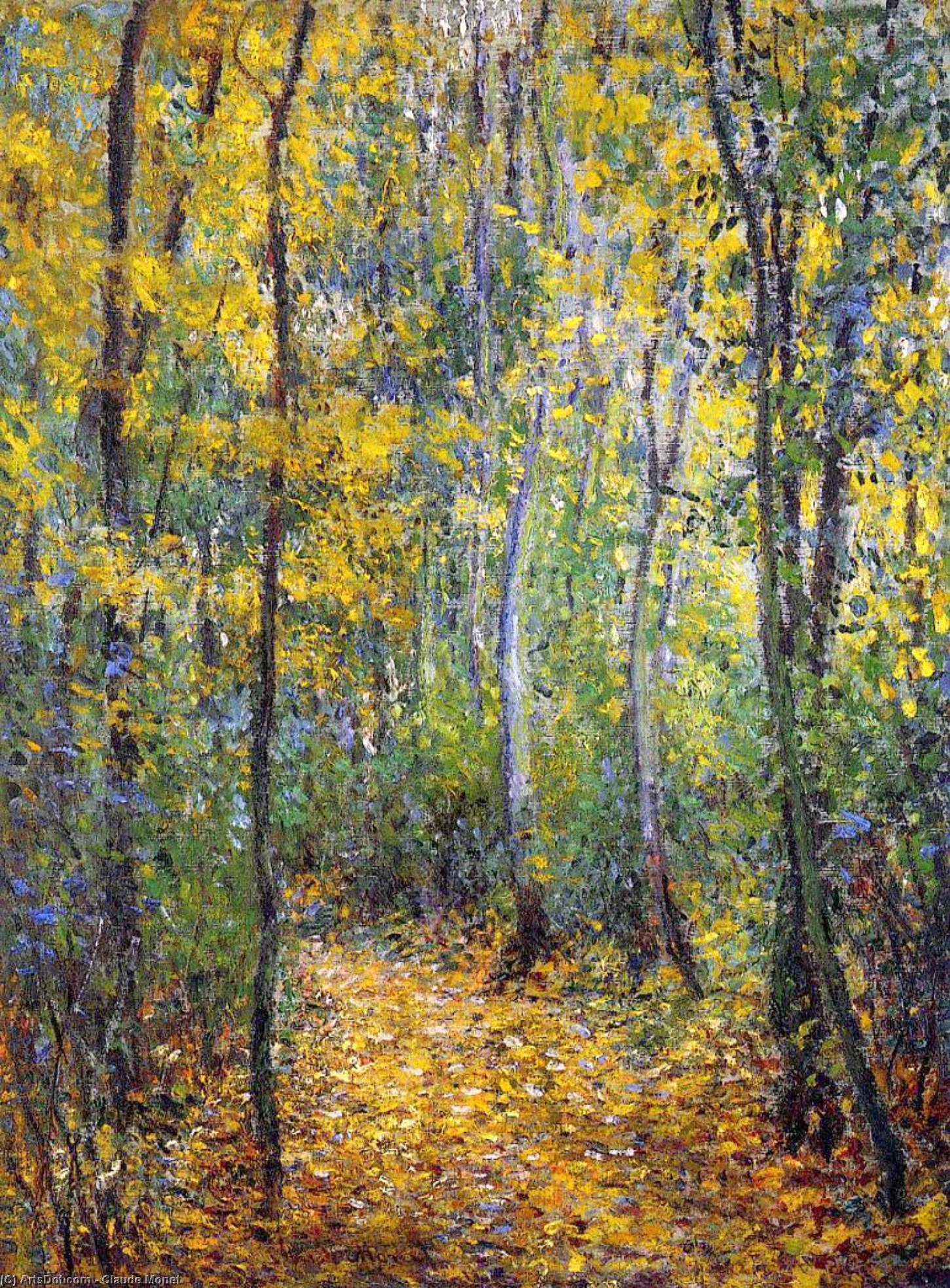
Wood Lane by Claude Monet: A Glimpse of Autumnal Serenity
Claude Monet's "Wood Lane," painted in 1876, is a captivating oil on canvas that exemplifies the Impressionist movement’s focus on capturing fleeting moments and the effects of light. Housed within the esteemed Philadelphia Museum of Art, this artwork transports viewers to a tranquil forest path bathed in the warm hues of autumn. Monet's masterful brushwork and keen observation of nature create an immersive experience, inviting contemplation and appreciation for the beauty of the natural world.
Composition and Technique: Capturing Light and Atmosphere
The painting depicts a dirt road winding through a dense forest, flanked by trees adorned with vibrant yellow leaves. Monet skillfully employs a limited color palette dominated by earthy tones – browns, yellows, and oranges – to evoke the essence of fall. The composition is carefully balanced, guiding the viewer's eye along the path into the depths of the woods. Noticeable brushstrokes are characteristic of Impressionism, adding texture and dynamism to the scene. Rather than meticulously detailing each leaf or branch, Monet prioritizes capturing the overall atmosphere and the interplay of light filtering through the foliage. This technique creates a sense of movement and vibrancy, as if the viewer is standing within the forest itself.
Historical Context: Impressionism and the Pursuit of Naturalism
"Wood Lane" was created during a pivotal period in art history when Monet and his fellow Impressionists were challenging traditional academic painting styles. Rejecting the formal constraints of the Salon, they sought to depict their immediate sensory experiences – particularly the effects of light and color on outdoor scenes. The late 1870s marked a time of experimentation for Monet, as he refined his techniques and explored new subjects. "Wood Lane" reflects this period's emphasis on naturalism and the artist’s desire to capture the ephemeral qualities of nature before they vanished.
Symbolism and Emotional Impact: A Moment of Peace
While seemingly a straightforward depiction of a forest path, “Wood Lane” carries subtle symbolic weight. The autumnal setting evokes themes of transition, reflection, and the cyclical nature of life. The winding path can be interpreted as a metaphor for journeys and personal growth. More than anything, however, the painting conveys a profound sense of peace and tranquility. Monet’s ability to capture the quiet beauty of the natural world invites viewers to pause, breathe deeply, and appreciate the simple pleasures of existence. The warm color palette and soft lighting create an emotionally resonant experience, offering solace and inspiration.
Q&A
「ウッド・ロー」のファインアートプリントは販売されていますか?
「ウッド・ロー」はコットンキャンバス、またはアーカイブ品質のキャンバスペーパーに施されたファインアートプリントとしてご購入いただけます。ご注文はファインアートプリントページにて、お好みのサイズでお選びいただけます。
クロード・モネ作「ウッド・ロー」は、作家の母国に保管されていますか?
いいえ、作品は国外に保管されています。クロード・モネはフランスで生まれ、その真作である「ウッド・ロー」はアメリカ合衆国の美術館に収蔵されています。
クロード・モネ作「ウッド・ロー」は、Impressionismにおいてどのような情緒を表現していますか?
「ウッド・ロー」のImpressionism様式には、静謐な感情が添えられています。



































