
 OilWallArtBaroque
 1646Early Modern
 103.0 x 134.0 cm
 メトロポリタン美術館
迅速な制作と多彩な仕上げオプションを備えた、ミュージアムクオリティのジークレーまたはキャンバスプリント。 ( 手描きの絵画を購入 デジタル画像販売へ切り替え)





























作品のオリジナル比率に合わせた、当店の規定サイズからお選びください。

特定のフレームやスペースに合わせて、ご自身でサイズを指定することも可能です。選択されたサイズが元の画像の比率と一致しない場合、作品をトリミングするか、鏡面反射または単色での塗りつぶしによって画像を拡張いたします。制作を開始する前に、ご確認用のデジタルモックアップをお送りいたします。
画面上のプレビューには、実際のトリミングや拡張は反映されませんのでご注意ください。最終的な構図を正確に確認できるのは、モックアップのみとなります。
カスタムサイズも承っておりますが、元の比率を維持するためには、あらかじめ用意されたリストからサイズを選択することをお勧めいたします。

Sunrise
複製画のサイズ
In the quiet moments before the world fully awakens, there exists a transient, ethereal light that transforms the landscape into something divine. It is this precise, fleeting magic that Claude Lorrain captured in his 1646 masterpiece, Sunrise. As one of the most revered landscape painters of the Baroque era, Lorrain possessed an unparalleled ability to translate the physical world into a poetic vision of antiquity. This painting is not merely a depiction of a riverbank; it is a symphony of light, where the rising sun acts as both the protagonist and the conductor, orchestrating a scene of profound tranquility and classical grace.
The composition invites the viewer to step into an idealized version of Arcadia, a pastoral paradise that has captivated the human imagination since the time of Virgil. As the eye wanders across the canvas, it encounters a meticulously crafted world where humanity and nature exist in perfect, rhythmic harmony. A man stands poised on the riverbank with his horse, perhaps lost in contemplation of the water's surface, while figures move softly through the landscape, accompanied by the loyal presence of a dog. A solitary boat drifts near the center, adding to the sense of slow, deliberate movement. Through this arrangement, Lorrain creates a narrative of peace, suggesting a moment where time itself has paused to honor the arrival of the day.
What truly distinguishes Sunrise is Lorrain’s revolutionary command over atmospheric perspective. Utilizing the delicate technique of sfumato—the soft, smoky blending of edges—he eliminates harsh outlines to allow the landscape to breathe. This creates a sense of immense depth, where distant trees and riverbanks appear to dissolve into a golden haze. The artist masterfully employs chiaroscuro, using the dramatic contrast between the burgeoning light of the sun and the lingering shadows of the night to sculpt the forms of the trees and figures, imbuing the scene with a palpable, three-dimensional intensity.
The color palette is a testament to Lorrain's emotional intelligence as a painter. The canvas is saturated with warm yellows, radiant oranges, and deep reds that radiate from the sun’s core, bleeding into the cooler blues and lush greens of the foliage and water. This chromatic balance does more than just mimic nature; it evokes a feeling of warmth and renewal. For the collector or interior designer, this painting offers a transformative energy. It possesses the rare ability to anchor a room with its classical weight while simultaneously brightening an environment with its luminous, optimistic glow.
Beyond its visual splendor, Sunrise carries profound symbolic resonance. The references to classical mythology, such as the presence of Apollo, suggest themes of transformation, rebirth, and the eternal cycle of nature. To possess a reproduction of this work is to bring a piece of the Baroque soul into a modern space. It serves as a window into a lost era of elegance, offering a sophisticated focal point that inspires contemplation and calm.
Whether placed in a grand library, a sun-drenched living area, or a refined studio, this painting acts as an enduring testament to the beauty of the natural world. It is an investment in atmosphere, providing a sense of historical depth and artistic prestige that transcends fleeting trends. For those seeking to surround themselves with art that speaks of peace, light, and the eternal beauty of the classical past, Lorrain’s Sunrise remains an incomparable choice.

紀元1600年頃、現在のフランスに位置するロレーヌ公国の小さな村、シャマニュで生まれたクロード・ロラン――本名はクロード・ジェレ――は、バロック期を代表する最も称賛される風景画家の一人であり続けています。彼の初期の生活はいくつかの謎に包まれており、修行に関する伝記には矛盾が見られます。ヨアヒム・フォン・ザンドラルトによる記録によれば、彼は菓子職人の徒弟としてささやかな日々を送り、その後ローマで芸術家たちと仕事を得たという説があります。一方、フィリッポ・バルディヌッチの記述は、彼がナポリでゴフレド・ワルスから学び、後にアゴスティーノ・タッシのもとローマで学んだ初期の訓練について詳述しています。
1630年代までには、クロード・ロランはイタリアにおける第一人者としての地位を確固たるものにしていました。彼の絵画は、その大気的な質によってすぐに注目を集め、高値で取引されるようになりました。彼は、イタリア風の風景と古典的、そして聖書のテーマを見事に融合させ、視覚的に息をのむほど美しく、知的好奇心を刺激する光景を創り出しました。
クロードの初期の影響には、北ヨーロッパの風景の伝統、特にフランドル派の画家たちのものが含まれていました。彼はまた、ティツィアーノやラファエロといったイタリア・ルネサンスの巨匠たちの作品も研究しました。時が経つにつれ、彼の様式は、より暗く劇的な構図から、黄金色の輝きを特徴とする、より明るく空気感のある光景へと進化していきました。
クロード・ロランが風景画にもたらした影響は計り知れません。彼はこのジャンルを、それまで歴史的または宗教的な主題にのみ許されていた威信の高い領域へと引き上げました。彼の作品は、光と大気の儚い効果を捉えようとしたJ.M.W.ターナーや印象派の画家たちを含む何世代もの芸術家に影響を与えました。今日、彼の絵画は非常に高く評価されており、特にロンドンのナショナル・ギャラリーや南オーストラリア州美術館など、世界中の主要な美術館で見ることができます。
クロード・ロランは1682年11月23日にローマで亡くなりました。サン・ルイージ・デイ・フランチェージ教会にある彼の墓石には、「Claude / peintre de / rome / mort / le 23 novembre 1682」というシンプルな銘文が刻まれています。彼は、西洋美術史において最も重要で影響力のある風景画家の一人としての遺産を残しました。

1600 - 1682

Explore the profound elegance of Baroque Classicism. Discover how masters fused dramatic chiaroscuro with structured order to redefine art history through light, shadow, and emotional grandeur.
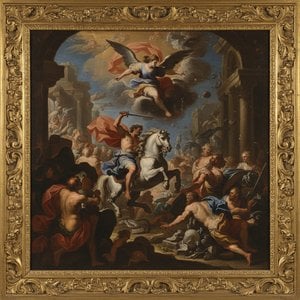
Explore the breathtaking power of Baroque art. Delve into the dramatic interplay of light, shadow, and motion through the works of masters like Caravaggio. Discover how the era's intense emotional realism continues to inspire collectors and connoisseurs of classical grandeur.

Explore the breathtaking drama of the Baroque era. From the mastery of chiaroscuro to epic mythological narratives, discover a definitive guide to art's most powerful period of light, shadow, and emotion for the true classical art enthusiast.


 プレビュー
プレビュー
 シェアする
シェアする シェアする
シェアする
 詳細を見る
詳細を見る ガイド
ガイド

 ダウンロード
 似ている作品
 X線調査
X線調査 スライドショー
 統計情報
統計情報 詳細を見る
詳細を見る









 ガラスオプションは、110cm未満のサイズでのみご利用いただけます。


