プレビュープレビュー ARで試着ARで試着 プリントを購入 プリントを購入画像を購入 画像を購入 シェアするシェアする
詳細を見る詳細を見る お気に入りに追加 お気に入りに追加 ダウンロードダウンロード 似ている作品似ている作品 X線調査X線調査 スライドショースライドショー

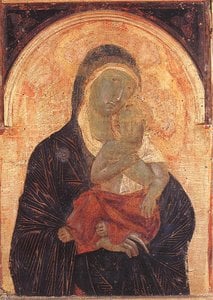
Virgin and Child

Experience the serene beauty of Cimabue's 'Virgin and Child,' a stunning Byzantine-style painting featuring gold and red hues depicting the tender moment between Mary and Jesus. A timeless masterpiece perfect for your home.

イタリア絵画の先駆者シマブエは、ビザンツ様式とルネサンス様式の融合を特徴とし、特に聖母マテアとアレッスの洗礼堂のモザイクで知られる芸術家です。彼の作品は美術史における重要な転換点を示し、後の画家たちに大きな影響を与えました。

手描き油彩複製画

当社のアーティストが、お客様のご希望のサイズと額縁に合わせて、キャンバスに手描きで制作する油彩画です。 (プリントを購入 プリントを購入画像を購入 画像を購入)

P118B $10
P118H $10
P118W $10
P438Z $10
P508JH $12
P508YH $12
P805H $10
P805Z $10
P919BZ $10
P919G $10
P919XJ $10
P959ZH $10
P968JZ $12
W106C $8
W218G $10
W218JH $8
W218Y $10
W307PJ $10
W316G $10
W316PJ $8
W316Y $10
W398PJ $8
W4111J $10
W500HY $15
W500JH $15
W692G $12
W849H $8
W940BG $15
W953PJ $8

標準サイズ
オーダーメイド
CM
INCH

作品のオリジナル比率に合わせた、当店の規定サイズからお選びください。

高さ

特定のフレームやスペースに合わせて、ご希望のサイズをご入力いただけます。選択されたサイズが元の画像の比率と異なる場合、アートワークをトリミングするか、手描きで要素を追加して絵画を拡張いたします。デジタルモックアップ を制作し、制作開始前にご確認(承認)をいただきます。
画面上のプレビューは、実際のトリミングや拡張を正確に反映しているものではありません。最終的な構図は、モックアップによってのみ正確にご確認いただけます。
カスタムサイズもご利用いただけますが、元の比率を維持するためには、あらかじめ用意されたリストからサイズを選択することをお勧めいたします。

カスタマイズの例:顔をお客様の写真に置き換える、ペットを追加する(例:猫を犬に変更)、背景に隠れたメッセージを入れる、背景の風景や要素を変更するなど。
ご注文後、WahooArt.com チームより詳細な指示をお送りするとともに、仕上がりイメージ(モックアップ)をご提供いたします。

世界中への配送()は、通常の5週間ではなく、3〜4週間でお届けいたします。(7 9月)。品質には一切妥協いたしません。

why_choose_icon
世界中へ無料エクスプレス配送
why_choose_icon
高品質なリネンキャンバス
why_choose_icon
配送時完全保険付
why_choose_icon
関税・輸入税の払い戻し保証
why_choose_icon
忠実な色彩再現保証
why_choose_icon
100日間返品保証(製造上の欠陥がある場合のみ)
why_choose_icon
100% 全額返金保証
why_choose_icon
まとめ買い割引のご案内

合計金額

$ 272

reproduction

Virgin and Child

複製技法

複製画のサイズ

-

合計金額

$ 272

作品詳細

  • Notable elements: Intricate patterns
  • Subject or theme: Virgin Mary, Child
  • Medium: Paint
  • Artist: Cimabue
  • Movement: Byzantine
  • Title: Virgin and Child

A Timeless Embrace: Cimabue's Virgin and Child

Cimabue’s “Virgin and Child,” dating from approximately 1280, is more than just a depiction of the Madonna and Child; it’s a profound statement of artistic transition. This painting, executed in the rich, jewel-toned palette characteristic of Byzantine art, embodies the last vestiges of that tradition while simultaneously hinting at the revolutionary changes to come within Italian painting. The scene itself – Mary cradling her infant son – is instantly recognizable as one of the most enduring narratives in Western art, yet Cimabue’s approach elevates it with a meticulous attention to detail and a deeply spiritual intensity.

  • Byzantine Roots: Cimabue was profoundly influenced by the artistic conventions of Constantinople, the heart of the Byzantine Empire. This influence is immediately apparent in the painting's formal structure – the pyramidal composition, the stylized figures, and the use of gold leaf to create a luminous, otherworldly effect. The intricate patterns and designs, hallmarks of Byzantine decoration, are skillfully rendered here, creating a sense of opulent grandeur.
  • A Florentine Innovation: While firmly rooted in Byzantine tradition, Cimabue’s work represents a crucial step towards the Renaissance. He began to subtly introduce elements of naturalism – particularly in the depiction of Mary's face and hands – moving away from the idealized, flattened forms favored by earlier Byzantine artists.

Technique and Materials: A Masterclass in Gold

Cimabue’s mastery is evident in every brushstroke. The painting was primarily executed in tempera on panel, a technique that allowed for precise detail and vibrant colors. However, it's the liberal use of gold leaf – shimmering across the Virgin’s robes and halo – that truly captivates the viewer. This wasn’t merely decorative; gold represented divine light and glory, central to Byzantine iconography. The application of gold was painstaking, requiring multiple layers and meticulous polishing to achieve its radiant effect. Cimabue's skill in layering pigments and creating depth through subtle gradations of color is remarkable, particularly considering the limitations of the medium.

Symbolism and Narrative

The painting’s symbolism is layered and rich with meaning. The Virgin Mary represents purity, humility, and divine grace. Her pose – gently cradling her child – evokes a sense of tenderness and maternal love. The presence of two additional figures, positioned on either side of the central scene, remains somewhat enigmatic. They may represent members of the family, or perhaps symbolize other aspects of faith—angels or saints—adding to the painting’s spiritual complexity. The nursing infant is a potent symbol of Christ's sacrifice and humanity’s salvation.

Emotional Impact and Legacy

"Virgin and Child" possesses an enduring emotional power that transcends its historical context. The intimate portrayal of mother and child evokes feelings of warmth, compassion, and reverence. Cimabue’s work serves as a poignant reminder of the timeless themes explored in Christian art – love, faith, and redemption. A hand-painted reproduction offers a unique opportunity to experience this masterpiece firsthand, bringing its beauty and spiritual depth into your home or studio.


アーティストの略歴

Cimabue: Grandfather of the Italian Renaissance

Giovanni Cimabue, born Cenni di Pepo around 1240 in Florence, stands as a monumental figure—a bridge between the established artistic traditions of the Byzantine world and the burgeoning innovations that would define the Italian Renaissance. His life, though partially obscured by time and romanticized accounts – most notably those penned by Giorgio Vasari centuries later – marks an undeniable turning point in Western art history. Cimabue wasn’t simply a painter; he was a courageous innovator who dared to subtly challenge artistic conventions, laying the groundwork for the revolutionary changes that would soon sweep across Italy. Even his nickname, believed to mean “bull-headed,” hints at a strong will and perhaps a rebellious spirit—qualities demonstrably present in his willingness to experiment with form and expression. He represents a crucial moment where art began to shift from being solely devotional imagery towards something more humanistic and emotionally resonant.

Early Influences and Artistic Development

Initially immersed in the Italo-Byzantine style prevalent throughout Florence, Cimabue’s early work adhered closely to established aesthetic principles: flattened figures adorned with shimmering gold leaf, symbolic rather than realistic depictions of space, and a profound focus on religious iconography. However, even within these constraints, a nascent desire for naturalism began to emerge. He wasn't content merely replicating existing forms; he sought to imbue his paintings with a greater sense of life and emotional depth. While the precise nature of his early training remains debated, it’s likely he honed his skills within Florentine workshops, absorbing the techniques and influences of the time while simultaneously developing his own unique artistic voice. The Byzantine style, characterized by its formality and spiritual focus, provided him with a solid foundation, but Cimabue began to subtly introduce elements that would foreshadow the coming Renaissance—a greater attention to volume, more expressive facial features, and a nascent understanding of spatial relationships. This wasn’t a sudden break from tradition, but rather a gradual evolution, a delicate balancing act between honoring the past and embracing new possibilities.

Masterpieces and Artistic Innovations

Cimabue's legacy is cemented through a series of breathtaking works that showcase his evolving style. The *Maestà* (Louvre), originally created for the Church of San Francesco in Pisa, stands as one of his most celebrated masterpieces. This monumental altarpiece exemplifies his mastery of composition and use of color, while simultaneously hinting at the shift away from rigid Byzantine conventions. The figures, though still possessing a degree of formality, exhibit a newfound sense of volume and presence. The *Crucifixion* (San Domenico, Arezzo), dating around 1270, is particularly significant as an early demonstration of his departure from strict Byzantine norms. Here, the proportions are more realistic, and the emotional weight of the scene is palpable—a stark contrast to the often-distant depictions found in earlier religious art. Further evidence of Cimabue’s innovative spirit can be seen in works like the *Flagellation of Christ* (Frick Collection), generally attributed to his workshop. This complex composition reveals an evolving understanding of perspective and spatial relationships, showcasing a growing interest in creating more immersive and believable scenes. His contributions weren't limited to panel paintings; Cimabue also excelled as a mosaicist, contributing significantly to the decoration of the Baptistery of Florence—though these mosaics have unfortunately suffered from deterioration over time.

A Pivotal Teacher: Giotto and Beyond

Perhaps Cimabue’s most enduring legacy lies in his role as the teacher of Giotto di Bondone. While historical accounts vary regarding the exact nature of their relationship, it is widely accepted that Giotto received crucial training under Cimabue's guidance. However, Giotto would ultimately surpass his master, revolutionizing Italian painting with an even more radical embrace of naturalism and emotional realism. It’s a testament to Cimabue’s skill as a teacher that he fostered such talent, even knowing it might eclipse his own achievements. The story, often recounted by Vasari, of Giotto playfully painting a fly on Cimabue's face speaks volumes about the dynamic between master and pupil—a playful rivalry that ultimately pushed both artists to greater heights. Cimabue’s influence extended beyond Giotto, impacting numerous other artists of the period. He challenged the artistic norms of his time, demonstrating that art could be more than just religious symbolism; it could also reflect human emotion and experience. His willingness to experiment with form, proportion, and expression paved the way for the innovations of the Renaissance, establishing him as a crucial transitional figure in the history of Western art.

Enduring Significance

Cimabue passed away in 1302 in Pisa, leaving behind a body of work that continues to captivate and inspire. Despite his significant contributions, details surrounding his later life remain scarce. However, Cimabue’s artistic legacy resonates powerfully through the works of his students and the evolution of Italian art. He represents a crucial step in the development of Western painting, moving away from the stylized conventions of the Byzantine era towards a more humanistic and naturalistic approach. His paintings are not merely historical artifacts; they are windows into a pivotal moment in artistic history—a time when artists began to question established norms and explore new possibilities. He was a pioneer, a visionary who dared to challenge the status quo and lay the foundations for the artistic brilliance that would define the Renaissance. Cimabue’s work reminds us that even within tradition, there is always room for innovation, and that true artistry lies in the courage to push boundaries and explore new horizons.
シマブエ

シマブエ

1240 - 1302 , イタリア

基本情報

  • Artistic Movement Or Style: ビザンチン様式とルネサンス様式
  • Artists Or Movements Influenced By This Artist: ['ジョットト・ディ・ボンドネ']
  • Artists Who Influenced This Artist: ['ギウント・ピサノ」「コッポ・ディ・マルコバルド']
  • Date Of Death: 1302年
  • Full Name: Giovanni Cimabue
  • Nationality: イタリア人
  • Notable Artworks: ['マエストラ」「十字架」「イエス・キリストの鞭打ち']
  • Place Of Birth: フィレンツェ、イタリア
テーマ、スタイル、特徴別に分類された作品を探索しましょう。