このページに掲載されている作品は著作権法によって保護されており、当社の許可なく同一の複製物を制作または販売することは法律で禁じられています。この保護は、以下のような国際条約に基づき執行されます。 ベルヌ条約 および、以下の条項に定められたものを含む各国の法律により、 米国著作権法 第17編。
この手法は、著作権で保護された作品の複製や複写を伴わないため、著作権法に完全に準拠しています。これは単なる模倣ではなく、創造的な再解釈です。元の作品からインスピレーションを受けつつも、それとは異なる、全く新しい絵画を生み出すものです。
スピーディーな制作と多彩な仕上げオプションが魅力の、ミュージアムクオリティなジークレー・キャンバスプリント。 ( 手描きの複製画を注文する デジタル画像販売へ切り替え)





























作品のオリジナル比率に合わせた、当店の規定サイズからお選びください。

額縁や壁のスペースに合わせて、ご希望の幅と高さを入力してください。プリントはカットすることは可能ですが、元の画像より大きくすることはできないため、異なる比率のサイズを選択された場合は、画像の一部が欠けることになります。印刷を開始する前に、内容を確認していただくためのデジタルモックアップをお送りいたします。このページに表示されている画像は、実際のカット後の状態を示すものではありません。実際の仕上がりはモックアップにてご確認ください。
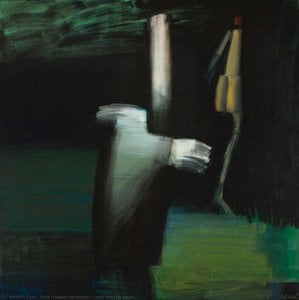
Reach
複製画サイズ一覧
スライドショーをご覧いただけます:Christopher Robert Browning作「Reach」のスライドショーページ。
Christopher Robert Browning作「Reach」はDramaticな雰囲気を纏っており、Hotel Lobbyに飾るのがおすすめです。作品が周囲の空間にもたらすムード(情緒)をお楽しみください。
「Reach」は、その作者の出生地を通じて、Expressionism運動とUnited States of Americaを結びつけています。
Christopher Robert Browning stands as a profound voice within the neo-expressionist movement, an artist whose canvases serve as conduits for the raw, unbridered currents of human emotion. Born in 1951 amidst the disciplined atmosphere of Camp Lejeune, North Carolina, Browning’s early life was shaped by a unique duality: the structured environment of military life and a deeply nurturing domestic sphere. As the son of a physician, his upbringing was grounded in stability, yet it was his mother who acted as the primary architect of his creative spirit, fostering an early and unyielding passion for visual expression. This foundational support allowed him to transition from the quiet observations of childhood into a rigorous academic pursuit of the arts, eventually leading him to the University of Illinois at Urbana-Champaign and later to the prestigious UC Davis, where he earned his MFA in 1976.
It was during these formative years in the mid-1970s that Browning began to absorb the turbulent energies of Abstract Expressionism, a movement that would forever inform his approach to the physical act of painting. His work does not merely represent reality; it seeks to excavate it. By embracing the tenets of neo-expressionism, Browning moved away from the detached intellectualism of conceptual art, choosing instead to embrace the tactile and the primal. He found inspiration in the heavy, textured legacies of masters such as Anselm Kiefer and Georg Baselitz, adopting their use of thick impasto and dramatic, gestural brushstrokes to create surfaces that feel alive with movement and struggle.
The power of Browning’s oeuvre lies in its ability to balance abstraction with a hauntingly recognizable symbolism. His paintings often transport the viewer to fantastical, dreamlike landscapes where the boundaries between the physical world and the psychological realm dissolve. Within these nebulous spaces, he populates his compositions with enigmatic figures and archetypal motifs that resonate with deep-seated mythological themes. The presence of serpents, for instance, serves as a recurring motif, weaving through his work to suggest themes of transformation, danger, and the cyclical nature of life.
In masterpieces such as Reach, painted in 1994, one can witness the artist’s mastery over light and ambiguity. In this work, Browning utilizes a limited but potent color palette—often dominated by deep blues and stark blacks—to create an atmosphere of intense drama. The figures within the piece are deliberately blurred, stripped of precise identity to become vessels for universal human experiences like connection and fleeting movement. Through the use of heavy texture and dramatic backlighting, he achieves a sense of immediacy, pulling the spectator into a moment that feels both suspended in time and bursting with kinetic energy.
Browning’s contribution to contemporary art is defined by his refusal to look away from the complexities of the human condition. His ability to synthesize the heavy textures of expressionism with the fluid, atmospheric qualities of impressionism has carved out a unique niche in the history of American painting. His work has been recognized by some of the world's most esteemed institutions, including:
Beyond the technical brilliance of his brushwork, Browning’s historical significance resides in his role as a bridge between the mid-century abstract traditions and the more figurative, emotionally charged explorations of the late twentieth century. He remains an artist whose work continues to provoke introspection, inviting every viewer to confront the beautiful, chaotic, and often mysterious depths of their own inner landscape.

1951 - , United States of America

Discover the transformative power of premium abstract oil paintings. WahooArt offers bespoke, hand-painted masterpieces and expert art consultation to elevate luxury interiors with unmatched craftsmanship, authenticity, and global delivery.

 設置イメージを確認
 送る
送る シェア
シェア
 詳細情報
詳細情報 ガイドを表示

 画像をダウンロード
 似ている作品
 X線調査
X線調査 スライドショー
 統計情報
統計情報


 続きを読む
続きを読む









 ガラスオプションは、110cm未満のサイズでのみご利用いただけます。