































作品のオリジナル比率に合わせた、当店の規定サイズからお選びください。

特定のフレームやスペースに合わせて、ご希望のサイズをご入力いただけます。選択されたサイズが元の画像の比率と異なる場合、アートワークをトリミングするか、手描きで要素を追加して絵画を拡張いたします。デジタルモックアップ を制作し、制作開始前にご確認(承認)をいただきます。
画面上のプレビューは、実際のトリミングや拡張を正確に反映しているものではありません。最終的な構図は、モックアップによってのみ正確にご確認いただけます。
カスタムサイズもご利用いただけますが、元の比率を維持するためには、あらかじめ用意されたリストからサイズを選択することをお勧めいたします。

A Pergola
複製画のサイズ
Christoffer Wilhelm Eckersberg's "A Pergola," painted in 1813, isn’t merely a depiction of a picturesque garden; it’s a carefully constructed tableau brimming with quiet contemplation and the subtle poetry of Danish light. This work, now housed within esteemed collections, offers a captivating glimpse into the burgeoning Romanticism that was reshaping European art at the time – a movement prioritizing emotional resonance and an intimate connection to nature over the rigid formality of Neoclassicism.
The scene unfolds with remarkable serenity. A weathered pergola, draped in climbing vines bursting with verdant life, dominates the composition. Beneath its arched canopy sits a simple stone bench, inviting rest and reflection. The surrounding landscape is meticulously rendered – ancient trees stand sentinel, their branches reaching skyward like supplicating arms, while a gentle stream meanders through the foreground, reflecting the soft hues of the afternoon light. Eckersberg’s skill lies not just in his technical proficiency but in his ability to capture a fleeting moment, imbuing it with an atmosphere of profound peace.
Eckersberg was renowned for his mastery of *sfumato*, a technique borrowed from Leonardo da Vinci that employs subtle gradations of tone and color to create a hazy, atmospheric effect. Here, this is particularly evident in the dappled light filtering through the leaves, casting dancing shadows across the stone bench and the surrounding foliage. The brushstrokes are loose yet controlled, contributing to an overall sense of fluidity and movement – as if the scene itself were breathing.
He employed a palette dominated by muted greens, blues, and browns, reflecting the naturalistic tendencies of his style. However, Eckersberg wasn’t simply replicating reality; he was interpreting it through the lens of Romanticism. The composition is carefully balanced, drawing the eye towards the central bench and creating a sense of depth and perspective that invites the viewer to step into the scene. Notice how he uses atmospheric perspective – distant elements are rendered paler and less distinct, further enhancing the illusion of space.
Born in Kolding, Denmark, in 1783, Christoffer Wilhelm Eckersberg’s life was inextricably linked to the artistic flourishing of his nation. He initially apprenticed under Jes Jessen, a prominent Aabenraa painter, absorbing the principles of classical composition and technique. However, it was his time spent studying in Copenhagen that truly shaped his artistic vision. During this period, he became a pivotal figure in the establishment of the Royal Danish Academy of Art, where he championed a more naturalistic and emotionally expressive style – a departure from the prevailing academic traditions.
Eckersberg’s influence extended far beyond his own paintings. He was a dedicated teacher, mentoring generations of Danish artists, including Wilhelm Schütte and C.L. Dal Piva. His emphasis on observation, light, and color profoundly impacted the development of Danish painting, solidifying its reputation as one of Europe's leading artistic centers. His work during this period is considered quintessential Romanticism in Denmark, capturing both the beauty of the landscape and the introspective mood of the era.
Beyond its aesthetic qualities, “A Pergola” resonates with symbolic meaning. The pergola itself represents a transition space – a bridge between the interior and exterior worlds, a place for contemplation and connection with nature. The bench invites us to pause, to reflect on our place within the larger scheme of things. The abundance of greenery symbolizes life, growth, and renewal, while the stream suggests the flow of time and the cyclical rhythms of nature.
Eckersberg’s choice of subject matter – a simple garden scene – is deliberate. He wasn't interested in grand historical narratives or mythological themes; instead, he sought to capture the beauty of everyday life and the profound emotional experiences that could be found within it. “A Pergola” is a testament to Eckersberg’s ability to transform the ordinary into something extraordinary, offering viewers a moment of quiet solace and artistic contemplation.


1783 - 1853
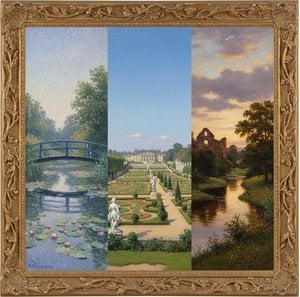
Embark on a visual journey through the serene beauty of gardens and parks in fine art. Discover how master artists capture nature's tranquility through impressionistic blooms and classical landscapes to bring timeless elegance into your home collection.

Embark on a visual journey through history's most iconic landscapes. Discover the mastery of Impressionism and the sublime power of nature through our expert guide to classical landscape art, curated for the discerning collector and fine art enthusiast.

Explore the profound beauty of village scene art. From Impressionist light to pastoral realism, discover how timeless landscapes capture nostalgia through expert artistry and historical depth. Perfect for collectors seeking evocative, museum-quality landscape inspirations.


 プレビュー
プレビュー
 プリントを購入
 シェアする
シェアする シェアする
シェアする
 詳細を見る
詳細を見る

 ダウンロード
 似ている作品
 X線調査
X線調査 スライドショー


 詳細を見る
詳細を見る









 ガラスオプションは、110cm未満のサイズでのみご利用いただけます。


