Acrylic On CanvasWallArtAmerican Regionalism
 1901
1901 35.0 x 25.0 cm
 Amon Carter Museum of American Art
当社のアーティストが、お客様のご希望のサイズと額縁に合わせて、キャンバスに手描きで制作する油彩画です。 ( プリント版に切り替え デジタル画像販売へ切り替え)





























作品のオリジナル比率に合わせた、当店の規定サイズからお選びください。

特定のフレームやスペースに合わせて、ご希望のサイズをご入力いただけます。選択されたサイズが元の画像の比率と異なる場合、アートワークをトリミングするか、手描きで要素を追加して絵画を拡張いたします。デジタルモックアップ を制作し、制作開始前にご確認(承認)をいただきます。
画面上のプレビューは、実際のトリミングや拡張を正確に反映しているものではありません。最終的な構図は、モックアップによってのみ正確にご確認いただけます。
カスタムサイズもご利用いただけますが、元の比率を維持するためには、あらかじめ用意されたリストからサイズを選択することをお勧めいたします。

Roping a Wolf
複製画のサイズ
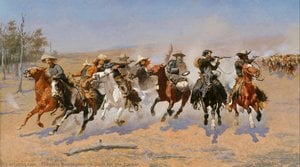
Charles Marion Russell's "Roping a Wolf," painted in 1901, isn’t merely a depiction of a Western scene; it’s a vibrant distillation of the American spirit – a potent blend of rugged individualism, frontier adventure, and a deep respect for the untamed wilderness. This watercolor masterpiece captures a fleeting moment of intense action, a cowboy skillfully maneuvering his horse to corral a wolf in the vast expanse of Montana's landscape. The painting immediately draws the viewer into its dynamic composition, dominated by diagonal lines created by the galloping horse and rider, guiding our eye through the scene with an undeniable sense of momentum.
Russell’s genius lies not just in his technical skill but in his profound understanding of the West – a realm he experienced firsthand as a working cowboy for over a decade. He didn't simply paint what he *saw*; he painted what he *felt*, imbuing each brushstroke with the dust, the heat, and the spirit of the frontier. The muted earth tones—ochres, browns, and blues—evoke the arid landscape, while subtle variations in color suggest atmospheric haze and the play of light on the rough terrain. The painting’s flattened perspective, a hallmark of watercolor techniques, lends it an almost dreamlike quality, transporting us to this specific moment in time.
Charles Marion Russell (1864-1926) was more than just an artist; he was a quintessential embodiment of the Western myth. Born in St. Louis, his early life was far removed from the landscapes he would later immortalize. He abandoned formal schooling at sixteen to become a cowboy, immersing himself fully in the life and culture of the American West. This experience profoundly shaped his artistic vision, informing his depictions of Native Americans, cowboys, wildlife, and the dramatic beauty of the frontier. Russell’s work is deeply rooted in observation and storytelling, often drawing upon Native American folklore and legends.
Russell's commitment extended beyond painting; he was a passionate advocate for Native American rights and worked tirelessly to preserve their culture and traditions. His art served as a powerful voice for the West’s indigenous peoples, offering a nuanced perspective that challenged prevailing stereotypes. His legacy is one of artistic integrity, cultural sensitivity, and a profound connection to the land.
“Roping a Wolf” exemplifies Russell's mastery of watercolor techniques. The artist skillfully employs wet-on-wet washes to create soft edges and blended colors, lending the scene an ethereal quality. The loose brushstrokes are visible throughout the painting, adding to its sense of immediacy and authenticity—a testament to Russell’s direct approach to his craft. Note the careful attention to detail in rendering the textures of the horse's coat, the rider's clothing, and the ruggedness of the landscape. The use of light is particularly effective, creating a dramatic contrast between the bright sunlight illuminating the foreground and the hazy atmosphere in the background.
The painting’s composition—a dynamic interplay of diagonals and curves—further enhances its visual impact. The central figure of the cowboy, poised with determination, anchors the scene while the movement of the horse and wolf creates a sense of thrilling action. The subtle integration of Native American elements – the wolf itself – speaks to Russell's deep respect for the land and its inhabitants.
Beyond its surface depiction, “Roping a Wolf” is rich in symbolism. The act of roping represents control over nature, a fundamental theme in Western art and literature. However, Russell doesn’t portray this as a simple conquest; the cowboy's skill is tempered by respect for the animal, suggesting a more nuanced relationship between humans and the wilderness. The wolf itself can be interpreted as a symbol of both danger and beauty, embodying the untamed spirit of the West. The painting evokes feelings of adventure, resilience, and the enduring allure of the frontier—a timeless reminder of America’s pioneering past.


1864 - 1926 , アメリカ合衆国

An expert guide for art collectors exploring the chemistry and artistry of oil, acrylic, tempera, and watercolor. Discover how medium specificity and material integrity define the longevity and value of fine art masterpieces.

Discover the ethereal beauty of premium watercolor reproductions and bespoke commissions at WahooArt. From museum-quality landscapes to custom AI-enhanced portraits, our master artists deliver unparalleled craftsmanship and white-glove service for discerning collectors worldwide.

Discover the ethereal beauty of watercolor through an art-historical lens. Master the delicate balance of light, fluidity, and pigment to capture the luminous essence of nature, inspired by the legendary techniques of the Old Masters and Impressionist greats.


 プレビュー
プレビュー
 シェアする
シェアする シェアする
シェアする
 詳細を見る
詳細を見る

 ダウンロード
 似ている作品
 X線調査
X線調査 スライドショー
 統計情報
統計情報 詳細を見る
詳細を見る









 ガラスオプションは、110cm未満のサイズでのみご利用いただけます。