
当社のアーティストが、お客様のご希望のサイズと額縁に合わせて、キャンバスに手描きで制作する油彩画です。 ( プリント版に切り替え デジタル画像販売へ切り替え)





























作品のオリジナル比率に合わせた、当店の規定サイズからお選びください。

特定のフレームやスペースに合わせて、ご希望のサイズをご入力いただけます。選択されたサイズが元の画像の比率と異なる場合、アートワークをトリミングするか、手描きで要素を追加して絵画を拡張いたします。デジタルモックアップ を制作し、制作開始前にご確認(承認)をいただきます。
画面上のプレビューは、実際のトリミングや拡張を正確に反映しているものではありません。最終的な構図は、モックアップによってのみ正確にご確認いただけます。
カスタムサイズもご利用いただけますが、元の比率を維持するためには、あらかじめ用意されたリストからサイズを選択することをお勧めいたします。

Bent
複製画のサイズ
Charles Marion Russell's "Bent," painted in 1922, isn’t merely a depiction of the American West; it’s a visceral embodiment of its rugged spirit. Born and raised on the fringes of society, Russell dedicated his life to capturing the essence of cowboys, Native Americans, and the untamed landscapes of Montana and Alberta. This particular piece, rendered in a masterful monochrome study using pencil or charcoal on paper, speaks volumes about the stoicism, resilience, and profound connection between man and nature that defined this era. The artwork’s power lies not just in its technical skill but also in its ability to evoke a deep sense of place and experience.
The composition of “Bent” is strikingly direct, utilizing a horizontal format that emphasizes the vastness of the Western terrain. The central focus immediately draws the eye to a group of soldiers on horseback traversing an arched gateway – a deliberate choice that anchors the scene within a military context. Russell’s technique is characterized by a remarkable attention to detail and a masterful manipulation of line. Hatching and cross-hatching are employed extensively, building up tonal values with meticulous precision. Loose, gestural lines capture the movement of the horses and riders, while more defined strokes delineate architectural elements like the gateway itself. This combination creates a rich tapestry of texture, simulating the roughness of weathered stone, the sheen of leather saddles, and the flowing motion of the horses’ manes.
The arched gateway serves as more than just a structural element; it functions as a potent symbol of transition and passage. It suggests a journey – not necessarily towards a specific destination, but rather through a period of hardship and uncertainty. The soldiers themselves embody the spirit of duty and responsibility, representing the expansion of American influence into the West. Considering the historical context—the early 20th century—Russell’s work reflects a complex relationship between settlers and Native Americans, capturing both the promise of opportunity and the realities of displacement. The artwork subtly hints at the challenges faced by those traversing this frontier landscape, inviting contemplation on themes of exploration, conflict, and cultural exchange.
Despite its subject matter—a military scene—“Bent” possesses a remarkable quiet intensity. The monochromatic palette contributes to a sense of seriousness and realism, while the restrained use of line avoids melodrama. There’s an underlying stoicism in the figures' postures and expressions, reflecting the hardships inherent in frontier life. Russell doesn’t glorify warfare; instead, he presents it with a measured dignity, capturing a fleeting moment of transit within a larger narrative. The artwork ultimately evokes a feeling of profound connection to the land—a sense that one is witnessing a timeless scene played out against the backdrop of an enduring landscape. It's a testament to Russell’s ability to imbue his subjects with both strength and vulnerability.
Additional Research:


1864 - 1926 , アメリカ合衆国

Discover the sophisticated mastery of graphite drawing. Explore expert techniques for achieving profound depth, intricate texture, and hyper-realistic detail through the alchemy of carbon, curated for the discerning art enthusiast and professional collector.

Elevate your artistic practice with this expert guide to mastering the line. Discover advanced techniques in graphite, charcoal, and contour drawing designed for art students seeking technical precision and expressive depth in their fine art studies.
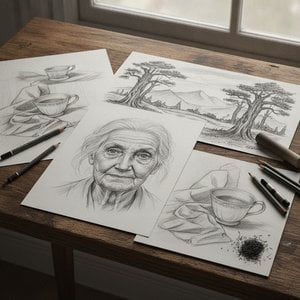
Explore the profound elegance of pencil and charcoal sketching. Discover how masters use line, shadow, and chiaroscuro to capture light and texture, bridging the gap between preparatory studies and timeless fine art masterpieces.

Explore the profound artistry of graphite drawing. Discover professional techniques for mastering depth, texture, and detail through a lens of art history, from classical sketches to modern masterpieces. Elevate your understanding of the pencil medium with our expert guide.


 プレビュー
プレビュー
 シェアする
シェアする シェアする
シェアする
 詳細を見る
詳細を見る

 ダウンロード
 似ている作品
 X線調査
X線調査 スライドショー
 統計情報
統計情報


 詳細を見る
詳細を見る









 ガラスオプションは、110cm未満のサイズでのみご利用いただけます。


