
迅速な制作と多彩な仕上げオプションを備えた、ミュージアムクオリティのジークレーまたはキャンバスプリント。 ( 手描きの絵画を購入 デジタル画像販売へ切り替え)





























作品のオリジナル比率に合わせた、当店の規定サイズからお選びください。

特定のフレームやスペースに合わせて、ご自身でサイズを指定することも可能です。選択されたサイズが元の画像の比率と一致しない場合、作品をトリミングするか、鏡面反射または単色での塗りつぶしによって画像を拡張いたします。制作を開始する前に、ご確認用のデジタルモックアップをお送りいたします。
画面上のプレビューには、実際のトリミングや拡張は反映されませんのでご注意ください。最終的な構図を正確に確認できるのは、モックアップのみとなります。
カスタムサイズも承っておりますが、元の比率を維持するためには、あらかじめ用意されたリストからサイズを選択することをお勧めいたします。

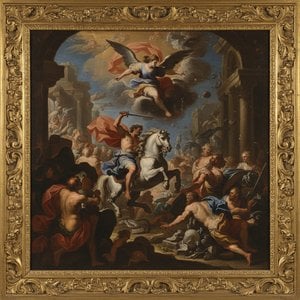
Hercules (detail)
複製画のサイズ
Charles Le Brun’s “Hercules (detail)” is not merely a depiction of a mythological hero; it's an immersive experience, a vibrant tableau vivant that transports the viewer to the heart of 17th-century French courtly life. Painted in 1658, this exquisite work embodies the height of Baroque artistry – a potent blend of classical ideals, dramatic dynamism, and opulent detail. It’s a testament to Le Brun's mastery as both a painter and a theorist, reflecting his profound influence on the artistic landscape of his era.

Image from Wikimedia Commons
Le Brun’s composition is a carefully orchestrated dance of classical motifs. At the center, Hercules dominates the scene, his muscular physique and resolute gaze radiating strength and divine authority. He ascends towards heaven, guided by a host of radiant angels – their wings spread wide in a gesture of benediction and protection. The clouds swirling behind them create an ethereal backdrop, lending a sense of weightlessness and transcendence to the narrative. The painting’s foundation rests firmly on classical principles: the balanced composition, the idealized forms, and the use of light and shadow to sculpt volume and drama are hallmarks of Le Brun's training under Poussin.
Le Brun’s technique is characterized by a remarkable level of detail and virtuosity. He employs a rich, layered approach, building up the image through countless glazes and scumbles to achieve an astonishingly luminous surface. The colors are predominantly earthy—ochres, siennas, and umbers—creating a sense of groundedness and gravitas. However, these muted tones are punctuated by flashes of gold and crimson in the angels’ robes and the celestial light, adding moments of intense brilliance. The artist's meticulous attention to texture – from the folds of Hercules’ drapery to the delicate feathers of the angels – is a testament to his skill and dedication.
Beyond its purely visual appeal, “Hercules” is laden with symbolism. The hero represents strength, courage, and virtue—qualities highly valued by Louis XIV and his court. His apotheosis – his ascent into heaven – signifies divine recognition and the fulfillment of heroic destiny. The painting was commissioned for the Salon d’Hercule at Vaux-le-Vicomte, a lavish chateau built by Nicolas Fouquet as a display of wealth and power. Le Brun's work served to elevate the space with mythological grandeur, reflecting the king’s own ambition and desire for immortality. The inclusion of figures like Hercules, associated with Roman virtue and military prowess, reinforced the ideals of royal authority and the glory of France.
“Hercules (detail)” stands as a pivotal work in Charles Le Brun’s oeuvre and a defining example of French Baroque painting. Its influence can be seen in countless subsequent works, shaping the artistic sensibilities of generations of artists. Reproductions of this magnificent piece continue to captivate viewers today, offering a glimpse into the splendor of the French court and the enduring power of classical mythology. It is a reminder that art can not only reflect history but also embody its most cherished values.


1619 - 1690 , フランス

Embark on a sophisticated journey through the eternal allure of mythological art. Discover how master painters breathe life into ancient legends, from Greek deities to Baroque masterpieces, and learn to curate these timeless narratives within your own exquisite art collection.
Explore the breathtaking power of Baroque art. Delve into the dramatic interplay of light, shadow, and motion through the works of masters like Caravaggio. Discover how the era's intense emotional realism continues to inspire collectors and connoisseurs of classical grandeur.


 プレビュー
プレビュー
 シェアする
シェアする シェアする
シェアする
 詳細を見る
詳細を見る ガイド
ガイド

 ダウンロード
 似ている作品
 X線調査
X線調査 スライドショー
 統計情報
統計情報


 詳細を見る
詳細を見る









 ガラスオプションは、110cm未満のサイズでのみご利用いただけます。


