

 Oil On CanvasWallArtExpressionism
 1954
1954 51.0 x 61.0 cm
 Arts Council Collection
このページに掲載されている作品は著作権法によって保護されており、当社の許可なく同一の複製物を制作または販売することは法律で禁じられています。この保護は、以下のような国際条約に基づき執行されます。 ベルヌ条約 および、以下の条項に定められたものを含む各国の法律により、 米国著作権法 第17編。
この手法は、著作権で保護された作品の複製や複写を伴わないため、著作権法に完全に準拠しています。これは単なる模倣ではなく、創造的な再解釈です。元の作品からインスピレーションを受けつつも、それとは異なる、全く新しい絵画を生み出すものです。
スピーディーな制作と多彩な仕上げオプションが魅力の、ミュージアムクオリティなジークレー・キャンバスプリント。 ( 手描きの複製画を注文する デジタル画像販売へ切り替え)





























作品のオリジナル比率に合わせた、当店の規定サイズからお選びください。

額縁や壁のスペースに合わせて、ご希望の幅と高さを入力してください。プリントはカットすることは可能ですが、元の画像より大きくすることはできないため、異なる比率のサイズを選択された場合は、画像の一部が欠けることになります。印刷を開始する前に、内容を確認していただくためのデジタルモックアップをお送りいたします。このページに表示されている画像は、実際のカット後の状態を示すものではありません。実際の仕上がりはモックアップにてご確認ください。
Two Musicians
複製画サイズ一覧
Ceri Richards' "Two Musicians," painted in 1954, isn’t merely a depiction of two figures engaged in musical activity; it’s an immersive experience—a vibrant, emotionally charged exploration of sound, movement, and the very essence of artistic expression. This work, a cornerstone of Welsh modernism, transcends simple representation to become a powerful distillation of feeling, firmly rooted in Richards' deep connection to both music and the landscape of his native Wales. The painting immediately commands attention with its audacious use of color – a dominant palette of fiery oranges and reds that pulsates with an almost palpable energy. These aren’t gentle hues; they are bold, assertive strokes designed to evoke passion, intensity, and perhaps even a touch of drama.
Richards' stylistic choices firmly place “Two Musicians” within the realm of Expressionism and early Cubism, though he synthesizes these influences into something uniquely his own. The figures themselves are rendered with remarkable abstraction; their forms are simplified, almost geometric, yet retain enough recognizable human quality to suggest a narrative. Lines are thick and expressive, not meticulously outlining shapes but rather conveying movement and texture through the application of paint itself. This impasto technique—the building up of layers of pigment—creates a tactile surface, inviting the viewer to reach out and feel the energy contained within the canvas. The flattened perspective further contributes to this sense of immediacy, prioritizing emotional impact over strict adherence to realistic spatial representation.
Richards’ lifelong fascination with music served as a primary catalyst for his artistic vision. He wasn't simply painting musicians; he was attempting to capture the *feeling* of music—its rhythm, its flow, its emotional resonance. The swirling arabesque patterns that dominate the composition are directly inspired by musical notation, mirroring the intricate dance of notes on a page. The placement of the central figures, bathed in this vibrant light, suggests an intimate moment of shared experience, perhaps a duet or a conversation through music. This connection to Welsh culture is also evident; Richards’ upbringing in Dunvant, steeped in folklore and choral tradition, profoundly shaped his artistic sensibilities.
Further adding to the painting's complexity is the subtle inclusion of symbolic elements. The prominent pot, adorned with a dragon motif—a potent symbol in Welsh heraldry—appears to be an integral part of the scene, almost acting as a conduit for the music itself. Its placement behind the musicians suggests a connection between tradition, artistry, and the creative spirit. This layering of meaning elevates “Two Musicians” beyond a straightforward portrait, transforming it into a rich tapestry of cultural references and artistic intentions.
The painting’s execution is remarkably confident and assured. Richards masterfully employs color to create depth and dynamism, using warm hues to draw the eye towards the central figures while simultaneously establishing a sense of movement throughout the composition. The thick application of paint—the hallmark of his impasto technique—adds considerable texture and visual interest, inviting close examination. “Two Musicians” was created during a period of significant artistic experimentation in Britain, following the devastation of World War II. Richards’ work reflects this spirit of renewal and exploration, embracing abstraction and emotional expression as ways to grapple with the complexities of the modern world.
The painting's creation coincided with a renewed interest in Welsh identity and culture, fueled by figures like Dylan Thomas. Richards’ engagement with Thomas’ poetry—as evidenced by his later series “Homage to Dylan Thomas”—demonstrates a broader cultural dialogue taking place within Wales at the time. “Two Musicians” can be seen as part of this larger movement, reflecting a desire to celebrate Welsh heritage and artistic innovation.
Reproductions of “Two Musicians” offer a remarkable opportunity to bring Richards’ vibrant vision into your home or office. The painting's bold colors and dynamic composition will undoubtedly serve as a focal point, injecting energy and passion into any space. Consider framing the artwork in a way that complements its intensity—a dark wood frame would provide a striking contrast, while a lighter color scheme could allow the colors of the painting to truly shine. Beyond its aesthetic appeal, “Two Musicians” is a testament to Richards’ artistic genius—a powerful and evocative work that continues to resonate with viewers today.
セリ・リチャーズ作「Two Musicians」は、Clear Color Presenceの彩度とVividの強烈な色彩で記録されています。
「Two Musicians」は1954年に制作されました。この制作年は、セリ・リチャーズのキャリアおよびその時代の文脈において、本作を位置づけるものです。
セリ・リチャーズ作「Two Musicians」は、作者の近代美術という時代における、Expressionismのムーブメントに位置づけられます。


1903 - 1971 , アメリカ合衆国

Journey through Wassily Kandinsky's 25 most iconic abstract paintings. Explore his revolutionary use of color, form & spiritual expressionism. Find museum-quality Kandinsky reproductions and elevate your home decor with WahooArt.com. Discover all masterpieces on WahooArt.com!

抽象表現主義を定義する10の傑作。ポロック、ロスコら巨匠たちの情熱と色彩の世界へ。各作品に込められた物語と技法を紐解き、至高のアート体験を。WahooArt.comで、ミュージアムクオリティの複製画や洗練されたインテリアアイデアを発見してください。

Explore the profound emotional depth of Lyrical Abstraction. Discover how masters like Raymond Parker used color and form to bridge Impressionism and Abstract Expressionism. Learn about this pivotal movement through our expert-led art history guide.
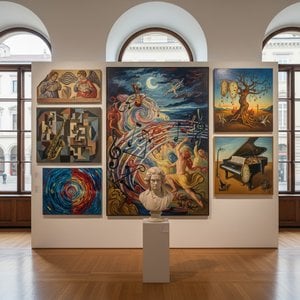
Explore the fascinating history of music's visual representation in art! From ancient symbolism to modern abstraction, discover how artists have captured sound and emotion on canvas. Expert insights & stunning examples.

Embark on a cultural journey through Lyrical Abstraction. Explore how masters like Kandinsky used color and motion to translate emotion into visual poetry. Discover the profound beauty of abstract expressionism and learn to curate emotional resonance in your own art collection.

 設置イメージを確認
 送る
送る シェア
シェア
 詳細情報
詳細情報 ガイドを表示

 画像をダウンロード
 似ている作品
 X線調査
X線調査 スライドショー
 統計情報
統計情報 続きを読む
続きを読む









 ガラスオプションは、110cm未満のサイズでのみご利用いただけます。


