

 Oil On CanvasWallArtContemporary Realism
 2020Contemporary
 45.0 x 35.0 cm
 Paintings in Hospitals
当社のアーティストが、お客様のご希望のサイズと額縁に合わせて、キャンバスに手描きで制作する油彩画です。 ( Switch to Print Switch to Digital Image)





























作品のオリジナル比率に合わせた、当店の規定サイズからお選びください。

特定のフレームやスペースに合わせて、ご希望のサイズをご入力いただけます。選択されたサイズが元の画像の比率と異なる場合、アートワークをトリミングするか、手描きで要素を追加して絵画を拡張いたします。デジタルモックアップ を制作し、制作開始前にご確認(承認)をいただきます。
画面上のプレビューは、実際のトリミングや拡張を正確に反映しているものではありません。最終的な構図は、モックアップによってのみ正確にご確認いただけます。
カスタムサイズもご利用いただけますが、元の比率を維持するためには、あらかじめ用意されたリストからサイズを選択することをお勧めいたします。

Becca
複製画のサイズ
In the quiet, evocative realm of contemporary impressionism, few works capture the raw essence of maternal devotion as poignantly as Becca. Created in 2020 by the London-born artist Caroline Louise Beavan Johnson, this oil on canvas piece serves as a profound meditation on the sanctity of the bond between mother and child. The painting transports the viewer into a private, sanctuary-like moment: a mother leaning down to press a tender kiss upon her infant during a bath. There is no artifice here, only the profound weight of presence. Through a masterful use of light and texture, Johnson invites us to witness a fleeting second of pure, unadultered connection that feels both deeply personal and universally recognizable.
The technical execution of Becca is a testament to the power of expressive brushwork. Eschewing the cold precision of hyper-realism, the artist employs a loose, painterly style that prioritizes emotional resonance over anatomical exactitude. The application of oil paint is thick and tactile, creating a rich impasto that lends a sculptural quality to the figures. This heavy texture allows light to dance across the surface of the canvas, mimicking the way soft, diffused illumination plays upon damp skin and rippling water. The composition is intentionally intimate, with a shallow depth of field that blurs the periphery, forcing the eye to settle upon the central embrace. This technique creates a sense of "tunnel vision," mirroring the way a parent’s entire world often narrows down to the singular focus of their child.
Beyond its aesthetic beauty, Becca is steeped in symbolic warmth. The color palette is a deliberate curation of amber, gold, and soft ochre tones, which bathe the scene in a glow reminiscent of late afternoon sunlight. These warm hues do more than just illuminate the subject; they psychologically communicate safety, heat, and the biological comfort of the womb. The organic shapes—the soft curves of the infant’s limbs and the fluid lines of the water—intertwine to suggest a seamless continuity between the human form and the natural world. In this way, the painting becomes an allegory for protection and vulnerability.
For the discerning collector or interior designer, Becca offers more than just a visual focal point; it provides an emotional anchor for a space. The artwork’s ability to evoke feelings of tenderness and peace makes it an ideal centerpiece for a nursery, a master suite, or a sophisticated living area where one seeks to cultivate an atmosphere of serenity. As a high-quality reproduction, this piece allows the tactile richness and the luminous, layered technique of Johnson's work to be experienced in any home, bringing a touch of contemporary British artistry and a profound sense of love into the domestic landscape.

The life of Caroline Louise Beavan Johnson, known to many as Carrie Stanley, is a compelling study in the intersection of personal narrative, media influence, and environmental stewardship. Born on March 17, 1988, in the vibrant heart of London, her early years were shaped by a lineage deeply embedded in the world of journalism and communication. As the daughter of Matthew Symonds, a co-founder of The Independent, she was raised amidst the rhythms of reporting and the weight of public discourse. This heritage provided more than just a connection to the press; it instilled an early appreciation for the power of storytelling and the importance of presenting truth through a curated lens.
Her intellectual journey took her to the University of Warwick, where she immersed herself in the study of Art History and Theatre Studies. This academic foundation proved pivotal, as it allowed her to develop a unique aesthetic sensibility that blends the visual grandeur of historical masterpieces with the dramatic flair of performance. It was here that the seeds of her appreciation for symbolism and classical technique were sown, creating a bridge between her professional pursuits in communications and her enduring passion for the arts and conservation.
While much of her public identity has been intertwined with the high-stakes arena of British politics—notably through her role as a media advisor and her marriage to former Prime Minister Boris Johnson—Johnson’s true legacy is increasingly defined by her commitment to the natural world. Her career trajectory, moving from the communications department of the Conservative Party to the forefront of global advocacy, reflects a profound evolution of purpose. She has utilized her mastery of narrative to champion causes that resonate far beyond the political sphere, focusing on the urgent need for ecological preservation.
As a senior advisor for Oceana, an international ocean conservation charity, she has applied her skills in media strategy to highlight the fragile beauty of our marine ecosystems. Her work is characterized by a deep-seated empathy for the voiceless elements of our planet, ranging from the vast, unexplored depths of the sea to the individual creatures that inhabit them. This dedication is further evidenced by her patronage of the Conservative Animal Welfare Foundation, where she advocates for the ethical treatment and protection of animals, mirroring the same precision and passion found in the classical art she admires.
The significance of Johnson’s work lies in her ability to weave disparate threads—politics, media, art history, and environmentalism—into a singular, impactful voice. She does not merely observe the world; she actively seeks to reshape the way we perceive our responsibilities toward it. Her influence is felt in the way global challenges are communicated to the public, turning complex scientific and political issues into emotive narratives that demand attention.
In reflecting on her contributions, one finds a life dedicated to the preservation of both culture and nature:
Ultimately, Caroline Louise Beavan Johnson stands as a figure of modern complexity, a woman whose life serves as a testament to the power of using one's platform to protect the beauty of the world, whether found in the strokes of an old master's brush or the rhythmic tides of the Atlantic.

1988 - , United Kingdom

Discover the enduring allure of oil on canvas. Explore how master techniques like impasto and glazing create the depth, texture, and emotional resonance found in the world's greatest masterpieces. An essential guide for fine art enthusiasts and discerning collectors.
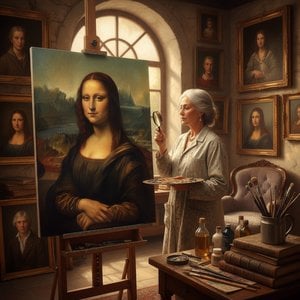
Discover the unparalleled elegance of WahooArt’s premium hand-painted oil reproductions. From bespoke portraits to museum-quality masterpieces, our expert artists transform visions into timeless legacies with 100% satisfaction guaranteed. Elevate your collection with true artistry.

Discover the profound allure of oil on canvas. Explore the mastery of impasto textures, the science of pigment longevity, and expert guides to selecting museum-quality reproductions that elevate your collection with timeless elegance and tactile depth.

Explore the profound secrets of classical oil painting. From the delicate mastery of glazing to the dramatic depth of chiaroscuro, discover the timeless techniques used by Old Masters to create enduring, museum-quality masterpieces that capture light and emotion.

 プレビュー
プレビュー
 シェアする
シェアする シェアする
シェアする
 詳細を見る
詳細を見る

 ダウンロード
 似ている作品
 X線調査
X線調査 スライドショー
 Stats
Stats 詳細を見る
詳細を見る









 ガラスオプションは、110cm未満のサイズでのみご利用いただけます。


