

当社のアーティストが、お客様のご希望のサイズと額縁に合わせて、キャンバスに手描きで制作する油彩画です。 ( プリント版に切り替え デジタル画像販売へ切り替え)





























作品のオリジナル比率に合わせた、当店の規定サイズからお選びください。

特定のフレームやスペースに合わせて、ご希望のサイズをご入力いただけます。選択されたサイズが元の画像の比率と異なる場合、アートワークをトリミングするか、手描きで要素を追加して絵画を拡張いたします。デジタルモックアップ を制作し、制作開始前にご確認(承認)をいただきます。
画面上のプレビューは、実際のトリミングや拡張を正確に反映しているものではありません。最終的な構図は、モックアップによってのみ正確にご確認いただけます。
カスタムサイズもご利用いただけますが、元の比率を維持するためには、あらかじめ用意されたリストからサイズを選択することをお勧めいたします。
André Le Nôtre
複製画サイズ一覧
André Le Nôtre’s portrait, painted in 1681 by Carlo Maratta, offers a glimpse into the mind of a man who fundamentally reshaped the landscape of Europe. More than simply a gardener, Le Nôtre was the “King of Gardeners,” Controller General of Buildings, Arts and Manufactures for France, and, crucially, Gardener to the King – a position that afforded him unparalleled influence over the aesthetic sensibilities of his era. The painting itself is a study in restrained elegance; a man of considerable age, yet radiating an aura of quiet authority and intellectual depth. Maratta’s masterful use of light and shadow emphasizes Le Nôtre's dignified presence, while the subtle details – the meticulously arranged books, the gesture of his hand – hint at the profound knowledge and considered artistry that underpinned his remarkable achievements.
Born in Paris in 1613, Le Nôtre’s early life was steeped in the world of horticulture. His father, Jean Le Nôtre, oversaw the gardens of the Tuileries Palace, providing young André with a foundational understanding of plant selection, design principles, and the practicalities of garden management. However, it wasn't merely experience that shaped him; Le Nôtre’s artistic training under Andrea Sacchi, a key figure in the Roman Baroque movement, instilled within him a deep appreciation for classical forms, perspective, and the harmonious balance between nature and architecture. This grounding in classical ideals would prove crucial as he embarked on his most ambitious project: transforming the sprawling grounds of Versailles into a breathtaking demonstration of French garden design.
Prior to Le Nôtre’s intervention, Versailles was a collection of disparate spaces, largely dictated by the needs of hunting and defense. It was Le Nôtre who conceived of a unified landscape – a meticulously planned series of geometric parterres, flowing water features, strategically placed groves of trees, and grand vistas designed to impress and inspire awe. His approach wasn’t simply about creating beautiful gardens; it was about crafting an illusion of infinite space, utilizing techniques like forced perspective and carefully calibrated scale to manipulate the viewer's perception. The vastness of the grounds, achieved through a masterful orchestration of elements, mirrored the power and grandeur of the French monarchy.
The influence of Italian Renaissance garden design is undeniable in Le Nôtre’s work, particularly the gardens of Villa Aldobrandini at Tivoli, which he likely studied extensively. However, Le Nôtre adapted these principles to suit the specific climate and topography of France, creating a distinctly “French Garden” characterized by its formal symmetry, clipped hedges, gravel paths, and an emphasis on water as a unifying element. The carefully controlled chaos – the seemingly random arrangement of plants within defined geometric patterns – created a sense of both order and natural beauty.
The inclusion of books in the portrait is particularly significant. Le Nôtre was not merely a craftsman; he was a scholar, deeply versed in mathematics, botany, and classical literature – all disciplines essential to his work. The gesture of his hand resting on the volumes suggests contemplation, study, and a profound understanding of the principles underlying both art and nature. The blue background further enhances this sense of intellectual depth, evoking the vastness of the sky and hinting at the limitless possibilities inherent in design.
Maratta’s depiction captures Le Nôtre not as a flamboyant figure of power, but as a man of quiet dignity and profound intellect. The portrait serves as a testament to his enduring legacy – a legacy that continues to inspire landscape architects and designers today. Reproductions of this artwork offer a unique opportunity to bring the spirit of this remarkable visionary into any space, reminding us of the transformative power of art and design.
カルロ・マラッタ作「André Le Nôtre」のデジタルファイルを入手するには、このページにて高解像度デジタル画像のダウンロードをご注文ください。
カルロ・マラッタ作「André Le Nôtre」の視覚的な明るさはdeep_shadowです。設置する空間の光の加減に合わせて調整することが可能です。
「André Le Nôtre」の彩度はMonochromaticです。彩度とは、色の鮮やかさの度合いを表します。
「André Le Nôtre」は、1681年にAcrylic On Canvas技法を用いて制作されました。素材と制作年は、原画がどのように、いつ制作されたかを示すものです。
カルロ・マラッタ作「André Le Nôtre」は、彩度Mutedで記録されています。
「André Le Nôtre」は、Baroque Classicizing Style様式のもと、カルロ・マラッタによって制作されました。作者と様式は、その作品が受け継ぐ伝統を定義するものです。
カルロ・マラッタ作「André Le Nôtre」は、明部と暗部の間にGentleなコントラストを描き出しています。
「André Le Nôtre」はGreen to Violet Spectrumの色調が際立っています。


1625 - 1713
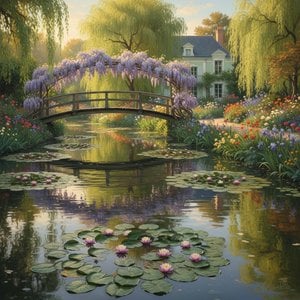
Embark on a visual journey through Claude Monet's Giverny. Discover the enchanting light, vibrant colors, and breathtaking landscapes of his legendary gardens through an expert exploration of Impressionist mastery and timeless beauty.
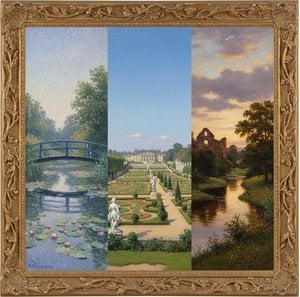
Embark on a visual journey through the serene beauty of gardens and parks in fine art. Discover how master artists capture nature's tranquility through impressionistic blooms and classical landscapes to bring timeless elegance into your home collection.

 設置イメージを確認
 送る
送る シェア
シェア
 詳細情報
詳細情報 ガイドを表示

 画像をダウンロード
 似ている作品
 X線調査
X線調査 スライドショー
 統計情報
統計情報


 続きを読む
続きを読む









 ガラスオプションは、110cm未満のサイズでのみご利用いただけます。


