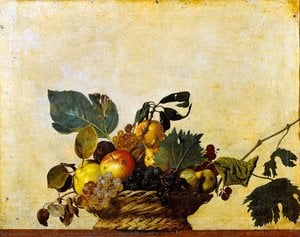
Flight
The painting "Flight" is a masterpiece created by the renowned Italian artist Michelangelo Merisi da Caravaggio (Michelangelo Merisi), a pivotal figure in Baroque art and whose revolutionary approach to painting continues to inspire artists today. This beautiful work of art transcends mere depiction; it’s an immersive experience into a moment of profound spiritual contemplation, skillfully rendered with unparalleled realism and dramatic lighting—a hallmark of Caravaggio's distinctive style.
The Artist and His Work
Michelangelo Merisi da Caravaggio (1571-1610), born in Milan amidst considerable hardship following the deaths of his father and grandfather during a devastating plague, embarked on an artistic journey that would reshape European painting. Initially apprenticed to Simone Peterzano under Titian’s tutelage—a formative experience emphasizing Renaissance techniques—Caravaggio swiftly established himself in Rome around 1592, rejecting academic conventions and prioritizing direct observation of the human condition. His unwavering commitment to portraying emotion with visceral intensity, coupled with his masterful manipulation of chiaroscuro (tenebrism), cemented his legacy as a revolutionary innovator who profoundly influenced artists like Hans Memling and Francisco Zurbaran. Caravaggio’s stylistic boldness challenged the prevailing Mannerist aesthetic, favoring naturalistic detail alongside dramatic contrasts between light and dark—a technique that would become synonymous with Baroque grandeur.
The Painting's Subject Matter
“Flight” depicts Mary cradling Jesus in her arms, surrounded by angels in a serene landscape bathed in ethereal light. The scene captures the Virgin’s tenderness and devotion as she gazes upwards towards God, conveying an atmosphere of peace and spiritual grace. Caravaggio’s meticulous attention to detail—from the folds of Mary's robe to the expressions on the angelic faces—creates a palpable sense of immediacy and emotional resonance. Unlike many religious paintings of his time, Caravaggio eschewed idealized representations, opting instead for unflinching realism that mirrored the complexities of human experience. The landscape serves as a subtle backdrop, emphasizing the sanctity of the moment without overwhelming it with elaborate ornamentation.
Technique and Style
Caravaggio’s technique—characterized by rapid brushstrokes and direct application of pigment onto canvas—was revolutionary for its time. He eschewed preparatory sketches and relied on improvisation, capturing fleeting expressions and textures with remarkable accuracy. His signature use of tenebrism—the dramatic juxtaposition of intense light and deep shadow—created a palpable sense of depth and emotion, drawing the viewer’s eye into the heart of the composition. Caravaggio's masterful control over chiaroscuro transformed ordinary scenes into theatrical spectacles, imbuing them with psychological drama and spiritual significance. The painting exemplifies Baroque art’s ambition to evoke powerful emotions in the observer—a testament to Caravaggio’s unparalleled artistic vision.
Similar Paintings
Other paintings that showcase similar stylistic elements include “The Annunciation” by Hans Memling, demonstrating a refined blend of realism and devotional piety; “Vision of Blessed Alonso Rodriguez” by Francisco Zurbaran, capturing a contemplative mood with subdued colors and masterful use of light; and “The Holy Family with the Little Bird” by Bartolome Esteban Murillo, presenting a harmonious depiction of familial affection within a tranquil setting. These artworks can be found in museums such as Santa Maria Donna Regina in Naples, Italy—institutions dedicated to preserving and showcasing masterpieces of Baroque art.
Caravaggio’s influence extends far beyond his immediate contemporaries, shaping artistic sensibilities for centuries to come. For more information on Michelangelo Merisi da Caravaggio and his enduring legacy, visit
https://WahooArt.com.