Oil On CanvasWallArtBaroque
 1600Early Modern
 237.0 x 189.0 cm
当社のアーティストが、お客様のご希望のサイズと額縁に合わせて、キャンバスに手描きで制作する油彩画です。 ( プリント版に切り替え デジタル画像販売へ切り替え)





























作品のオリジナル比率に合わせた、当店の規定サイズからお選びください。

特定のフレームやスペースに合わせて、ご希望のサイズをご入力いただけます。選択されたサイズが元の画像の比率と異なる場合、アートワークをトリミングするか、手描きで要素を追加して絵画を拡張いたします。デジタルモックアップ を制作し、制作開始前にご確認(承認)をいただきます。
画面上のプレビューは、実際のトリミングや拡張を正確に反映しているものではありません。最終的な構図は、モックアップによってのみ正確にご確認いただけます。
カスタムサイズもご利用いただけますが、元の比率を維持するためには、あらかじめ用意されたリストからサイズを選択することをお勧めいたします。

Conversion of Saint Paul
複製画のサイズ
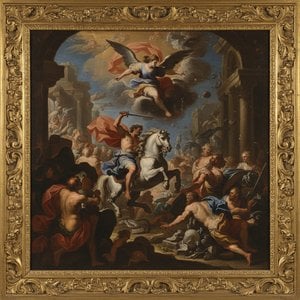
Caravaggio's "Conversion of Saint Paul," painted in 1600, stands as a pivotal work within the Baroque art movement and a testament to Michelangelo Merisi da Caravaggio’s revolutionary approach to religious painting. This oil on canvas masterpiece, measuring 237 x 189 cm, captures a moment of profound spiritual transformation with dramatic intensity and unparalleled realism.
The artwork vividly portrays the biblical event where Saint Paul, formerly known as Saul, experiences a divine encounter on his journey to Damascus. While traveling to persecute Christians, he is struck by a blinding light and hears the voice of Jesus Christ. The painting freezes this pivotal moment: Paul dramatically falls from his horse (though the horse itself is partially obscured), while another figure kneels beside him in apparent shock or prayer. This composition immediately draws the viewer into the heart of the event, emphasizing the suddenness and power of the divine intervention.
Caravaggio’s signature style shines through in "Conversion of Saint Paul." The most striking element is his masterful use of *chiaroscuro* – a technique employing stark contrasts between light and shadow. A single, intense beam of light illuminates Paul's face and upper body, highlighting the raw emotion and physical impact of the experience. This dramatic lighting not only creates visual drama but also directs the viewer’s gaze to the central figure, emphasizing his spiritual awakening. The figures themselves are rendered with remarkable realism; Caravaggio eschewed idealized forms, instead depicting them with palpable musculature and realistic textures, a departure from the more stylized depictions common in earlier Renaissance art. His use of tenebrism – an even more extreme form of chiaroscuro where darkness dominates – further intensifies the emotional impact.
Painted during a period when Caravaggio was rapidly gaining recognition, "Conversion of Saint Paul" reflects the broader artistic trends of the Baroque era. This movement emphasized drama, emotion, and grandeur, often employing theatrical lighting and dynamic compositions to engage viewers on an emotional level. The painting’s subject matter – the conversion of a persecutor into one of Christianity's most fervent apostles – held significant religious importance during the Counter-Reformation, a period when the Catholic Church sought to reaffirm its doctrines and inspire renewed faith. Symbolically, the light represents divine grace and revelation, while Paul's fall signifies his humbling and surrender to God’s will. The inclusion of the horse, though not explicitly mentioned in all biblical accounts, reinforces Paul’s status as a Roman official and underscores the abruptness of his transformation.
"Conversion of Saint Paul" evokes a powerful sense of awe, vulnerability, and spiritual awakening. The raw emotion etched on Paul's face, combined with the dramatic lighting and dynamic composition, creates an unforgettable visual experience. Despite periods of fluctuating popularity after Caravaggio’s death, his influence on Western art remains undeniable. His innovative use of light and shadow continues to inspire contemporary artists, and "Conversion of Saint Paul" stands as a timeless example of Baroque painting's ability to capture human emotion and drama with unparalleled intensity.


1571 - 1610 , スペイン

Explore the profound mastery of Caravaggio's tenebrism. Discover how his dramatic use of chiaroscuro revolutionized Baroque art through intense emotion and realism. An expert guide for classic art enthusiasts seeking to understand the power of shadow in historical masterpieces.
Explore the breathtaking power of Baroque art. Delve into the dramatic interplay of light, shadow, and motion through the works of masters like Caravaggio. Discover how the era's intense emotional realism continues to inspire collectors and connoisseurs of classical grandeur.

Embark on a sophisticated journey through Italian Baroque art. Discover the dramatic interplay of light and emotion in Caravaggio’s masterpieces and explore how to bring this timeless grandeur into your collection with expert art insights.

Discover the profound emotional power of Baroque painting. Explore the mastery of chiaroscuro, the realism of Caravaggio, and the dramatic interplay of light and shadow in this expert guide for classical art enthusiasts and collectors.


 プレビュー
プレビュー
 シェアする
シェアする シェアする
シェアする
 詳細を見る
詳細を見る ガイド
ガイド

 ダウンロード
 似ている作品
 X線調査
X線調査 スライドショー
 統計情報
統計情報 詳細を見る
詳細を見る









 ガラスオプションは、110cm未満のサイズでのみご利用いただけます。