迅速な制作と多彩な仕上げオプションを備えた、ミュージアムクオリティのジークレーまたはキャンバスプリント。 ( 手描きの絵画を購入 デジタル画像販売へ切り替え)





























作品のオリジナル比率に合わせた、当店の規定サイズからお選びください。

特定のフレームやスペースに合わせて、ご自身でサイズを指定することも可能です。選択されたサイズが元の画像の比率と一致しない場合、作品をトリミングするか、鏡面反射または単色での塗りつぶしによって画像を拡張いたします。制作を開始する前に、ご確認用のデジタルモックアップをお送りいたします。
画面上のプレビューには、実際のトリミングや拡張は反映されませんのでご注意ください。最終的な構図を正確に確認できるのは、モックアップのみとなります。
カスタムサイズも承っておりますが、元の比率を維持するためには、あらかじめ用意されたリストからサイズを選択することをお勧めいたします。

Farmyard
複製画のサイズ
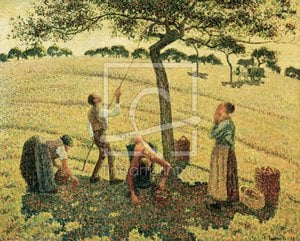
Camille Pissarro’s “Farmyard,” painted in 1863, offers a remarkably intimate and detailed glimpse into the rhythms of rural life – a scene both familiar and imbued with a quiet dignity. This work, executed during a pivotal period in the development of Impressionism, reveals Pissarro's meticulous observation and his burgeoning ability to capture not just the visual appearance of a subject but also its inherent atmosphere. The painting’s strength lies in its realism, yet it transcends mere documentation; it evokes a profound sense of connection to the land and the people who worked within it.
The scene unfolds with a carefully constructed narrative. A central figure – a man standing alongside a powerful horse – immediately draws the viewer’s eye, establishing a point of focus amidst the activity. The inclusion of other figures, subtly placed in the background, suggests a community engaged in daily tasks. Animals, particularly the dog and the two birds, add layers of interest and contribute to the overall feeling of a vibrant, living space. The architectural element – the open doorway leading into what appears to be a barn or stable – anchors the composition and reinforces the theme of agricultural labor. Pissarro’s masterful use of perspective guides the eye through the scene, creating a sense of depth and inviting the viewer to become part of this rural tableau.
“Farmyard” exemplifies Pissarro's evolving style, firmly rooted in Realism but increasingly influenced by the emerging tenets of Impressionism. Notice the loose brushwork, characteristic of the period, which avoids sharp outlines and instead emphasizes the play of light and shadow. The artist employs broken color – applying small strokes of pure pigment side-by-side – to create a shimmering effect, particularly evident in the depiction of the horse’s coat and the hay pile. This technique allows Pissarro to capture the transient qualities of light and atmosphere, a hallmark of Impressionist painting. While grounded in observation, the work demonstrates a growing willingness to prioritize subjective perception over strict adherence to academic conventions.
Painted in 1863, “Farmyard” reflects a time of significant social and artistic change. The rise of industrialization was beginning to transform rural landscapes, yet Pissarro’s work champions the enduring values associated with agricultural life – hard work, community, and connection to nature. The scene can be interpreted as a nostalgic celebration of a disappearing way of life. Furthermore, Pissarro's involvement in the Société des Artistes Indépendants, a group that championed independent artistic expression, aligns him with the broader movement challenging established artistic norms. This painting represents a crucial step in his development and foreshadows his later contributions to Impressionism’s evolution.
"Farmyard" possesses a quiet emotional resonance that continues to captivate viewers today. It is not a dramatic or overtly sentimental work, but rather one of subtle beauty and profound observation. The painting's ability to evoke a sense of peace and connection to the natural world speaks to Pissarro’s artistic skill and his deep understanding of human experience. A hand-painted reproduction offers an exceptional opportunity to bring this evocative scene into your home or office, celebrating the legacy of one of Impressionism’s most important figures.


1830 - 1903 , フランス

Discover the luminous world of Camille Pissarro. Explore how this Impressionist master captured light and rural life through evocative landscapes, from Pontoise to Eragny, and learn about his enduring legacy in art history.


 プレビュー
プレビュー
 シェアする
シェアする シェアする
シェアする
 詳細を見る
詳細を見る ガイド
ガイド

 ダウンロード
 似ている作品
 X線調査
X線調査 スライドショー
 統計情報
統計情報

 詳細を見る
詳細を見る









 ガラスオプションは、110cm未満のサイズでのみご利用いただけます。