

 Social Realism
 1940
1940 23.0 x 30.0 cm
このページに掲載されている作品は著作権法によって保護されており、当社の許可なく同一の複製物を制作または販売することは法律で禁じられています。この保護は、以下のような国際条約に基づき執行されます。 ベルヌ条約 および、以下の条項に定められたものを含む各国の法律により、 米国著作権法 第17編。
敬意を払った法的な代替手段として、私たちはオリジナルにインスピレーションを与えられた、カスタムの手描きアートワークを提供しています。私たちの熟練したプロのアーティストは、元の作品が持つスタイル、情緒、そして芸術的なエッセンスを注意深く研究し、独自の創作物でありながら、同じ感性を呼び起こすような、新しくユニークな作品を作り上げます。
この手法は、著作権で保護された作品の複製や複写を伴わないため、著作権法に完全に準拠しています。これは単なる模倣ではなく、創造的な再解釈です。元の作品からインスピレーションを受けつつも、それとは異なる、全く新しい絵画を生み出すものです。
当社のアーティストが、お客様のご希望のサイズと額縁に合わせて、キャンバスに手描きで制作する油彩画です。 ( プリント版に切り替え デジタル画像販売へ切り替え)
作品のオリジナル比率に合わせた、当店の規定サイズからお選びください。

フレームや壁のスペースに合わせて、ご希望の幅と高さを入力してください。本作品は手描きのため、異なる比率のサイズをご希望の場合、絵画の周囲を少し広げて描くか、あるいは端を少しカットして調整することが可能です。お客様のご要望に合わせます。制作を開始する前に、仕上がりを確認するためのデジタルモックアップをお送りいたします。このページに表示されている画像は完成品の実物ではなく、あくまでモックアップによるイメージです。
Workers Homes
複製画サイズ一覧

Blanche Grambs (1916-2010) wasn’t merely an American artist; she was a chronicler of profound social and economic shifts, a visual witness to the tumultuous era of the Great Depression and the New Deal. Her legacy resides not in grand museums or celebrated salons, but within the stark realism of her prints – intimate portrayals of marginalized communities, industrial laborers, and the enduring struggle for dignity amidst hardship. Born in Beijing, China, to American parents, Grambs’ early life was steeped in a unique cultural tension, an experience that profoundly shaped her artistic perspective and fueled her commitment to social justice.
Her formative years were marked by isolation within a Westernized enclave of expatriates, a world removed from the realities faced by the Chinese working class. This distance fostered a keen awareness of inequality and exploitation – themes that would become central to her work. She began drawing at a young age, honing her skills through informal study groups, initially sketching portraits of local residents. It was this early exposure to diverse subjects and her developing artistic talent laid the groundwork for her later career as a printmaker.
Grambs’ formal training at the Art Students League in New York City provided her with essential technical skills, but it was her involvement with the Works Progress Administration (WPA) during the 1930s that truly defined her artistic trajectory. The WPA, a cornerstone of President Roosevelt's New Deal, offered employment to artists and other creatives, providing a vital lifeline during the Depression. Grambs joined the Federal Art Project, producing over thirty prints that captured the spirit – and suffering – of the era.
Her work within the FAP wasn’t simply decorative; it was explicitly political. Grambs actively participated in Marxist theory classes at the New York Workers School and engaged in communist rallies, reflecting a deep-seated belief in the power of art to challenge injustice. Her arrest during a sit-in protest against budget cuts for the WPA underscored her unwavering commitment to social reform. Notably, she traveled to Lanceford, Pennsylvania, immersing herself in the lives of coal miners – a community she depicted with unflinching honesty and empathy. The resulting prints, such as *Miners Going to Work*, are not romanticized depictions of labor; they expose the grueling conditions, the physical toll, and the precarious existence faced by these men and their families.
Grambs’ artistic style is characterized by a deliberate use of stark contrasts, muted colors, and a focus on texture. She primarily employed intaglio techniques – etching, drypoint, and aquatint – to achieve this effect. Aquatint, in particular, allowed her to emulate the smoky atmosphere of coal mines, conveying both the physical environment and the sense of confinement. Her prints are often monochromatic or limited to a restricted palette of grays, browns, and blacks, intensifying the emotional impact and drawing attention to the subject matter.
Her subjects were deliberately chosen to highlight the plight of marginalized communities – coal miners, unemployed workers, impoverished families. She avoided idealized representations, instead presenting figures with dignity and resilience in the face of adversity. *Warehouse, East River*, for example, depicts a vast warehouse complex alongside a train carrying coal, symbolizing the relentless cycle of exploitation that trapped many within the industrial system. Her work wasn’t about offering solutions; it was about bearing witness to the realities of poverty and injustice.
Following her departure from the WPA in 1940, Grambs shifted her focus to illustration, primarily for children's books. However, her commitment to social realism remained a driving force throughout her career. Her later work, often exploring themes of nature and environmentalism – influenced by figures like Rachel Carson – continued to reflect her deep concern for the well-being of both people and the planet.
Blanche Grambs’ prints are now held in prestigious collections across the United States and Europe, including the Smithsonian American Art Museum, the Metropolitan Museum of Art, and the British Museum. Her work serves as a powerful reminder of the social and economic realities of the Great Depression and a testament to the enduring power of art to document, critique, and inspire change. She wasn’t simply an artist; she was a chronicler of her time, offering a poignant and unforgettable portrait of America's shadowed progress.

1916 - 2010

ジェームズ・マクニール・ホイストラーの至高の25選。ノクターン、印象派、美しい色彩に満ちた作品群を紐解きます。WahooArtで高品質なアートプリントとインテリアをお楽しみください。名画の世界へ – WahooArt.com

Explore the rich history of etching, from its origins to modern practice. Discover techniques, key artists like Rembrandt, and insights for collectors. A comprehensive guide by WahooArt.
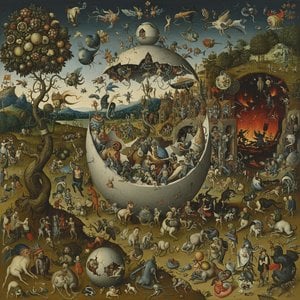
ヒエロニムス・ボッシュの傑作25選。中世絵画の幻想的な世界を巡り、寓意と象徴に満ちた作品群を紐解きます。WahooArtで高品質な油絵複製やアートプリントをお楽しみください。ボッシュの色彩とテーマをあなたの空間に。今すぐコレクションをご覧ください。

Explore the rich history of etching, from its origins to Rembrandt's masterful innovations. Discover the technique, aesthetic qualities & enduring legacy of this captivating art form. Expert insights for collectors and enthusiasts.

Journey through 10 legendary etching masterpieces by Rembrandt, Dürer & Goya. Explore the history of printmaking and discover timeless art for your home. Find museum-quality reproductions at WahooArt.com.

 設置イメージを確認
 送る
送る シェア
シェア
 詳細情報
詳細情報 ガイドを表示

 画像をダウンロード
 似ている作品
 X線調査
X線調査 スライドショー
 統計情報
統計情報 続きを読む
続きを読む






































 ガラスオプションは、110cm未満のサイズでのみご利用いただけます。


