


このページに掲載されている作品は著作権法によって保護されており、当社の許可なく同一の複製物を制作または販売することは法律で禁じられています。この保護は、以下のような国際条約に基づき執行されます。 ベルヌ条約 および、以下の条項に定められたものを含む各国の法律により、 米国著作権法 第17編。
この手法は、著作権で保護された作品の複製や複写を伴わないため、著作権法に完全に準拠しています。これは単なる模倣ではなく、創造的な再解釈です。元の作品からインスピレーションを受けつつも、それとは異なる、全く新しい絵画を生み出すものです。
スピーディーな制作と多彩な仕上げオプションが魅力の、ミュージアムクオリティなジークレー・キャンバスプリント。 ( 手描き複製画を注文する デジタル画像販売へ切り替え)
作品のオリジナル比率に合わせた、当店の規定サイズからお選びください。

額縁や壁のスペースに合わせて、ご希望の幅と高さを入力してください。プリントはカットすることは可能ですが、元の画像より大きくすることはできないため、異なる比率のサイズを選択された場合は、画像の一部が欠けることになります。印刷を開始する前に、内容を確認していただくためのデジタルモックアップをお送りいたします。このページに表示されている画像は、実際のカット後の状態を示すものではありません。実際の仕上がりはモックアップにてご確認ください。
Packaging Post for the War
複製画サイズ一覧

Born Hermann Wilhelm Brandt in Hamburg, Germany, the man who would become known to the world as Bill Brandt possessed a lens capable of capturing the profound complexities of the human condition and the stark beauty of the natural world. His journey was one of movement and transformation, shaped by the turbulent winds of early twentieth-century Europe. After spending much of his youth in a sanatorium in Switzerland, Brandt found himself drawn to the artistic pulse of Paris in the late 1920s. It was here, within the legendary studio of Man Ray, that he encountered the surrealist movement—a profound influence that would later manifest in his celebrated, distorted studies of the human form.
Moving to London in 1933, Brandt began a period of intense social documentation. Inspired by the socio-political writings of figures like George Orwell, he turned his camera toward the deep contrasts of the British class system. He traversed the landscapes of the United Kingdom, from the bustling West End and the sprawling suburbs to the gritty, industrial slums. His work for influential magazines such as Lilliput and Picture Post allowed him to capture the raw emotion of the era, documenting everything from the heavy atmosphere of the 1930s depression to the ghostly, blackout-shrouded streets of London during the Second World War.
As his career progressed, Brandt’s focus shifted from the social realism of the streets to more experimental and evocative territories. He became a master of the monochrome landscape, finding a haunting rhythm in the textures of the earth. His photographic studies of places like the Isle of Skye, the Giant's Causeway in Ireland, and the rugged terrain of Connemara showcase an incredible ability to use light and shadow to evoke isolation and timelessness. In these works, the landscape is not merely a setting but a character, imbued with a sense of drama and scale.
Beyond his landscapes and photojournalism, Brandt achieved significant renown for his later explorations of the human figure. His series Perspective of Nudes remains a cornerstone of twentieth-century photography, utilizing unique techniques—such as working with a pinhole aperture set to infinity—to create images that challenge perception and celebrate the sculptural qualities of the body. Through this diverse body of work, Brandt established himself as one of the most important photographers of his century, leaving behind a legacy defined by:

1904 - 1983 , Germany

Explore the profound drama of warfare through fine art. From heroic battle scenes to intimate portraits of valor, discover museum-quality oil reproductions and bespoke commissions curated for the discerning collector by WahooArt.

Explore how military art evolved from imperial propaganda to raw realism. Discover the profound human truth behind every brushstroke.

Explore how masters like Vereshchagin and Bellows captured the visceral truth of war. Discover the profound power of visual history today.
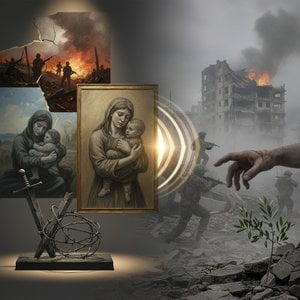
Explore a profound collection of historical war art. From visceral realism to poignant depictions of human resilience, discover museum-quality oil reproductions and expert insights for the discerning collector seeking to preserve history's most powerful echoes.

Explore the visceral visual language of battle art through masters like Rosa and Matejko. Discover the profound truth behind conflict on canvas.
 設置イメージを表示
 シェアする
シェアする シェアする
シェアする
 詳細を見る
詳細を見る ガイドを表示

 ダウンロード
 似ている作品
 X線調査
X線調査 スライドショーを表示
 Q&A
Q&A
 統計情報
統計情報
 詳細を表示
詳細を表示






































 ガラスオプションは、110cm未満のサイズでのみご利用いただけます。


