A Pioneer of Hungarian Modernism: The Life and Art of Bertalan Pór
Bertalan Pór, born in Budapest on November 4th, 1880, emerged as a pivotal figure in the landscape of early twentieth-century Hungarian art. His journey, spanning from his formative years amidst the burgeoning artistic fervor of fin-de-siècle Hungary to his eventual embrace of Parisian modernism and return to contribute to his homeland’s cultural revival, embodies a commitment to innovation and a profound engagement with the evolving aesthetic sensibilities of his time. From an early age, Pór demonstrated a natural aptitude for drawing, setting him on a path that would lead him through rigorous academic training and ultimately into the heart of avant-garde artistic circles. He initially honed his skills at the School of Industrial Design in Budapest under László Gyulay, but recognizing the limitations of local instruction, he sought further development abroad. Munich became his first destination, where he studied with Gabriel von Hackl, absorbing German artistic traditions before venturing to the vibrant artists’ colony of Nagybánya. This community, founded by Simon Hollósy and others, proved instrumental in shaping Pór's artistic vision, fostering a collaborative spirit and an openness to experimentation that would define his future work. His studies culminated in Paris at the Académie Julian under Jean Paul Laurens, exposing him to the latest trends in French painting and solidifying his foundation in academic technique.
The Radical Vision of ‘The Eight’
Pór's artistic trajectory took a decisive turn upon his return to Hungary with his involvement with “The Eight” (Nyolcak), a collective of artists who challenged the conservative norms of the Hungarian art establishment. Formed in 1909, this group – comprising Károly Kernstok, Róbert Berény, Dezső Czigány, Béla Czóbel, Ödön Márffy, Dezső Orbán, and Lajos Tihanyi alongside Pór – represented a bold departure from traditional artistic conventions. Though they only mounted three collective exhibitions, their impact was seismic, introducing Hungary to the radical aesthetics of Fauvism, Cubism, and Expressionism. Pór, along with Kernstok, proved particularly receptive to these influences, skillfully integrating elements of both German and French theories into his own unique style. He harbored a deep admiration for Ferdinand Hodler, whose symbolic landscapes and expressive use of color resonated with his developing artistic sensibilities. The Eight’s commitment to portraying modern life and exploring subjective experience through bold colors, distorted forms, and unconventional compositions marked a turning point in Hungarian art history, paving the way for future generations of modernist artists. Their work was not merely an imitation of Western trends but a dynamic adaptation that reflected the specific cultural context of Hungary.
From Exile to Reintegration: A Life Interrupted
The political upheaval following the fall of the Hungarian Democratic Republic in 1919 forced Pór into exile, first to Czechoslovakia and eventually to Paris in 1938 where he joined a thriving community of Hungarian émigrés. This period saw a shift in his artistic focus towards landscapes and animal paintings, reflecting both a personal response to displacement and an exploration of new subject matter. He traveled extensively throughout Europe and even the Soviet Union, absorbing diverse influences and refining his technique. Despite the challenges of exile, Pór remained active within the Hungarian émigré community, playing a vital role in reorganizing the Hungarian House in Paris after World War II – a cultural center that provided support and a sense of belonging for expatriate artists. A surprising turn came in 1948 when he returned to Hungary, accepting a teaching position at the Budapest Academy of Fine Arts (now the Hungarian University of Fine Arts). This marked a period of reintegration and renewed artistic productivity, allowing him to share his knowledge and experience with a new generation of Hungarian painters until his death in 1964.
A Lasting Legacy: Pór’s Contribution to Modern Art
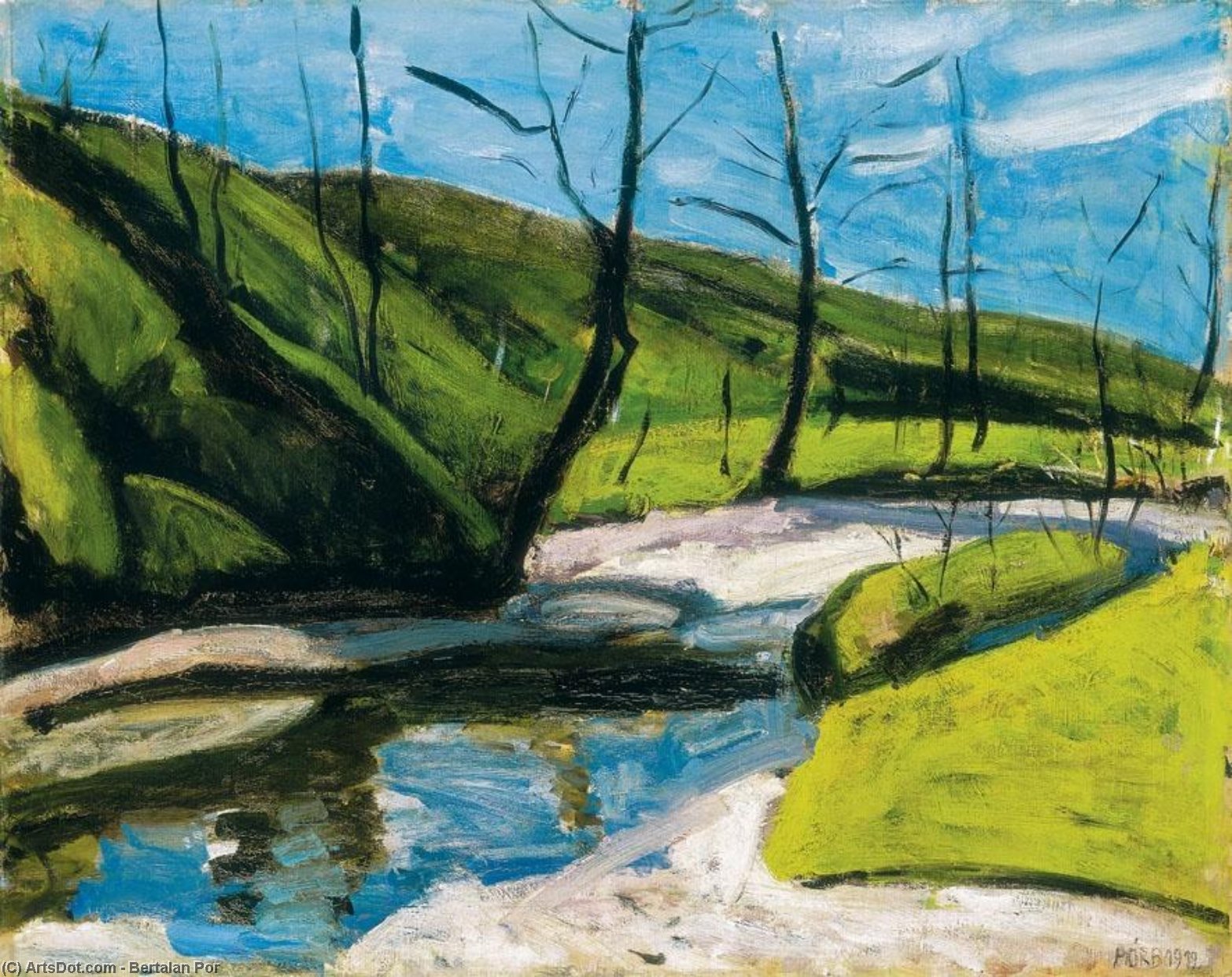
Bertalan Pór's legacy extends far beyond his individual paintings; he is rightfully recognized as a key architect of modernist Hungarian art. His early embrace of avant-garde movements, particularly through his association with The Eight, broadened the scope of artistic expression within Hungary and challenged established norms. Today, his works are held in prestigious collections such as the Hungarian National Gallery, which houses one of his self-portraits, and the Museum of Modern Art in New York City, which possesses his powerful lithograph “Proletarians of the World, Unite!”. The enduring interest in Pór’s work is evidenced by centenary exhibitions celebrating The Eight, solidifying their historical significance and highlighting Pór's crucial contribution to Hungarian art history.
His paintings are not simply representations of reality but expressions of a deeply felt emotional and intellectual engagement with the world around him. He remains an inspiring figure for artists and art enthusiasts alike, embodying the spirit of innovation, resilience, and artistic integrity that defines the best of modernism.
- Key Movements: Fauvism, Cubism, Expressionism, Modernism
- Notable Works: Bulls, The Family, Margitka, Proletarians of the World, Unite!
- Influence: Ferdinand Hodler, Jean Paul Laurens, Gabriel von Hackl



 プレビュー
プレビュー
 プリントを購入
 シェアする
シェアする シェアする
シェアする
 詳細を見る
詳細を見る

 ダウンロード
 似ている作品
 X線調査
X線調査 スライドショー
 詳細を見る
詳細を見る