
当社のアーティストが、お客様のご希望のサイズと額縁に合わせて、キャンバスに手描きで制作する油彩画です。 ( プリント版に切り替え デジタル画像販売へ切り替え)





























作品のオリジナル比率に合わせた、当店の規定サイズからお選びください。

特定のフレームやスペースに合わせて、ご希望のサイズをご入力いただけます。選択されたサイズが元の画像の比率と異なる場合、アートワークをトリミングするか、手描きで要素を追加して絵画を拡張いたします。デジタルモックアップ を制作し、制作開始前にご確認(承認)をいただきます。
画面上のプレビューは、実際のトリミングや拡張を正確に反映しているものではありません。最終的な構図は、モックアップによってのみ正確にご確認いただけます。
カスタムサイズもご利用いただけますが、元の比率を維持するためには、あらかじめ用意されたリストからサイズを選択することをお勧めいたします。

Helena Luy
複製画のサイズ

In the bustling, gaslit streets of late nineteenth-century New York, where the rapid pulse of progress met the refined elegance of the Gilded Age, Benjamin Falk captured something far more enduring than mere physical likeness. Born in Manhattan on October 14, 1853, Falk was a child of the city, a lifelong New Yorker whose artistic sensibilities were forged in the heart of American urbanity. His journey into the light began not as a master, but as a dedicated student and technician under the guidance of photographer George Rockwood. This early apprenticeship provided him with a foundational mastery of the chemical and mechanical complexities of the medium, yet it was his innate poetic sensibility that would eventually elevate his work from simple documentation to high art.
As Falk transitioned from a skilled technician to an independent visionary, his studio became a sanctuary for the era's most luminous figures. By 1877, he had established his first professional presence on East 14th Street, but it was his strategic move to Broadway in 1881 that truly catalyzed his ascent. Positioned near the vibrant theatrical heart of Madison Square, Falk’s studio became a destination for the cultural elite. His lens did not merely record faces; it interpreted souls. While many of his contemporaries relied on the stark, unforgiving clarity of high-contrast lighting, Falk pioneered a soft focus aesthetic. He utilized diffused light and delicate tonal gradations to create an atmosphere of warmth and intimacy, a technique that allowed him to capture the subtle nuances of expression and the quiet dignity of his subjects.
The true brilliance of Falk’s oeuvre lies in the remarkable diversity of his sitters, a collection of individuals who shaped the course of American history, science, and the arts. To look through Falk's archives is to walk through a pantheon of late Victorian greatness. His portraits were not merely commissioned tasks but artistic encounters that bridged the gap between the observer and the observed. The breadth of his influence can be seen in the names etched into his historical record:
This ability to navigate between the rugged determination of an inventor and the theatrical glamour of a stage star demonstrates a profound versatility. Falk’s mastery of the albumen silver print allowed for a rich, sepia-toned depth that complemented his preference for soft light, ensuring that each portrait possessed a timeless, almost dreamlike quality that transcended the era's technological limitations.
The passing of Benjamin Falk in 1925 marked the end of an era, yet his contribution to the evolution of photography remains indelible. He stood at the pivotal intersection where photography transitioned from a scientific curiosity into a respected fine art form. By prioritizing the essence of personality over the rigid precision of anatomical accuracy, he helped define the psychological depth that would become a hallmark of modern portraiture. His work serves as a vital historical window, offering more than just a record of what people looked like; it offers a sensory experience of how they felt within their own moment in time.
Today, the legacy of Benjamin Falk is preserved in prestigious institutions such as the Amon Carter Museum of American Art and the New York Public Library. His portraits continue to resonate because they possess a certain "gentle touch"—a refusal to let the harshness of reality obscure the beauty of the human spirit. In an age of instant, disposable imagery, Falk’s deliberate, atmospheric compositions remind us of the power of the slow, thoughtful gaze, ensuring his place as one of the true masters of the American photographic tradition.

1853 - 1911 , United States of America
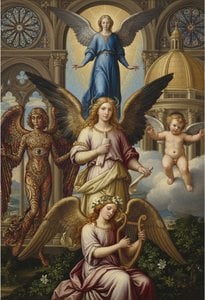
Explore the profound beauty of angelic figures in art history. From Renaissance masterpieces to celestial symbolism, our expert guide offers a sophisticated journey through the divine imagery of the Old Masters for discerning collectors and art enthusiasts.

Explore the profound evolution of documentary photography through a cultural lens. From early social realism to modern visual narratives, discover how photographers have captured history, labor, and the human condition to redefine fine art.

Explore the profound artistry of black and white photography. From historical mastery to the interplay of light and shadow, discover how monochrome captures timeless emotion and form through a sophisticated lens of art history.

Explore the profound emotional depth of documentary photography art. Discover how collectors curate powerful historical narratives through museum-quality black and white prints and fine art reproductions that preserve humanity's most resilient moments.

Explore the profound evolution of contemporary photography through a connoisseur's lens. From monochrome mastery to digital innovation, discover how modern photographic works shape fine art collections and define our cultural legacy.


 プレビュー
プレビュー
 シェアする
シェアする シェアする
シェアする
 詳細を見る
詳細を見る ガイド
ガイド

 ダウンロード
 似ている作品
 X線調査
X線調査 スライドショー
 統計情報
統計情報


 詳細を見る
詳細を見る









 ガラスオプションは、110cm未満のサイズでのみご利用いただけます。


