Tempera On PanelRenaissance
 1464Renaissance
 132.0 x 41.0 cm
 Gallerie dell’Accademia
オンラインプレビューをはるかに凌ぐ、高解像度で鮮明なデジタル画像をご購入いただけます。
各ファイルは、社内の専門家が高度なツールと熟練した手作業によるレタッチを駆使し、細心の注意を払って仕上げています。すべての画像において、卓越した鮮明度、正確な色彩再現性、そして繊細なディテールをお約束いたします。
最終ファイルは、プロフェッショナルな編集・印刷環境ですぐにご利用いただけるよう最適化された状態で、72時間以内にメールにてお届けいたします。これは、一流のデザインスタジオ、出版社、ギャラリーから信頼されているものと同等の品質です。
個人での鑑賞、印刷、クリエイティブなプロジェクトにご利用いただける高解像度ファイルをダウンロードできます。 ( プリント版に切り替え 手描きの複製画を注文する)
WahooArt.com を選ぶことは、単に画像を手に入れることではありません。プロの手によって精密に仕上げられ、満足保証が付いた高品質なデジタルアートワークを受け取ることを意味します。ご注文いただいた際に自動的に付随する内容は、以下の通りです:
ご注文から72時間以内に、高解像度のデジタル画像ファイルをメールでお送りいたします。お手元に届き次第、すぐにご利用いただけます。
お客様の作品は、高度なAI技術と専門家による手作業を組み合わせてプロフェッショナルに最適化されており、細部のディテール、鮮明さ、そして正確な色再現性を最大限に引き出しています。
ファイルを誤って削除したり、紛失してしまったりしましたか?ご安心ください。いつでも無料で再送いたします。
関税や手数料、配送料を気にすることなく、お気に入りのアートワークをすぐにお楽しみいただけます。デジタルダウンロードは常に免税です。
プロ仕様のツールとカラーマネジメント技術を用いることで、デジタル画像が元の色を最大限に忠実に再現することを保証いたします。
ご購入いただいたデジタル画像にご満足いただけない場合は、100日以内であれば、理由を問わず修正または100%の返金対応をさせていただきます。
ご満足いただけない場合は、デジタルファイルを受け取ってから100日以内であれば、理由を問わず全額返金いたします。
3枚購入で10%OFF、5枚購入で15%OFF、10枚以上のご購入で20%OFF。クリエイティブなプロジェクトやギャラリー、エージェンシーに最適です。
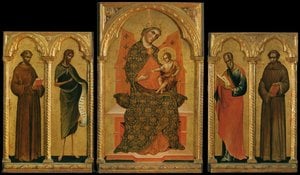
In the heart of the Venetian Renaissance, where the light of the lagoons meets the profound devotion of the era, Bartolomeo Vivarini crafted a masterpiece of spiritual storytelling. His Polyptych, completed in 1464, is not merely a painting but a sacred window into the late Gothic and early Renaissance soul. This exquisite tempera on panel work, measuring an intimate yet commanding 132 x 41 cm, serves as a breathtaking testament to the artist's ability to weave together human emotion and divine iconography. As one gazes upon these five interconnected panels, they are transported to an era where art served as the primary bridge between the earthly realm and the heavens.
The composition is a rhythmic dance of figures, structured with the architectural grace typical of the period. At its heart sits the Virgin Mary, cradling the Christ Child upon a throne, her presence radiating a maternal tenderness that anchors the entire work. Surrounding this central miracle are four saints, each meticulously rendered to evoke their unique sanctity. From the scholarly gravity of the bearded figures holding sacred manuscripts to the youthful, haloed innocence of the surrounding saints, Vivarini utilizes a sophisticated use of perspective and human anatomy to breathe life into the divine. The golden backgrounds do more than just signify holiness; they create an eternal, unshakeable space that transcends time, reflecting the light in a way that would have mesmerized 15th-century worshippers.
To behold this Polyptych is to witness the mastery of tempera technique. Vivarini’s hand is evident in the delicate transitions of skin tones and the heavy, sculptural folds of the garments. The artist employs a rich, saturated palette where deep blues and regal golds dominate, creating a visual hierarchy that guides the eye through the narrative. The interplay between the dark, somber robes of the male figures and the vibrant pinks and yellows of others creates a chromatic tension that is both harmonious and stimulating. This careful balance of color ensures that each panel retains its individual identity while contributing to a unified, symphonic whole.
For the discerning collector or interior designer, this work offers an unparalleled opportunity to introduce a sense of historical weight and classical elegance into a space. The intricate details—the fine lines of a beard, the subtle glow of a halo, the texture of a manuscript—provide endless points of visual interest. A high-quality reproduction of this piece does more than decorate a wall; it anchors a room with a sense of permanence and cultural depth. Whether placed in a quiet study or as a focal point in a grand hall, the Polyptych invites contemplation, offering a serene yet powerful presence that resonates with the timeless beauty of the Italian Renaissance.
バルトロメオ・ヴィヴァリーニ作「Polyptych」の視覚的な明るさはdeep_shadowです。設置する空間の光の加減に合わせて調整することが可能です。
バルトロメオ・ヴィヴァリーニ作「Polyptych」の著作権の状態は明確であり、本作はパブリックドメイン(著作権消滅)です。Gallerie dell’Accademiaに所蔵されているという事実によって、この状態が変わることはありません。
「Polyptych」は、Driftwood (#af9465)を主軸としたEarthyなパレットによって構成されています。

In the vibrant, shimmering atmosphere of the Quattrocento, Bartolomeo Vivarini emerged as a pivotal figure in the evolution of Venetian painting. Born in the storied glassmaking hub of Murano, Italy, he was part of an influential dynasty of artists that helped shape the visual identity of the Republic of Venice. As a member of the Vivarini family, his life and work were deeply intertwined with the artistic pulse of his homeland, bridging the transition from the ornate, gilded traditions of the late Gothic period to the burgeoning humanism of the early Renaissance.
The artistry of Vivarini is characterized by a profound sense of spiritual depth and technical precision. While he was a master of tempera, often utilizing gold leaf to imbue his compositions with a celestial luxury, he was also an innovator in the use of new mediums. It is noted that he learned the art of oil painting from Antonello da Messina, and he is credited with producing what is believed to be the first oil painting in Venice around 1473. This mastery allowed him to manipulate light and texture in ways that brought a new level of intimacy and serenity to his religious subjects.
Vivarini’s work often presents a striking balance between hard, defined outlines and a rich, emotive color palette. His figures frequently possess a dignified and devout expression, capturing the solemnity required for the altarpieces that adorned Venetian basilicas. This ability to convey human emotion through structured forms made him a sought-after painter for significant religious commissions. A notable example of his skill is found in his Madonna and Child, where he uses light entering through windows and deep red drapery to create a sense of sacred space.
Beyond the figures themselves, Vivarini’s paintings are often layered with symbolic meaning:
The historical importance of Bartolomeo Vivarini lies in his role as a bridge between eras. He stood at the crossroads of the Byzantine-influenced traditions of his predecessors and the revolutionary Renaissance styles brought by artists like Fra Angelico and Giovanni Bellini. By blending these diverse influences, he helped establish a unique Venetian visual language—one that prioritized luminous color and emotional resonance.
His influence extended through his family lineage, notably impacting the work of his nephew, Alvise Vivarini, who would become a leading artist in Venice before the rise of Bellini. Through his meticulous detail and his pioneering adoption of oil techniques, Bartolomeo Vivarini left an indelible mark on the history of Italian art, ensuring that the spiritual and aesthetic grandeur of Murano and Venice would be preserved for generations to come.

1440 - 1499 , イタリア

 設置イメージを確認
 送る
送る シェア
シェア
 詳細情報
詳細情報 ガイドを表示

 画像をダウンロード
 似ている作品
 X線調査
X線調査 スライドショー
 統計情報
統計情報 続きを読む
続きを読む