このページに掲載されている作品は著作権法によって保護されており、当社の許可なく同一の複製物を制作または販売することは法律で禁じられています。この保護は、以下のような国際条約に基づき執行されます。 ベルヌ条約 および、以下の条項に定められたものを含む各国の法律により、 米国著作権法 第17編。
この手法は、著作権で保護された作品の複製や複写を伴わないため、著作権法に完全に準拠しています。これは単なる模倣ではなく、創造的な再解釈です。元の作品からインスピレーションを受けつつも、それとは異なる、全く新しい絵画を生み出すものです。
スピーディーな制作と多彩な仕上げオプションが魅力の、ミュージアムクオリティなジークレー・キャンバスプリント。 ( 手描きの複製画を注文する デジタル画像販売へ切り替え)
作品のオリジナル比率に合わせた、当店の規定サイズからお選びください。

額縁や壁のスペースに合わせて、ご希望の幅と高さを入力してください。プリントはカットすることは可能ですが、元の画像より大きくすることはできないため、異なる比率のサイズを選択された場合は、画像の一部が欠けることになります。印刷を開始する前に、内容を確認していただくためのデジタルモックアップをお送りいたします。このページに表示されている画像は、実際のカット後の状態を示すものではありません。実際の仕上がりはモックアップにてご確認ください。
Single Form (Chûn Quoit)
複製画サイズ一覧
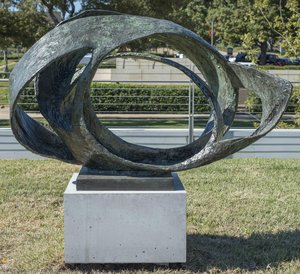
Barbara Hepworth’s “Single Form (Chûn Quoit)” is not merely a sculpture; it's an invitation into a dialogue with the ancient, a resonant echo of prehistoric ritual and the enduring power of form. Created in 1961, this arresting piece—a study in dark stone, meticulously carved and subtly textured—captures Hepworth’s signature style: a masterful blend of abstraction and deeply rooted connection to the natural world. The work immediately commands attention with its verticality, a stark yet graceful presence that speaks of both strength and vulnerability. It's a form that seems simultaneously grounded in the earth and reaching for something beyond – a visual embodiment of contemplation.
The sculpture’s genesis lies within the evocative landscape of Cornwall, specifically referencing the “quoit” chamber tombs found on the Penwith peninsula. These Neolithic structures, characterized by their distinctive circular openings, served as sacred spaces, imbued with layers of ritual and belief. Hepworth deliberately chose to evoke this ancient geometry, translating its essence into a contemporary form. The rough-hewn surface of the stone, achieved through careful carving and polishing, suggests the raw materiality of the original tombs while simultaneously hinting at the artist’s deliberate shaping – a delicate balance between preservation and reimagining.
Hepworth's choice of material—a dark, possibly bronze or similar stone—is crucial to the sculpture’s impact. The deep hue absorbs light, creating an immediate sense of weight and solidity. Yet, it is not a monolithic mass; subtle variations in texture – areas of roughness juxtaposed with polished surfaces – invite close inspection. This tactile quality encourages viewers to engage physically with the work, sensing its form through touch as much as sight.
The technique employed is one of painstaking refinement. Hepworth’s process involved a deliberate layering and shaping of the stone, guided by an intuitive understanding of its inherent qualities. The circular opening, piercing the upper portion of the sculpture, isn't simply a decorative element; it acts as a focal point, drawing the eye inward and suggesting a portal to another realm. The subtle gradations in tone, achieved through careful polishing and carving, create a sense of depth and volume, transforming what could have been a flat plane into a dynamic three-dimensional form.
“Single Form (Chûn Quoit)” transcends its purely formal qualities to evoke profound symbolism. The reference to the Neolithic quoit tombs speaks to humanity’s enduring fascination with death, ritual, and the mysteries of the past. The sculpture can be interpreted as a meditation on time, memory, and the cyclical nature of existence – a reminder that we are all connected to those who came before us.
Furthermore, the work possesses an undeniable emotional resonance. Its austere beauty and contemplative form invite viewers to slow down, to breathe deeply, and to engage in a quiet dialogue with their own inner selves. The sculpture’s simplicity is deceptive; it holds within it a vastness of meaning, prompting reflection on themes of spirituality, mortality, and the enduring power of human creativity.
Barbara Hepworth was a pivotal figure in 20th-century art, pioneering new approaches to sculpture that moved beyond traditional representational forms. “Single Form (Chûn Quoit)” stands as a testament to her innovative spirit and her profound connection to the natural world. Her work continues to inspire artists and collectors alike, offering a timeless exploration of form, space, and the human condition. Reproductions of this iconic piece provide a remarkable opportunity to bring Hepworth’s vision into any setting, adding a touch of contemplative elegance and historical significance.
バーバラ・ヘップワース作「Single Form (Chûn Quoit)」のNeutralsなパレットは、そのReflectiveな情緒的トーンと見事に調和しています。色彩は、作品が感情を伝えるための重要な要素の一つです。
バーバラ・ヘップワース作「Single Form (Chûn Quoit)」はModernismに属しています。このムーブメントは、本作の様式的な背景を形作るものです。
バーバラ・ヘップワース作「Single Form (Chûn Quoit)」は、明部と暗部の間にStatementなコントラストを描き出しています。


1903 - 1975 , イギリス

Explore the rich history of sculpture from ancient masterpieces to contemporary innovations. Discover key techniques, influential artists & investment potential for discerning art collectors.

Explore the revolutionary sculptures of Henry Moore – abstract forms, reclining figures & powerful expressions of the human condition. Discover his legacy & artistic process with WahooArt.

Journey through art history with our Top 10 bronze sculptures! Explore masterpieces by Rodin, Michelangelo & more. Discover stories behind iconic statues and find museum-quality reproductions for your home decor at WahooArt.com.

モンドリアン、マレーヴィチ…幾何学的抽象絵画を代表する傑作10選。各作品の背景や色彩構成、アーティストの情熱に迫ります。美術館品質の複製画はWahooArt.comで。オンラインでアートコレクションをご覧ください。

Explore the profound world of Barbara Hepworth's sculpture. Discover her artistic evolution, iconic forms, and lasting influence on modern art. A guide for collectors & enthusiasts.


 送る
送る シェア
シェア
 詳細情報
詳細情報 ガイドを表示

 画像をダウンロード
 似ている作品
 スライドショー
 統計情報
統計情報


 続きを読む
続きを読む






































 ガラスオプションは、110cm未満のサイズでのみご利用いただけます。