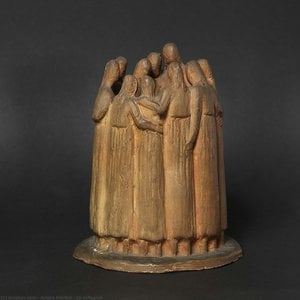
TerracottaNovecento Italiano
 Modern
 5.0 x 23.0 cm
 Fondazione Cariplo
当社のアーティストが、お客様のご希望のサイズと額縁に合わせて、キャンバスに手描きで制作する油彩画です。 ( プリント版に切り替え デジタル画像販売へ切り替え)
作品のオリジナル比率に合わせた、当店の規定サイズからお選びください。

特定のフレームやスペースに合わせて、ご希望のサイズをご入力いただけます。選択されたサイズが元の画像の比率と異なる場合、アートワークをトリミングするか、手描きで要素を追加して絵画を拡張いたします。デジタルモックアップ を制作し、制作開始前にご確認(承認)をいただきます。
画面上のプレビューは、実際のトリミングや拡張を正確に反映しているものではありません。最終的な構図は、モックアップによってのみ正確にご確認いただけます。
カスタムサイズもご利用いただけますが、元の比率を維持するためには、あらかじめ用意されたリストからサイズを選択することをお勧めいたします。

Horse
複製画サイズ一覧
In the quiet presence of Arturo Martini’s Horse, one encounters more than just a depiction of an animal; one meets a profound dialogue between ancient tradition and the burgeoning modernism of the early twentieth century. This captivating sculpture, originally conceived in cast terracotta, serves as a window into a pivotal moment in Italian art history. The piece captures a sense of raw, unbridled vitality, with its powerful head and open mouth suggesting a breath caught in time. While the original work is celebrated for its light blue finish—a color palette inspired by the storied ceramics of Savona—the essence of the sculpture lies in its ability to convey movement and life through the deliberate simplification of form.
The technique employed by Martini reflects his deep-seated roots in craftsmanship. Having begun his journey as a goldsmith, Martini possessed an intimate understanding of how material responds to the artist's touch. In this work, we see the influence of his studies with Etruscan and Roman antiquities, where the heavy, earthbound nature of terracotta is transformed into something ethereal. The way the legs are positioned, spreading outward to create a dynamic visual tension, demonstrates a mastery of composition that avoids mere imitation of nature in favor of capturing its underlying energy. For the discerning collector or interior designer, this piece offers a sophisticated interplay of texture and silhouette, making it an ideal focal point for spaces that value sculptural depth.
To understand the Horse is to understand the turbulent artistic landscape of post-World War I Italy. Martini was an artist who refused to be confined by a single movement; he navigated the experimental fervor of Futurism and the structured elegance of the Novecento Italiano with unparalleled grace. This specific work, produced around 1926-1927, represents a period where Martini sought to move beyond the "primitivist purification" of forms toward a more expressive, liberated style. He moved away from rigid constraints to find a new language of sculpture—one that utilized freer forms to achieve a deeper emotional resonance.
For those looking to integrate art into a contemporary living space, a high-quality reproduction of this masterpiece brings with it an aura of historical significance and timeless aesthetic appeal. The sculpture’s ability to bridge the gap between classical stability and modern fluidity allows it to complement diverse decor styles, from minimalist galleries to richly textured, classical interiors. It is not merely a decoration but an invitation to contemplate the enduring power of the animal spirit and the transformative hand of a master who turned humble clay into an eternal icon of motion.


1889 - 1947

Explore the rich history of sculpture from ancient masterpieces to contemporary innovations. Discover key techniques, influential artists & investment potential for discerning art collectors.

Explore the rich history of sculpture with WahooArt. Discover key techniques, influential artists & investment potential for discerning collectors. Expert insights into valuing and collecting timeless masterpieces.

Journey through art history with our Top 10 bronze sculptures! Explore masterpieces by Rodin, Michelangelo & more. Discover stories behind iconic statues and find museum-quality reproductions for your home decor at WahooArt.com.

Immerse yourself in the captivating world of slate blue! Explore 10 iconic paintings by Monet, Van Gogh & Renoir. Discover their stories, techniques & find museum-quality art reproductions for your home at .

Journey through art history with 10 legendary bronze sculptures – from Michelangelo's David to Rodin’s Thinker. Explore the stories, techniques & timeless beauty of these masterpieces. Find museum-quality reproductions & elevate your home decor on WahooArt.com.


 送る
送る シェア
シェア
 詳細情報
詳細情報 ガイドを表示

 画像をダウンロード
 似ている作品
 スライドショー
 統計情報
統計情報 続きを読む
続きを読む






































 ガラスオプションは、110cm未満のサイズでのみご利用いただけます。