
x


 キャンバスにアクリル絵具ウォールアートRenaissance Mannerism
 1550
1550 144.0 x 104.0 cm
 国立美術館 (Rijksmuseum)




























作品のオリジナル比率に合わせた、当店の規定サイズからお選びください。

特定のフレームやスペースに合わせて、ご希望のサイズをご入力いただけます。選択されたサイズが元の画像の比率と異なる場合、アートワークをトリミングするか、手描きで要素を追加して絵画を拡張いたします。デジタルモックアップ を制作し、制作開始前にご確認(承認)をいただきます。
画面上のプレビューは、実際のトリミングや拡張を正確に反映しているものではありません。最終的な構図は、モックアップによってのみ正確にご確認いただけます。
カスタムサイズもご利用いただけますが、元の比率を維持するためには、あらかじめ用意されたリストからサイズを選択することをお勧めいたします。

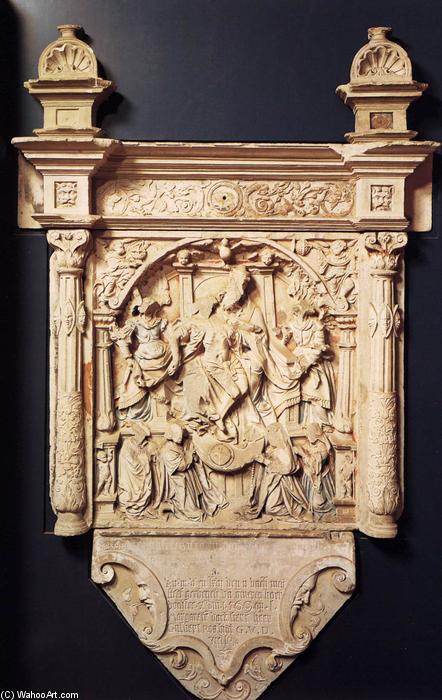
ロズ家霊銘
複製画のサイズ

Arnt van Tricht remains a figure shrouded in relative obscurity compared to his more famous contemporaries, such as Pieter Bruegel the Elder or Hans Holbein the Younger. Yet, for those who look closely at the artistic landscape of the mid-16th century, his contribution to the cultural fabric of Antwerp and Cologne is undeniable. Born around 1530, Van Tricht’s formative years coincided with a period of intense intellectual ferment, fueled by humanist scholarship and a profound rediscovery of classical ideals. While precise biographical details regarding his early upbringing are scarce, evidence suggests he was a master of both wood and stone, honing his skills in the prestigious workshops of the Lower Rhine region.
His artistic journey likely began under the guidance of Hendrick Douverman, a prominent sculptor of the era. This early training instilled in him a meticulous craftsmanship that would define his career. Though he may have had roots in Utrecht—as suggested by the stylistic similarities between his work and the influential sculptors of that city—he established much of his reputation in Kalkar. In these early years, Van Tricht was a prolific wood-carver, often creating innovative adaptations of late Gothic models. However, as the winds of the Reformation began to sweep through Northern Europe, his medium shifted. The religious upheavals necessitated a change in artistic focus, leading him to specialize in stone relief carving, memorial tablets, and exquisite chimney-pieces that blended durability with profound spiritual narrative.
By the mid-1560s, Van Tricht had relocated to Antwerp, a vibrant, bustling hub of international trade and artistic innovation. This move proved pivotal, as the Antwerp patronage system encouraged artists to push the boundaries of their medium. It was during this period that his work began to reflect the sophisticated influences of the High Renaissance and Mannerism. He absorbed the grace of Italian masters like Andrea del Piero della Francesca and the subtle emotional depth of Leonardo da Century, incorporating elements of idealized beauty into his sculptural reliefs.
His most celebrated achievement remains the Ros Family Epitaphs, a series of monumental funerary sculptures commissioned for St. Elisabeth’s Church in Antwerp. Executed in fine Carrara marble, these works transcend mere decoration to become profound theological contemplations. In these pieces, one can witness a masterful command of chiaroscuro—the dramatic interplay of light and shadow—carved directly into the stone. The central figures, often depicting divine grace through the presentation of Christ, are rendered with such precision that the folds of drapery and the nuances of facial expression seem almost palpable. These works served as a microcosm of the era's anxieties, capturing the tension between religious devotion and the looming threat of iconoclasm.
The tragedy of Van Tricht’s legacy is inextricably linked to the turbulent history of Antwerp itself. The Iconoclasm of 1578, a period of violent Protestant reform, saw many of his most precious works targeted by zealous soldiers. The Ros Family Epitaph, for instance, suffered the heartbreak of defaced figures, with heads shattered in an act of religious defiance. Despite such destruction, the surviving fragments of his oeuvre continue to speak volumes about the transition from late Gothic traditions to the sophisticated humanist ideals of the Renaissance.
Today, Arnt van Tricht is remembered not just as a sculptor, but as a bridge between eras. His ability to pivot from the intricate wood-carving of the North to the monumental stone reliefs of the South demonstrates a remarkable versatility and resilience. His work stands as a testament to:
Through his hands, the stone and wood were given a voice—a quiet, enduring voice that continues to resonate within the halls of art history.

1530 - 1570 , Netherlands
Explore the fascinating transformation of internet memes into durable canvas art! Discover the cultural impact, artistic techniques & preservation efforts driving this new movement. Expert insights for collectors and enthusiasts.

デジタルネイティブ世代の感性を捉えた現代アート作品をWahooArtで。アプロプリエーション、ポスト・インターネット表現、カスタムポートレートなど、高品質な油絵複製と専門のアートコンサルテーションを提供します。コレクションの拡充や空間デザインに。


最新の美術ニュース、限定オファー、そしてインテリアのアイデアをいち早くお届けします。
お客様のプロジェクトについてお聞かせください。当社の美術専門家が、お客様に合わせた3つのパーソナライズされた芸術提案をご提供いたします。
あなたにぴったりの3作品を無料で厳選いたします

 プレビュー
プレビュー
 プリントを購入
 シェアする
シェアする シェアする
シェアする
 詳細を見る
詳細を見る

 ダウンロード
 似ている作品
 X線調査
X線調査 スライドショー
 詳細を見る
詳細を見る









 ガラスオプションは、110cm未満のサイズでのみご利用いただけます。


