

 Oil On CanvasWallArtBaroque
 1643Early Modern
 105.0 x 84.0 cm
 プラド美術館
当社のアーティストが、お客様のご希望のサイズと額縁に合わせて、キャンバスに手描きで制作する油彩画です。 ( プリント版に切り替え デジタル画像販売へ切り替え)





























作品のオリジナル比率に合わせた、当店の規定サイズからお選びください。

フレームや壁のスペースに合わせて、ご希望の幅と高さを入力してください。本作品は手描きのため、異なる比率のサイズをご希望の場合、絵画の周囲を少し広げて描くか、あるいは端を少しカットして調整することが可能です。お客様のご要望に合わせます。制作を開始する前に、仕上がりを確認するためのデジタルモックアップをお送りいたします。このページに表示されている画像は完成品の実物ではなく、あくまでモックアップによるイメージです。
St Jerome
複製画サイズ一覧
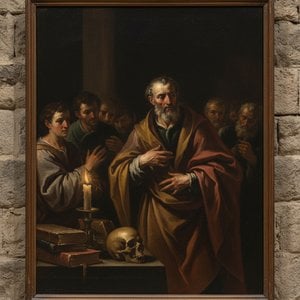
To stand before Antonio de Pereda’s depiction of St Jerome is to step directly into the hushed, richly shadowed chambers of profound thought. This 1643 masterpiece does not merely hang on a wall; it envelops the viewer in an atmosphere thick with scholarly contemplation and spiritual yearning. The painting captures the essence of the Baroque obsession with intense human emotion, translating the solitary life of the scholar into a dramatic visual narrative. Pereda masterfully presents St Jerome, the aged hermit, not as a static portrait, but as a man caught in the very act of wrestling with profound truths—the mysteries of faith, mortality, and divine knowledge.
The technical brilliance evident in this oil on canvas work is breathtaking. Pereda employs the dramatic chiaroscuro characteristic of the Baroque period, where light does not simply illuminate but rather sculpts the drama from within the darkness. Deep, velvety shadows consume much of the background, serving only to push the central figure forward into a pool of focused, ethereal light. Observe the texture: the impasto technique gives palpable weight to the folds of the red robe and the delicate topography of the man’s wrinkled skin. This is not merely representation; it is an almost tactile rendering of age and wisdom. The loose, expressive brushwork allows the viewer's eye to wander, appreciating both the meticulous detail—such as the open pages of the book—and the overall sense of painterly energy.
The genius of the composition lies in its symbolic density. St Jerome is surrounded by potent emblems that speak volumes without uttering a word. The skull resting near his hand serves as an undeniable memento mori, a stark reminder of life’s fleeting nature against the backdrop of eternal contemplation. Nearby, the open book signifies accumulated knowledge and sacred scripture, while the inclusion of elements like the shepherd's staff or perhaps a trumpet hints at a calling—a divine message interrupting the quietude of study. These objects coalesce around the central figure, creating a visual dialogue between earthly pursuits (the books) and ultimate spiritual reckoning (the skull).
For the collector or designer seeking to infuse a room with intellectual gravitas and dramatic depth, this reproduction offers unparalleled character. The dominant palette of deep browns, rich ochres, and passionate reds allows it to anchor any sophisticated interior scheme, whether in a library, study, or formal drawing-room. Owning a piece echoing Pereda’s vision means inviting a conversation about art history, philosophy, and the enduring human quest for meaning into your daily life. It is an artwork that demands slow viewing, rewarding the observer with deeper insights every time their gaze lingers upon its dramatic interplay of light and shadow.
アントニオ・デ・ペレダ作「St Jerome」 のおすすめの用途は (Focal)、飾る場所は (Lounge) です。
アントニオ・デ・ペレダ作「St Jerome」は、原寸で105 x 84 cmのPortraitによる作品です。
「St Jerome」はアントニオ・デ・ペレダの作品とされています。

アントニオ・デ・ペレダ・イ・サルガド(1611–1678)は、スペイン・バロック時代を代表する画家であり、その精緻を極めた静物画によって、今日まで高い称賛を浴び続けています。スペインのバリャドリードに生を受けた彼は、マドリード派絵画における極めて重要な人物としてその名を刻みました。
ペレダの人生は、芸術と切り離せないものでした。彼の父、母、そして二人の兄弟は皆、画家という職業に就いていました。このような芸術的な家庭環境こそが、彼が幼い頃から芸術に対して深い関心を抱き、その才能を育む揺るぎない土壌となったことは疑いようもありません。彼はマドリードにて、当時名声の高かった画家ペドロ・デ・ラス・クエバスに師事し、その基礎を築きました。
ペレダの輝かしいキャリアにおける決定的な瞬間は、スペイン宮廷の有力者であったジョヴァンニ・バッティスタ・クレシェンツィとの出会いによってもたらされました。クレシェンツィはペレダを自らの庇護下に置き、画家としての道を進むための貴重な機会と導きを与えました。しかし、1635年にクレシェンツィが没すると、ペレダは宮廷から離れることとなり、その後は宗教施設からの依頼を受ける道へと歩みを進めることになります。
ペレダの画風を語る上で欠かせないのが、光と影の劇的な対比を生み出すテネブリズムの見事な駆使です。バロック絵画の真骨頂とも言えるこの技法は、彼の作品に圧倒的な奥行きと感情的な強烈さを吹き込んでいます。彼は静物画の大家として最もよく知られていますが、その卓越した技術は宗教画や歴史画といった壮大な構図においても遺憾なく発揮されました。
ペレダが残した作品群は、多岐にわたるジャンルにおいて比類なき輝きを放っています。
ペレダの芸術的探求は、いくつかの重要な芸術家や運動から深い影響を受けていました。
アントニオ・デ・ペレダは、スペイン・バロック美術史において極めて重要な地位を占めています。彼の静物画は、質感、光、そして形態を捉える驚異的な能力を示しており、このジャンルにおける最高峰の例と見なされています。また、その歴史画は、大規模な物語を描き出す画家としての多才さと技術の高さを証明しています。17世紀スペインの芸術的景観に多大な貢献を果たした彼の遺志は、傑作という名の輝かしいレガシーとして、今なお私たちの心を捉えて離しません。

1611 - 1678 , スペイン
Explore the profound drama of Spanish Baroque art. Delve into the mastery of light, shadow, and realism through the legendary works of Diego Velázquez and the Spanish Golden Age.

 設置イメージを確認
 送る
送る シェア
シェア
 詳細情報
詳細情報 ガイドを表示

 画像をダウンロード
 似ている作品
 X線調査
X線調査 スライドショー
 統計情報
統計情報 続きを読む
続きを読む









 ガラスオプションは、110cm未満のサイズでのみご利用いただけます。


