
 Oil On CanvasWallArtHague School
 1880
1880 368.0 x 505.0 cm
 Toledo Museum of Art
当社のアーティストが、お客様のご希望のサイズと額縁に合わせて、キャンバスに手描きで制作する油彩画です。 ( プリント版に切り替え デジタル画像販売へ切り替え)





























作品のオリジナル比率に合わせた、当店の規定サイズからお選びください。

特定のフレームやスペースに合わせて、ご希望のサイズをご入力いただけます。選択されたサイズが元の画像の比率と異なる場合、アートワークをトリミングするか、手描きで要素を追加して絵画を拡張いたします。デジタルモックアップ を制作し、制作開始前にご確認(承認)をいただきます。
画面上のプレビューは、実際のトリミングや拡張を正確に反映しているものではありません。最終的な構図は、モックアップによってのみ正確にご確認いただけます。
カスタムサイズもご利用いただけますが、元の比率を維持するためには、あらかじめ用意されたリストからサイズを選択することをお勧めいたします。

A Dutch Road
複製画のサイズ
Led by Anton Mauve, the group of Dutch painters known as the Hague School distinguished itself by its exceptional rendering of moody atmosphere and light. As a Dutch critic wrote of the Hague School in 1875, “The artists try, by preference, to render mood; and they give precedence to tone above color… They have revealed the poetry of gray in a hitherto unprecedented manner.” Like the Barbizon painters (see 1933.37), they preferred to work out-of-doors and remained true to the tonality of the Dutch countryside, affected by the moist climate. Mauve's A Dutch Road reveals his characteristic “poetry of gray” and his debt to the great Dutch seventeenth-century masters of landscape (see 1978.68) and the French Realist artist Jean-François Millet (1814-1875).
This monumental canvas, measuring 368 x 505 cm, captures a quintessential scene from rural Holland – a solitary road winding its way into the distance beneath an overcast sky. Painted around 1880, “A Dutch Road” exemplifies Mauve’s unwavering commitment to capturing the essence of nature and conveying profound emotional resonance. The artwork depicts a bleak and somber winter landscape. It’s an oil painting with a realistic style, showcasing a muddy road receding into the distance, flanked by bare trees under a heavy, overcast sky. A lone figure on horseback is the central subject, walking away from the viewer.
The composition prioritizes horizontal lines – the road, the tree trunks – creating a sense of vastness and isolation that speaks to the melancholic spirit of the era. Lines are loose and expressive, suggesting brushstrokes rather than precise detail. Shapes are largely geometric – the road, trees, and sky – but softened by the texture of the paint. The technique is characteristic of oil painting, utilizing layering and blending to achieve the desired effects. Thick impasto—heavy application of pigment—dominates particularly in the wet ground and tree branches, adding a tactile quality to the image that invites contemplation.
Beyond its technical brilliance, “A Dutch Road” resonates with deeper symbolic meanings. The desolate landscape embodies themes of solitude and travel, reflecting Mauve’s own fascination with the human condition amidst the grandeur of nature. The figure on horseback, walking away from the viewer, symbolizes departure—perhaps a journey into introspection or a farewell to earthly concerns. The muted color palette – predominantly grays, browns, and whites – reinforces the pervasive gloom but simultaneously highlights the subtle beauty of the winter scene.
“A Dutch Road” stands as a cornerstone of the Hague School’s artistic legacy. Influenced by Impressionism and rooted in the Barbizon tradition, Mauve sought to depict nature with uncompromising honesty and sensitivity. He aimed to capture not merely what he saw but how it felt—the quiet contemplation evoked by the stillness of winter light. This painting exemplifies the school's belief that art should strive for emotional truthfulness, mirroring the profound connection between humanity and its environment.
The Toledo Museum of Art houses a stunning reproduction of “A Dutch Road,” allowing viewers to experience Mauve’s masterful technique and evocative vision firsthand. For more details about this artwork and its provenance, please visit Toledo Museum of Art.


1838 - 1888 , オランダ
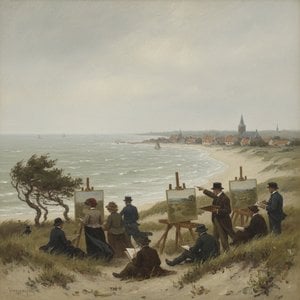
Explore the ethereal beauty of the Hague School art movement. Discover how masters like Jan Weissenbruch captured the atmospheric grey light of the Dutch landscape through unparalleled technique and emotive, misty compositions.

Explore the breathtaking mastery of Dutch Golden Age landscapes. From Italianate light to atmospheric realism, discover the techniques of 17th-century masters and learn how to bring these timeless, museum-quality masterpieces into your home through expert oil reproductions.


 プレビュー
プレビュー
 シェアする
シェアする シェアする
シェアする
 詳細を見る
詳細を見る ガイド
ガイド

 ダウンロード
 似ている作品
 X線調査
X線調査 スライドショー
 統計情報
統計情報 詳細を見る
詳細を見る









 ガラスオプションは、110cm未満のサイズでのみご利用いただけます。


