x


 OilWallArtBaroque Classicism
 58.0 x 77.0 cm
 エルミタージュ美術館
迅速な制作と多彩な仕上げオプションを備えた、ミュージアムクオリティのジークレーまたはキャンバスプリント。 ( 手描きの絵画を購入 画像を購入)





























作品のオリジナル比率に合わせた、当店の規定サイズからお選びください。

特定のフレームやスペースに合わせて、ご自身でサイズを指定することも可能です。選択されたサイズが元の画像の比率と一致しない場合、作品をトリミングするか、鏡面反射または単色での塗りつぶしによって画像を拡張いたします。制作を開始する前に、ご確認用のデジタルモックアップをお送りいたします。
画面上のプレビューには、実際のトリミングや拡張は反映されませんのでご注意ください。最終的な構図を正確に確認できるのは、モックアップのみとなります。
カスタムサイズも承っておりますが、元の比率を維持するためには、あらかじめ用意されたリストからサイズを選択することをお勧めいたします。

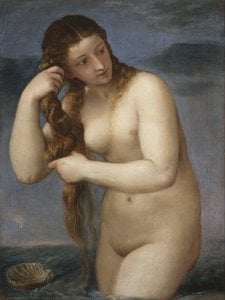
Venus at Rest
複製画のサイズ
Andrea Sacchi’s “Venus at Rest” isn't merely a painting; it’s an invitation to step into a realm of classical grace and contemplative beauty. Completed in the mid-17th century, during the height of the Baroque period in Rome, this oil on canvas transports us to a world where mythology intertwines with idealized serenity. The work, now housed within the esteemed Hermitage Museum in St. Petersburg, Russia, is a testament to Sacchi’s mastery of capturing not just form but also an atmosphere of profound peace.

Sacchi’s style is a fascinating blend of classical ideals and Baroque dynamism, yet he consciously steers clear of the overwhelming theatricality often associated with his era. He draws heavily from the influence of Raphael, particularly in the careful balance of composition and the subtle modeling of forms. The painting eschews dramatic diagonals or bombastic gestures, instead favoring a carefully orchestrated arrangement where Venus, seated upon her golden throne, becomes the focal point of quiet contemplation. Notice how the figures—cherubs engaged in playful activities—are not presented as active participants but rather as gentle observers, contributing to the overall sense of tranquility.
The use of light and shadow is exquisitely controlled, creating a diffused glow that softens the forms and imbues the scene with an ethereal quality. Sacchi’s meticulous attention to detail – from the delicate folds of Venus's drapery to the intricate foliage surrounding her—demonstrates his exceptional technical skill. Interestingly, Sacchi’s approach aligns him with a group of artists who were pushing back against the excesses of the Baroque, advocating for a more restrained and harmonious style.
“Venus at Rest” is rich in symbolic meaning. Venus herself embodies the ideals of feminine beauty, love, and fertility – qualities celebrated throughout classical mythology. The golden throne symbolizes her divine status and authority, while the cherubs surrounding her represent innocence and joy. The lush foliage—a carefully rendered depiction of plants from various regions—suggests abundance and prosperity. Even the mountainous landscape in the background hints at a connection to the natural world, grounding Venus’s idealized beauty within a tangible reality.
Beyond its immediate visual appeal, the painting speaks to broader themes of harmony, balance, and the pursuit of inner peace. It's a meditation on the power of stillness and the appreciation of simple pleasures – a concept particularly resonant in a world often characterized by chaos and distraction.
Andrea Sacchi’s “Venus at Rest” stands as a significant work within the context of 17th-century Roman art. His commitment to classical restraint influenced subsequent generations of artists, including Carlo Maratta, who carried on his style and techniques. The painting's influence can also be seen in the works of other Baroque masters like Pieter Wouwerman and Jan Weenix, whose dynamic compositions and meticulous attention to detail share a common thread with Sacchi’s approach. Today, reproductions of “Venus at Rest” continue to captivate art lovers worldwide, offering a glimpse into the enduring beauty and timeless appeal of this Baroque masterpiece.


1599 - 1661 , イタリア

Elevate your collection with the dramatic grandeur of Baroque oil masterpieces. WahooArt offers exquisite, hand-painted reproductions of the Great Masters, featuring authentic chiaroscuro and premium textures. Discover bespoke artistry and expert consultation for elite collectors worldwide.


最新の美術ニュース、限定オファー、そしてインテリアのアイデアをいち早くお届けします。
お客様のプロジェクトについてお聞かせください。当社の美術専門家が、お客様に合わせた3つのパーソナライズされた芸術提案をご提供いたします。
あなたにぴったりの3作品を無料で厳選いたします


 プレビュー
プレビュー
 シェアする
シェアする シェアする
シェアする
 詳細を見る
詳細を見る

 ダウンロード
 似ている作品
 X線調査
X線調査 スライドショー
 詳細を見る
詳細を見る









 ガラスオプションは、110cm未満のサイズでのみご利用いただけます。