

スピーディーな制作と多彩な仕上げオプションが魅力の、ミュージアムクオリティなジークレー・キャンバスプリント。 ( 手描きの複製画を注文する デジタル画像販売へ切り替え)





























作品のオリジナル比率に合わせた、当店の規定サイズからお選びください。

特定のフレームやスペースに合わせて、ご自身でサイズを指定することも可能です。選択されたサイズが元の画像の比率と一致しない場合、作品をトリミングするか、鏡面反射または単色での塗りつぶしによって画像を拡張いたします。制作を開始する前に、ご確認用のデジタルモックアップをお送りいたします。
画面上のプレビューには、実際のトリミングや拡張は反映されませんのでご注意ください。最終的な構図を正確に確認できるのは、モックアップのみとなります。
カスタムサイズも承っておりますが、元の比率を維持するためには、あらかじめ用意されたリストからサイズを選択することをお勧めいたします。

Guitar and Profile
複製画サイズ一覧
In the delicate interplay of shadow and line found within André Masson’s 1924 work, Guitar and Profile, we encounter a profound moment of artistic metamorphosis. This exquisite pencil drawing serves as a hauntingly beautiful bridge between the tangible world of musical instruments and the ethereal realm of human consciousness. At first glance, the viewer is drawn to the striking asymmetrical composition, where the structured form of a guitar dominates the right side of the frame, while a mysterious human profile emerges softly from its soundhole. It is a piece that does not merely depict objects, but rather captures a psychological state, inviting the observer into a silent dialogue between sound and soul.
The technique employed by Masson in this period demonstrates a masterful command of graphite. Through meticulous hatching and cross-hatching, he builds a sense of volume and depth that breathes life into the two-dimensional surface. The artist utilizes a grayscale palette to create a soft, diffused light that avoids harsh contrasts, opting instead for subtle tonal transitions that suggest an atmosphere of quiet introspection. This approach lends the work a dreamlike quality, where the boundaries between the organic curves of the human face and the geometric precision of the guitar's body begin to blur, much like a melody dissolving into memory.
Created during a pivotal era in Masson’s career, this drawing reflects the burgeoning influence of Surrealism and the artist's fascination with the subconscious. While the work retains elements of realism through its detailed rendering, there is an unmistakable impressionistic touch that prioritizes emotional resonance over photographic accuracy. The way the profile emerges from the instrument suggests a profound symbolism: the idea that music is not merely an external auditory experience, but an internal, transformative force capable of giving shape to our very identities. It evokes themes of metamorphosis and the symbiotic relationship between the creator and their medium.
For the discerning collector or interior designer, Guitar and Profile offers a sophisticated focal point that transcends mere decoration. Its understated elegance and monochromatic depth allow it to integrate seamlessly into diverse high-end environments, from contemporary minimalist galleries to classic, scholarly studies. The artwork possesses a timeless quality, its aged appearance and textured pencil strokes providing a sense of historical weight and intellectual depth. To possess a reproduction of this piece is to bring a fragment of the Surrealist revolution into one's space—a constant reminder of the beauty found in the intersection of art, music, and the human spirit.

1896年、フランスのバラグニー=シュル=テレーヌに生まれたアンドレ・マソンは、20世紀美術における重要な役割を担った画家です。幼少の頃から絵画に才能を示し、ブリュッセルの王立芸術アカデミーでコンスタン・モンタルドのもとで基礎的な訓練を受けました。しかし、彼の芸術的探求心は、伝統的な様式にとらわれず、常に新しい表現の可能性を追い求めるものでした。初期の作品にはキュビスムの影響が見られ、近代美術の潮流にいち早く関心を寄せたことがうかがえます。
1920年代に入ると、マソンはシュルレアリスム運動の中心人物の一人となります。アントナン・アルトー、ミシェル・レイリス、ホアン・ミロ、ジョルジュ・バタイユ、ジャン・デュビュフェ、ジョルジュ・マルキンといった同時代の芸術家たちとの交流を通じて、彼は意識の深層を探る試みに熱中しました。特に彼が積極的に取り入れたのが、自動描画という技法です。これは、理性的なコントロールを放棄し、潜在意識の手によって導かれるようにして作品を描き出すもので、シュルレアリスムの核心とも言える表現方法でした。無数のペンとインクによる作品群は、彼の革新的なアプローチを鮮やかに物語っています。
マソンの実験精神は、自動描画にとどまりませんでした。彼はキャンバスに砂や膠を投げつけ、その偶然の形状に基づいて油絵を描き出すというユニークな技法を開発しました。この手法によって生み出された作品は、従来の絵画の概念を覆し、見る者に強烈な視覚的衝撃を与えました。また、彼の作品には暴力的なテーマやエロティックなモチーフが頻繁に登場し、伝統的な芸術規範からの大胆な逸脱を示しています。
1920年代後半になると、マソンはシュルレアリスムから距離を置き始め、アンドレ・デランといった画家たちに影響を受けたより構造的な様式へと移行しました。この変化は、彼の風景画に見ることができます。第二次世界大戦中、ナチスによって彼の作品は「退廃芸術」と断罪されましたが、彼はヴァリアン・フライの支援を受けてアメリカ合衆国へ逃れることができました。そして、その滞在中にジャクソン・ポロックをはじめとするアメリカのアブストラクト・エクスプレッショニストたちに大きな影響を与えました。
戦後、マソンはフランスに戻り、南仏の Aix-en-Provence に拠点を定めました。彼は再び風景画を描き始め、より自然主義的な主題へと回帰しました。しかし、彼の作品には常に内なる世界への探求が込められており、晩年の作品においてもシュルレアリスム時代から続くテーマや技法が見られます。アンドレ・マソンは、シュルレアリスムのパイオニアとして、また自動描画という革新的な技法の創始者として、20世紀美術史にその名を刻んでいます。彼の功績は、キュビスムからアブストラクト・エクスプレッショニズムに至るまで、幅広い芸術運動に影響を与え、現代アートの発展に大きく貢献しました。

1896 - 1987

Explore the profound beauty of the sketch. Discover how masters use charcoal and graphite to capture raw emotion, anatomical precision, and fluid movement, bridging the gap between ephemeral marks and eternal oil masterpieces.
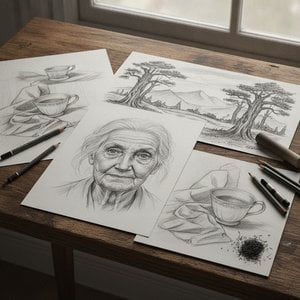
Explore the profound elegance of pencil and charcoal sketching. Discover how masters use line, shadow, and chiaroscuro to capture light and texture, bridging the gap between preparatory studies and timeless fine art masterpieces.

Elevate your artistic practice with this expert guide to mastering the line. Discover advanced techniques in graphite, charcoal, and contour drawing designed for art students seeking technical precision and expressive depth in their fine art studies.

Explore the profound artistry of graphite drawing. Discover professional techniques for mastering depth, texture, and detail through a lens of art history, from classical sketches to modern masterpieces. Elevate your understanding of the pencil medium with our expert guide.

Discover the sophisticated mastery of graphite drawing. Explore expert techniques for achieving profound depth, intricate texture, and hyper-realistic detail through the alchemy of carbon, curated for the discerning art enthusiast and professional collector.

 設置イメージを確認
 送る
送る シェア
シェア
 詳細情報
詳細情報 ガイドを表示

 画像をダウンロード
 似ている作品
 X線調査
X線調査 スライドショー
 統計情報
統計情報


 続きを読む
続きを読む









 ガラスオプションは、110cm未満のサイズでのみご利用いただけます。


