
x


 Oil On CanvasWallArtContemporary Realism
 188019th Century
 64.0 x 46.0 cm
 Fitzwilliam College
迅速な制作と多彩な仕上げオプションを備えた、ミュージアムクオリティのジークレーまたはキャンバスプリント。 ( 手描きの絵画を購入 画像を購入)





























作品のオリジナル比率に合わせた、当店の規定サイズからお選びください。

特定のフレームやスペースに合わせて、ご自身でサイズを指定することも可能です。選択されたサイズが元の画像の比率と一致しない場合、作品をトリミングするか、鏡面反射または単色での塗りつぶしによって画像を拡張いたします。制作を開始する前に、ご確認用のデジタルモックアップをお送りいたします。
画面上のプレビューには、実際のトリミングや拡張は反映されませんのでご注意ください。最終的な構図を正確に確認できるのは、モックアップのみとなります。
カスタムサイズも承っておりますが、元の比率を維持するためには、あらかじめ用意されたリストからサイズを選択することをお勧めいたします。

The Reverend Robert Burn
複製画のサイズ
Alphonse Legros' "The Reverend Robert Burn," painted in 1880, is more than just a portrait; it’s a carefully constructed tableau of Victorian sensibilities and the quiet contemplation of a man steeped in faith. This oil-on-canvas work, currently residing within The Fitzwilliam Museum’s collection, offers a glimpse into a bygone era – an era defined by meticulous detail, restrained emotion, and a profound respect for tradition. Legros, a French-British artist who later found his home in London, masterfully captures the essence of his subject, not merely through likeness but through a subtle orchestration of form, light, and color that speaks volumes about character and inner life.
The painting depicts an older gentleman, identified as “The Reverend Robert Burn,” seated in a simple chair. His face, etched with lines of experience and wisdom, is the focal point of the composition. Legros’s realism is immediately apparent; every wrinkle, every strand of grey hair, every slight asymmetry of the features is rendered with painstaking accuracy. Yet, it's not merely a photographic representation. The artist skillfully employs modeling – building up forms through layers of paint – to create a sense of volume and depth, giving the Reverend’s face a tangible presence that draws the viewer in. Notice how the light catches on his cheekbones, highlighting their structure and casting subtle shadows beneath his eyes, hinting at both age and a contemplative spirit.
Legros' style firmly resides within the realm of academic realism, a movement that sought to emulate the techniques and subject matter of Renaissance masters. This approach prioritized meticulous observation, anatomical accuracy, and a commitment to depicting reality as it is perceived – without resorting to subjective interpretation or expressive distortion. His training at the Dijon art school and his early work as a house decorator instilled in him a deep understanding of materials and form, which he expertly translates onto canvas. The influence of 19th-century portraiture, particularly the works of David and Ingres, is evident in the painting’s formal structure – the balanced composition, the careful attention to detail, and the dignified pose of the subject.
Furthermore, Legros' journey as an artist reflects a broader shift in artistic identity. Initially trained in France, he later embraced British culture and was naturalized as a British subject. This transition is subtly reflected in his work – a blending of French technical skill with a distinctly English sensibility. The muted color palette, dominated by earthy browns, greys, and ochres, evokes the somber atmosphere of Victorian England, while the Reverend’s attire—a dark robe and simple furnishings—underscores the seriousness and solemnity of his role.
Beyond its technical merits, “The Reverend Robert Burn” is rich in symbolic meaning. The subject's age and appearance immediately evoke associations with wisdom, experience, and faith – qualities traditionally associated with religious leaders. The Reverend’s gaze, directed slightly off-camera, suggests a quiet introspection, as if he is lost in thought or contemplating the mysteries of his beliefs. The simplicity of the setting—a plain chair and a dark background—further emphasizes the subject's inner world, stripping away any distractions and focusing attention on his character.
The painting’s emotional impact is one of quiet dignity and melancholy. It doesn’t shout for attention; instead, it invites contemplation and reflection. The subdued colors and careful rendering create a sense of stillness and solemnity, while the subject's face conveys a profound depth of feeling—a mixture of serenity, wisdom, and perhaps a hint of sadness. It is a portrait that lingers in the mind long after it has been viewed, prompting viewers to consider the complexities of human experience and the enduring power of faith.
Alphonse Legros’s “The Reverend Robert Burn” stands as a testament to his artistic skill and his ability to capture the essence of his subject. His work, alongside that of other Slade School teachers like Whistler and Rodin, played a pivotal role in shaping the British art scene during the late 19th century. Legros’s legacy extends beyond this single painting; he was also a dedicated teacher who nurtured the talents of numerous young artists, including several prominent women known as “The Slade Girls,” who went on to achieve considerable success in their own right. Reproductions of this evocative portrait continue to be appreciated for its technical mastery and profound emotional resonance, offering a window into a fascinating period of artistic and cultural history.


1837 - 1911 , フランス

Explore the profound beauty of Academic Painting and Realism. Discover how master artists capture truth through meticulous technique, offering discerning collectors unparalleled excellence in hand-painted oil reproductions and bespoke fine art commissions.

Explore the profound beauty of Academic Realism. Discover the technical mastery, historical significance, and timeless techniques that define this prestigious art movement through an expert-led guide for true classical art enthusiasts.
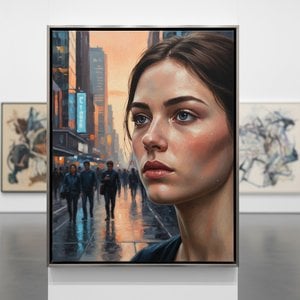
Explore the profound depth of Contemporary Realism. Discover how hyper-realistic art captures modern emotion through technical mastery, offering collectors a sophisticated way to preserve the soul of human experience through exquisite, museum-quality oil paintings and fine art.


最新の美術ニュース、限定オファー、そしてインテリアのアイデアをいち早くお届けします。
お客様のプロジェクトについてお聞かせください。当社の美術専門家が、お客様に合わせた3つのパーソナライズされた芸術提案をご提供いたします。
あなたにぴったりの3作品を無料で厳選いたします


 プレビュー
プレビュー
 シェアする
シェアする シェアする
シェアする
 詳細を見る
詳細を見る

 ダウンロード
 似ている作品
 X線調査
X線調査 スライドショー
 詳細を見る
詳細を見る









 ガラスオプションは、110cm未満のサイズでのみご利用いただけます。


