

スピーディーな制作と多彩な仕上げオプションが魅力の、ミュージアムクオリティなジークレー・キャンバスプリント。 ( 手描き複製画を注文する デジタル画像販売へ切り替え)





























作品のオリジナル比率に合わせた、当店の規定サイズからお選びください。

額縁や壁のスペースに合わせて、ご希望の幅と高さを入力してください。プリントはカットすることは可能ですが、元の画像より大きくすることはできないため、異なる比率のサイズを選択された場合は、画像の一部が欠けることになります。印刷を開始する前に、内容を確認していただくためのデジタルモックアップをお送りいたします。このページに表示されている画像は、実際のカット後の状態を示すものではありません。実際の仕上がりはモックアップにてご確認ください。
General interrogating a mobile guard, supporting an injured lieutenant
複製画サイズ一覧
Alphonse de Neuville's "General Interrogating a Mobile Guard Supporting an Injured Lieutenant," painted in 1879, is more than just a depiction of a military scene; it’s a meticulously crafted tableau of tension, duty, and the lingering weight of conflict. The painting transports us to a bleak, snow-swept landscape – likely inspired by the aftermath of the Franco-Prussian War – where a seasoned general, radiating authority, engages in a serious conversation with a young lieutenant bearing the visible wounds of battle. The scene isn’t one of triumphant victory, but rather a quiet assessment amidst the ruins of war, a moment suspended between interrogation and judgment.
De Neuville's artistic lineage is deeply rooted in the Romantic tradition, particularly influenced by Eugène Delacroix’s dramatic use of color and composition. This influence manifests powerfully here through the carefully orchestrated arrangement of figures against the stark backdrop. The triangular structure, anchored by the central interaction between the general and the lieutenant, draws the viewer’s eye directly to this pivotal exchange. The horses, rendered with a remarkable sense of realism – their coats gleaming faintly beneath the overcast sky – contribute significantly to the painting's dynamic energy, suggesting movement and urgency even within the stillness of the scene.
The color palette is deliberately restrained, dominated by a muted range of grays, whites, and browns that perfectly capture the harshness and desolation of the winter landscape. Subtle hints of warmer tones – in the uniforms of the officers and the horse coats – provide a delicate contrast, preventing the scene from becoming entirely bleak. De Neuville masterfully employs atmospheric perspective; distant figures are rendered with increasing softness and detail loss, creating an illusion of depth that anchors the viewer within this frozen world. The diffused lighting, characteristic of overcast days, casts a soft, even illumination across the canvas, eliminating strong shadows and contributing to the painting’s somber mood.
De Neuville's technique is firmly rooted in academic painting, evident in his skillful rendering of form and detail. Visible brushstrokes – particularly prominent in the depiction of the snow-covered ground and the textures of clothing – add a tactile quality to the work, inviting the viewer to almost feel the cold wind and rough fabric. Lines are used strategically to define shapes and create a sense of realism, while also subtly conveying the tension within the scene. The musculature of the horses is particularly well-defined, adding to their powerful presence. The artist’s attention to detail extends to the subtle nuances of facial expressions – the general's stern gaze, the lieutenant’s wounded composure – revealing a profound understanding of human psychology.
Beyond its realistic depiction of military life, “General Interrogating a Mobile Guard Supporting an Injured Lieutenant” is rich in symbolic meaning. The injured lieutenant represents sacrifice and loss—a tangible reminder of the brutal cost of war. The general’s questioning posture suggests responsibility, authority, and perhaps even regret. The scene evokes feelings of uncertainty, duty, and the lingering trauma of conflict. It's a poignant meditation on leadership, accountability, and the enduring consequences of violence. The painting doesn’t offer easy answers or heroic narratives; instead, it presents a complex and emotionally resonant portrait of a moment caught between action and reflection.
Created using traditional oil paints on canvas, this artwork stands as a testament to de Neuville's mastery of his medium. The choice of oil paint allowed for layering and blending, contributing to the painting’s rich textures and nuanced color palette. Painted during the late 19th century, it reflects the artistic and political climate of France following the Franco-Prussian War – a period marked by nationalistic fervor and a desire to commemorate military achievements. De Neuville's work served as both a historical record and a powerful expression of patriotic sentiment. The painting’s acquisition by the Musée de l’Armée in Paris underscores its significance within French art history.
「General interrogating a mobile guard, supporting an injured lieutenant」に似た作品は、こちらの関連作品ページでご覧いただけます。
「General interrogating a mobile guard, supporting an injured lieutenant」の技法はOil On Canvasです。
「General interrogating a mobile guard, supporting an injured lieutenant」はGreen to Violet Spectrumの色調が際立っています。


1835 - 1885 , フランス
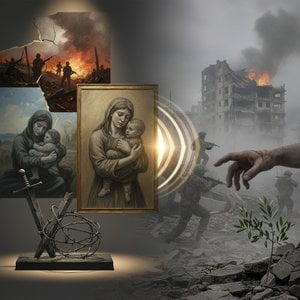
Explore a profound collection of historical war art. From visceral realism to poignant depictions of human resilience, discover museum-quality oil reproductions and expert insights for the discerning collector seeking to preserve history's most powerful echoes.

Explore the profound symbolism of military uniforms in art history. From Victorian portraits to realistic lithographs, discover how artists capture power, identity, and historical legacy through the intricate details of martial regalia and command.
 設置イメージを表示
 シェアする
シェアする シェアする
シェアする
 詳細を見る
詳細を見る ガイドを表示

 ダウンロード
 似ている作品
 X線調査
X線調査 スライドショーを表示
 Q&A
Q&A
 統計情報
統計情報


 詳細を表示
詳細を表示









 ガラスオプションは、110cm未満のサイズでのみご利用いただけます。


![Vida De Miguel De Cervantes Saavedra (life Of Miguel De Cervantes Saavedra). Book V Of The Edition Of Don Quixote (biblioteca Nacional De España)\n\n[7] — Martín Fernández De Navarrete Y Ximénez De Tejada, Academic Art](/media/artworks/images-thumb/8c/b6/8cb67a4dd450447373a546c8dd039e57.jpg)