































作品のオリジナル比率に合わせた、当店の規定サイズからお選びください。

特定のフレームやスペースに合わせて、ご希望のサイズをご入力いただけます。選択されたサイズが元の画像の比率と異なる場合、アートワークをトリミングするか、手描きで要素を追加して絵画を拡張いたします。デジタルモックアップ を制作し、制作開始前にご確認(承認)をいただきます。
画面上のプレビューは、実際のトリミングや拡張を正確に反映しているものではありません。最終的な構図は、モックアップによってのみ正確にご確認いただけます。
カスタムサイズもご利用いただけますが、元の比率を維持するためには、あらかじめ用意されたリストからサイズを選択することをお勧めいたします。

Topkapı Palace
複製画のサイズ

Born in the vibrant, layered city of Istanbul in 1904, Ali Avni Çelebi’s life was inextricably linked to the evolving landscape of early 20th-century Turkey. His artistic journey wasn't a straightforward ascent through formal training; instead, it unfolded as a dynamic interplay between traditional Turkish aesthetics and the burgeoning influences of European modernism – a synthesis that would define his distinctive style and enduring legacy. From humble beginnings, nurtured by a family recognizing his talent, Çelebi’s path led him through institutions like Sanayi-i Nefise, Istanbul's pioneering art school, initially under the tutelage of Hikmet Onat and later İbrahim Çallı. This early grounding established a foundation in classical techniques, yet it was his subsequent sojourn to Munich that proved pivotal, exposing him to the revolutionary currents of Cubism and Expressionism.
His time with Hans Hofmann at the Academy of Fine Arts in Munich wasn’t merely an academic pursuit; it represented a profound shift in his artistic sensibilities. Hofmann's emphasis on simplified forms, flattened perspectives, and the use of color as a primary expressive tool resonated deeply with Çelebi, influencing his approach to composition and palette. However, returning to Turkey in 1927, he didn’t simply replicate these European innovations. Instead, he skillfully integrated them into a distinctly Turkish visual vocabulary, drawing upon centuries of Ottoman artistic tradition – particularly the intricate details of architecture and the evocative portrayal of daily life.
Çelebi's oeuvre is overwhelmingly defined by his intimate depictions of Istanbul. The city itself—its labyrinthine streets, majestic mosques, bustling marketplaces, and serene waterfronts—became the central subject of his work. He wasn’t merely recording scenes; he was attempting to capture the very essence of Istanbul – its historical weight, its vibrant energy, and its unique atmosphere. His paintings frequently feature grand architectural monuments like Topkapı Palace, rendered with meticulous detail and a keen eye for light and shadow, yet imbued with a sense of immediacy and human presence.
Technically, Çelebi’s style is characterized by a remarkable balance between observation and imagination. He employed a layered approach to painting, building up surfaces with multiple thin washes of color—a technique reminiscent of the Venetian masters but adapted to his own expressive needs. His use of perspective was often deliberately skewed, creating an illusionistic depth that drew the viewer into the scene. He skillfully blended elements of Cubism – particularly in the fragmentation and geometric simplification of forms – with a distinctly Turkish sensibility, evident in the rich colors and dynamic compositions.
Crucially, Çelebi’s artistic development was intertwined with his involvement in the Independent Painters and Sculptors' Association, founded in 1927. This collective represented a bold step towards establishing a modern Turkish art scene, challenging the conservative academic traditions that still dominated the field. Alongside fellow artists like Zeki Kocamemi, Çelebi advocated for artistic freedom and experimentation, embracing new ideas while remaining rooted in Turkish cultural heritage. The association’s exhibitions provided a vital platform for emerging artists and helped to shape public perceptions of contemporary art in Turkey.
His role as a lecturer at the Academy of Fine Arts and his subsequent position as assistant to Leopold Levy and Feyhaman Duran further solidified his influence within the artistic community, allowing him to mentor younger generations of painters. He wasn’t simply teaching technique; he was instilling a spirit of innovation and critical engagement with the changing world.
Ali Avni Çelebi's career spanned seven decades, during which he produced an extensive body of work that continues to captivate viewers. His paintings are not merely representations of Istanbul; they are windows into a bygone era—a testament to the city’s enduring beauty and its complex cultural identity. His ability to synthesize European modernism with traditional Turkish aesthetics established him as one of the most important figures in 20th-century Turkish art, leaving behind a rich legacy that continues to inspire artists today.
He died in Istanbul in 1993, but his paintings remain a powerful symbol of Turkish artistic heritage. His work is held in numerous collections throughout Turkey and internationally, ensuring that the vision of this remarkable artist will continue to be appreciated for generations to come.

1904 - 1993 , Turkey
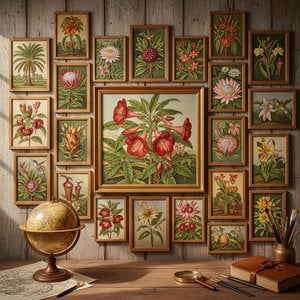
Journey through the vibrant world of Marianne North’s botanical paintings! Explore 25 iconic artworks from this Victorian artist, celebrating exotic flora & travel. Find museum-quality reproductions and curated decor ideas at WahooArt.com.

Explore the exquisite Rococo portraits of Jean-Étienne Liotard, a master of pastel and enamel. Discover his innovative techniques, captivating Turkish scenes, and lasting influence on art history. Learn more at WahooArt.
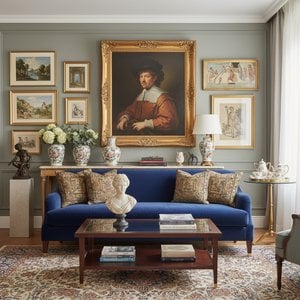
サンクトペテルブルク・エルミタージュ美術館の至宝25選。レムブランド、ダ・ヴィンチの名作を紐解き、歴史と芸術の輝きをご堪能ください。WahooArt.comで高品質な複製画やインテリアアートを見つけ、空間に感動を。今すぐコレクションをご覧ください。


 プレビュー
プレビュー
 プリントを購入
 シェアする
シェアする シェアする
シェアする
 詳細を見る
詳細を見る

 ダウンロード
 似ている作品
 X線調査
X線調査 スライドショー

 詳細を見る
詳細を見る









 ガラスオプションは、110cm未満のサイズでのみご利用いただけます。


