x

 エングレービングその他Northern Renaissance
 1501
1501 35.0 x 26.0 cm
 ロサンゼルス・カウンティ・ミュージアム・オブ・アート
作品のオリジナル比率に合わせた、当店の規定サイズからお選びください。

特定のフレームやスペースに合わせて、ご自身でサイズを指定することも可能です。選択されたサイズが元の画像の比率と一致しない場合、作品をトリミングするか、鏡面反射または単色での塗りつぶしによって画像を拡張いたします。制作を開始する前に、ご確認用のデジタルモックアップをお送りいたします。
画面上のプレビューには、実際のトリミングや拡張は反映されませんのでご注意ください。最終的な構図を正確に確認できるのは、モックアップのみとなります。
カスタムサイズも承っておりますが、元の比率を維持するためには、あらかじめ用意されたリストからサイズを選択することをお勧めいたします。

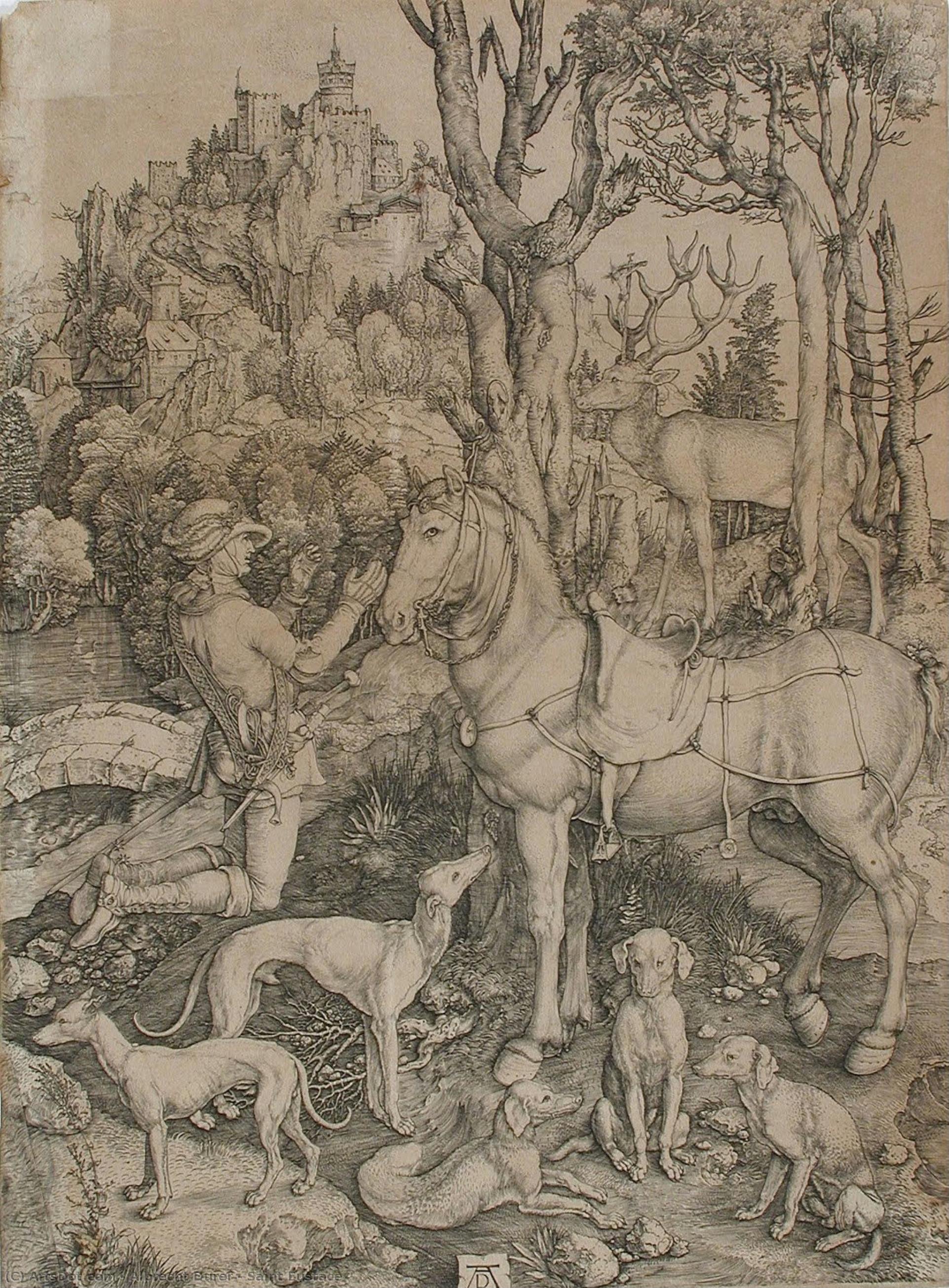
Saint Eustace
複製画のサイズ
Albrecht Dürer's “Saint Eustace,” completed in 1501, isn’t merely a depiction of a biblical scene; it’s a meticulously crafted meditation on conversion, power, and the primal connection between humanity and nature. This engraving, rendered with astonishing detail and imbued with the characteristic austerity of Northern Renaissance art, transports us to a shadowed woodland landscape teeming with life – both human and animal. The subject, Saint Eustace, the Roman general who famously slew a giant boar and adopted Christianity after encountering the cross in its antlers, is presented not as a triumphant warrior but as a man profoundly changed by an encounter with the divine.

Dürer’s mastery lies in his command of engraving, a technique demanding immense patience and precision. The image is built entirely from meticulously drawn lines, each carefully hatched to create subtle tonal variations—a remarkable feat considering the medium's limitations. This hatching isn’t simply decorative; it’s fundamental to the work’s depth and realism. Notice how the dense foliage in the background recedes into shadow, while the figures emerge with a crisp clarity. The use of linear perspective, though somewhat flattened by the engraving process, creates a convincing illusion of space, drawing the viewer into the scene. The texture is palpable – you can almost feel the rough bark of the trees and the bristly fur of the hounds.
Beyond the straightforward narrative of conversion, “Saint Eustace” is rich in symbolic meaning. The hounds themselves represent loyalty and skill—essential qualities for a hunter and, by extension, for a Christian disciple. The horse, a symbol of power and nobility, underscores Eustace’s former status as a Roman general. The presence of the castle in the distance hints at his aristocratic background, while the scattered dogs suggest a life once devoted to the pursuit of game. Even the stag, now bearing the cross, is a potent symbol of sacrifice and redemption. The entire composition speaks to a transformation—a shift from worldly ambition to spiritual devotion.
Despite its detailed depiction of action, “Saint Eustace” possesses an underlying sense of quiet contemplation. The muted palette, dominated by shades of brown and grey, contributes to a feeling of solemnity and introspection. The scene unfolds with a deliberate slowness, inviting the viewer to pause and reflect on the profound nature of Eustace’s journey. It's not a dramatic or overtly emotional portrayal; rather, it’s a subtle and deeply resonant meditation on faith, transformation, and the enduring power of the natural world. This engraving offers a glimpse into the soul of a Renaissance master, revealing both his technical brilliance and his profound understanding of human experience.


1471 - 1528 , ドイツ
Explore 25 iconic artworks by Albrecht Dürer, a master of the German Renaissance. Discover the stories behind Melencolia I, Knight Death and Devil & more. Find museum-quality art reproductions for your home at WahooArt.com.

Explore the life & art of Albrecht Dürer, a pivotal German Renaissance master. Discover his groundbreaking printmaking techniques, iconic self-portraits, and lasting influence on Western art history. A deep dive into innovation & symbolism.
北方ルネサンスの10大傑作を紐解き、芸術の革新と美しさを再発見。ヤン・ファン・エイクからデューラーまで、巨匠たちの物語と技法を深く探求。高品質な複製絵画で、お部屋にアートの息吹を。WahooArt.comで至宝の世界をお楽しみください!

Explore the groundbreaking art of Albrecht Altdorfer, a pioneer of the Northern Renaissance's Danube School. Discover his innovative landscapes, spiritual symbolism & lasting influence on German painting.

Explore the profound religious art of Matthias Grünewald, master of the Isenheim Altarpiece. Discover his unique expressionism, symbolism & lasting impact on Renaissance painting. A guide for collectors and enthusiasts.


最新の美術ニュース、限定オファー、そしてインテリアのアイデアをいち早くお届けします。
お客様のプロジェクトについてお聞かせください。当社の美術専門家が、お客様に合わせた3つのパーソナライズされた芸術提案をご提供いたします。
あなたにぴったりの3作品を無料で厳選いたします
 手描き複製画を注文する
 シェアする
シェアする シェアする
シェアする
 詳細を見る
詳細を見る

 ダウンロード
 似ている作品
 X線
X線 スライドショー
 詳細を見る
詳細を見る






































 ガラスオプションは、110cm未満のサイズでのみご利用いただけます。