作品詳細説明
A Titan of Northern Renaissance Art: Albrecht Dürer’s Nemesis
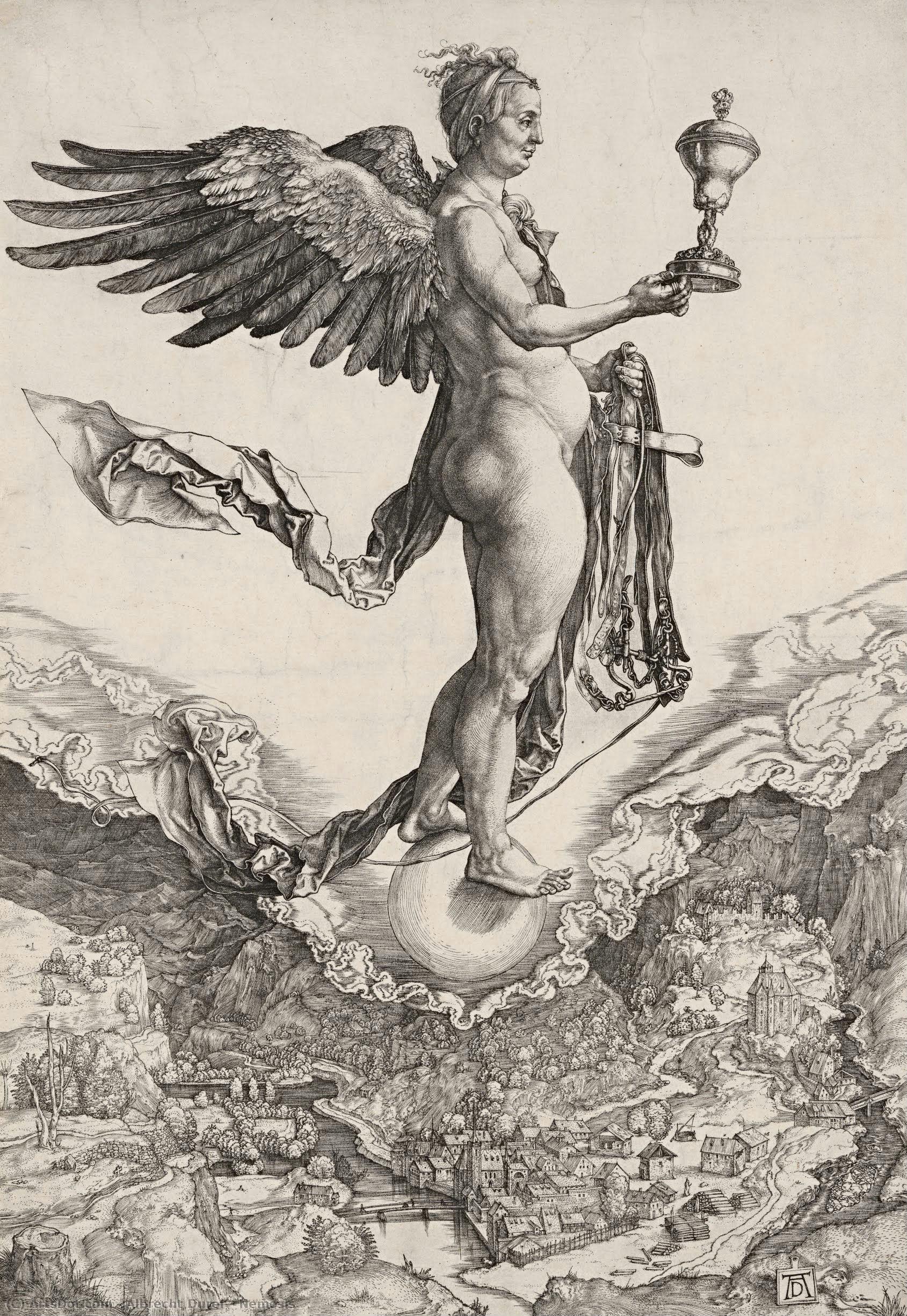
Albrecht Dürer's "Nemesis," completed in 1501, stands as an unparalleled achievement of German Renaissance art—a testament to meticulous observation, masterful technique, and profound intellectual engagement. More than just a depiction of a mythological figure, it embodies the anxieties and aspirations of its time, reflecting a burgeoning humanist interest in classical ideals intertwined with a deeply rooted Northern European sensibility. This monumental engraving captures not merely an image but a complex philosophical statement about fate, restraint, and divine justice.
The Myth Embodied: Symbolism and Narrative
The artwork draws heavily from Angelo Poliziano’s poem concerning Nemesis—the Greek goddess of retribution—a figure who represents the inescapable consequences of human actions. Dürer skillfully portrays Nemesis perched atop a sphere, symbolizing the precariousness inherent in existence itself; this deliberate choice underscores the idea that all things are subject to an overarching force beyond human control. Beneath her watchful gaze lies a meticulously rendered Tyrolese village – Chiusa – which Dürer documented during his first journey to Italy in 1494, demonstrating his dedication to capturing both idealized beauty and realistic detail. The inclusion of a bird soaring above Nemesis adds another layer of symbolism: representing freedom and aspiration, it contrasts with the goddess’s stern authority, prompting contemplation on the balance between ambition and moral responsibility.
Technical Mastery: Dürer's Precision and Anatomical Canon
Dürer’s artistic prowess is evident in every aspect of “Nemesis.” Executed with extraordinary precision using a complex etching technique—a process involving multiple plates inked and wiped away to create tonal variations—the engraving showcases the pinnacle of Northern Renaissance printmaking. Crucially, Dürer adhered rigorously to Vitruvius's anatomical canon, meticulously mapping out the proportions of the human figure according to classical principles. While deviating slightly from idealized beauty standards prevalent in Greece and Rome, Dürer’s depiction of Nemesis exemplifies Northern European artistic traditions—a deliberate choice that reflects a nuanced understanding of humanist thought. The artist’s careful attention to detail extends beyond anatomy; he painstakingly recreates the landscape with remarkable accuracy, grounding the mythological narrative in tangible observation.
Historical Context: Renaissance Humanism and Artistic Innovation
“Nemesis” emerged during a period of significant intellectual ferment—the High Renaissance—characterized by a revival of classical learning and artistic ideals. Artists like Dürer sought to synthesize pagan wisdom with Christian faith, exploring themes of morality, justice, and the human condition. The engraving’s ambition to represent the cosmos and humanity's place within it speaks directly to this humanist preoccupation. Furthermore, Dürer’s work pushed the boundaries of printmaking technique, establishing himself as a pioneer in chiaroscuro—the dramatic use of light and shadow—a stylistic innovation that profoundly influenced subsequent generations of artists.
Emotional Resonance: A Portrait of Moral Responsibility
Ultimately, “Nemesis” transcends mere visual representation; it communicates an enduring message about human accountability. The goddess’s impassive gaze compels viewers to confront the inevitability of judgment and the importance of ethical conduct. Dürer's masterful composition—the careful arrangement of figures and landscape—creates a palpable sense of tension and contemplation, inviting reflection on the complexities of human experience. This engraving remains an inspiring reminder that true beauty lies not only in aesthetic perfection but also in intellectual depth and moral integrity – qualities that continue to resonate powerfully with audiences today.