x































作品のオリジナル比率に合わせた、当店の規定サイズからお選びください。

特定のフレームやスペースに合わせて、ご希望のサイズをご入力いただけます。選択されたサイズが元の画像の比率と異なる場合、アートワークをトリミングするか、手描きで要素を追加して絵画を拡張いたします。デジタルモックアップ を制作し、制作開始前にご確認(承認)をいただきます。
画面上のプレビューは、実際のトリミングや拡張を正確に反映しているものではありません。最終的な構図は、モックアップによってのみ正確にご確認いただけます。
カスタムサイズもご利用いただけますが、元の比率を維持するためには、あらかじめ用意されたリストからサイズを選択することをお勧めいたします。

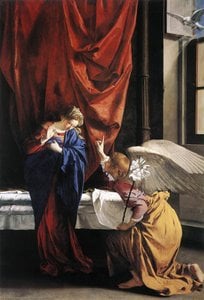
Annunciaton
複製画のサイズ

In the vibrant, sun-drenched landscape of eighteenth-century Rome, Agostino Masucci emerged as a painter of profound grace and technical refinement. Born in 1691, Masucci was a child of the Eternal City, coming of age at a moment when the heavy, dramatic grandeur of the High Baroque began to soften into the delicate, airy sensibilities of the Rococo. His artistic journey was one of seamless transition, navigating the shifting tides of European taste with a hand that remained anchored in classical tradition yet responsive to the burgeoning elegance of his era. Through his brush, the monumental weight of the previous century found a new, more luminous expression, bridging the gap between the theatricality of the Baroque and the nascent clarity of Neoclassicism.
The foundation of Masucci’s mastery was laid within the prestigious studios of Rome, where he first studied under Andrea Procaccino. However, it was his subsequent association with Carlo Maratta—the titan of Roman painting—that would most profoundly shape his aesthetic DNA. As a pupil in Maratta’s influential circle, Masucci absorbed a style characterized by clarity, balanced compositions, and a certain noble restraint. This lineage is evident in his religious works, which often possess a smooth, porcelain-like finish and a serene, cultivated atmosphere. While some critics of his time noted that his devotional Madonnas occasionally struggled to reach the heights of his master’s emotional intensity, there is no denying the exquisite technical precision and the "clear, cool" quality that defined his altarpieces.
Masucci’s influence extended far beyond the confines of a solitary studio; he was a central figure in the intellectual and social fabric of Rome’s artistic elite. His membership in the Accademia di San Luca provided him with a platform for scholarly exchange, and his appointment as Principe della Stamperia Re Reale Romana between 1736 and 1738 cemented his status as a leader within the Roman art world. This period of professional ascendancy allowed him to forge deep connections with the great architects of the age, such as Filippo Juvarra and Luigi Vanvitelli. These alliances transformed Masucci from a mere painter of canvases into a visionary of integrated spaces, where painting, architecture, and ornament coalesced into a singular, breathtaking experience.
Perhaps the most glittering testament to his international renown was his relationship with King John V of Portugal. This royal patronage led to one of the most ambitious artistic undertakings of the century: the design and oversight of the Chapel of Saint John the Baptist in Lisbon. In this monumental project, Masucci’s talent for narrative and decorative splendor was fully realized. His work on the chapel's magnificent mosaic panels demonstrated an ability to translate complex biblical narratives into enduring, opulent visual poetry, contributing to a religious space that remains one of the most costly and breathtakingly ornate in Europe.
While his large-scale religious commissions captured the public imagination, Masucci’s true versatility shone through in his intimate portraiture and his exceptional skill as a draughtsman. In an era where the portrait served as a vital instrument of social identity, Masucci proved himself a formidable chronicler of the Roman elite and European royalty alike. His portraits of figures such as Pope Clement XII and Cardinal Niccolò del Giudice reveal a keen eye for character and a sophisticated command of light and texture. It was in this genre that many contemporaries viewed him as the legitimate heir to Maratta, possessing a unique ability to imbue his subjects with both dignity and a lifelike presence.
Beyond the oil canvas, Masucci’s preparatory studies offer a window into his creative intellect. His drawings, executed in various media including black, red, and blue chalk, reveal an artist deeply engaged with the anatomical and compositional rigors of his craft. These works, such as his studies for Saint Anne in the Education of the Virgin, showcase a fluid, expressive line that anticipates the more spontaneous energy of the Rococo. Through this duality—the ability to execute monumental, structured compositions and to capture the fleeting delicacy of a sketch—Agostino Masucci secured his place as a pivotal figure whose work echoed the splendor and the evolving spirit of the Roman Golden Age.

1691 - 1758

Explore the profound differences between Baroque drama and Rococo elegance. Our expert guide delves into art history, chiaroscuro, and the evolution of European masterpieces for collectors and enthusiasts seeking deep historical context.
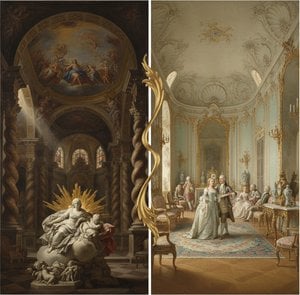
Explore the captivating evolution from Baroque's drama to Rococo's grace! Discover key artists, characteristics & lasting influence of these art movements with expert insights at WahooArt.

Explore the dramatic world of Baroque art! Discover iconic artists like Caravaggio & Rubens, defining techniques, and its lasting impact on art history. Expert insights for collectors & enthusiasts at WahooArt.

華麗なるロココ美術の世界へ。バロックから生まれた優雅な芸術、その10大傑作を徹底解説!ブーシェ、フロマンなど巨匠たちの技と物語を紐解き、お部屋を彩るアートを見つけよう。WahooArt.comで至高の美術館品質レプリカとインテリアアイデアを発見。

Explore the opulent world of Rococo art! Discover its origins, key artists like Watteau & Boucher, and lasting influence on design. Expert insights for collectors & enthusiasts.


最新の美術ニュース、限定オファー、そしてインテリアのアイデアをいち早くお届けします。
お客様のプロジェクトについてお聞かせください。当社の美術専門家が、お客様に合わせた3つのパーソナライズされた芸術提案をご提供いたします。
あなたにぴったりの3作品を無料で厳選いたします


 プレビュー
プレビュー
 プリントを購入
 シェアする
シェアする シェアする
シェアする
 詳細を見る
詳細を見る

 ダウンロード
 似ている作品
 X線調査
X線調査 スライドショー


 詳細を見る
詳細を見る









 ガラスオプションは、110cm未満のサイズでのみご利用いただけます。