
x































作品のオリジナル比率に合わせた、当店の規定サイズからお選びください。

特定のフレームやスペースに合わせて、ご希望のサイズをご入力いただけます。選択されたサイズが元の画像の比率と異なる場合、アートワークをトリミングするか、手描きで要素を追加して絵画を拡張いたします。デジタルモックアップ を制作し、制作開始前にご確認(承認)をいただきます。
画面上のプレビューは、実際のトリミングや拡張を正確に反映しているものではありません。最終的な構図は、モックアップによってのみ正確にご確認いただけます。
カスタムサイズもご利用いただけますが、元の比率を維持するためには、あらかじめ用意されたリストからサイズを選択することをお勧めいたします。

Musical Society
複製画のサイズ
Abraham Bosse's "Musical Society," a captivating copper engraving executed around 1635, offers more than just a depiction of an evening gathering; it’s a meticulously rendered window into the vibrant social and cultural life of 17th-century Paris. Bosse, a pivotal figure in French Baroque art renowned for his unflinching realism and detailed portrayals of everyday subjects – from boisterous tavern scenes to intimate portraits – here captures a moment of convivial elegance within a private salon. The image isn’t merely decorative; it's a carefully constructed tableau brimming with subtle social commentary and artistic mastery.
The scene unfolds around a richly appointed table, the focal point of the composition, where musicians engage in spirited performance. A diverse group – men and women alike – are seated on chairs and benches, their postures suggesting both engagement and relaxed enjoyment. Notice the variety of instruments: a lute, a recorder, and perhaps even a small keyboard instrument hint at the breadth of musical tastes present. Bosse’s skill lies not just in representing these objects accurately but in imbuing them with a sense of life and texture through his masterful use of line. The figures themselves are rendered with remarkable attention to detail – the folds of their clothing, the expressions on their faces, even the delicate tracery of the window frame all contribute to a remarkably convincing illusion of reality.
Bosse’s technique is fundamentally rooted in the principles of engraving. He employed a complex system of hatching and cross-hatching – layering parallel lines of varying density – to create an astonishing range of tonal values, mimicking the effects of shading achieved through oil paint. This painstaking process demanded immense patience and control, resulting in a surface texture that’s both visually rich and remarkably tactile. The fine, precise lines are not simply outlines; they define form, suggest volume, and convey the play of light and shadow with remarkable subtlety. The overall effect is one of controlled chaos – a carefully orchestrated arrangement of lines that nonetheless feels spontaneous and alive.
The style firmly places “Musical Society” within the Baroque period, specifically reflecting the influence of artists like Peter Paul Rubens and Rembrandt. Bosse’s commitment to realism, his ability to capture the nuances of human expression, and his masterful use of light and shadow are all hallmarks of this artistic movement. However, unlike the grand scale and dramatic intensity often associated with Baroque painting, Bosse's work possesses a quieter intimacy, focusing on capturing a specific moment in time rather than conveying an overarching narrative.
Beyond its technical brilliance, “Musical Society” offers valuable insights into the social customs and cultural values of 17th-century Paris. The gathering itself represents a significant aspect of aristocratic life – a celebration of music, intellect, and social connection. The presence of both men and women suggests a relatively liberal atmosphere for the time, where artistic pursuits were not solely the domain of men. The inclusion of instruments like the lute and recorder indicates that musical performance was an integral part of courtly entertainment.
Furthermore, the setting – a private salon with a large window offering natural light – speaks to the importance of domesticity and refinement within aristocratic culture. The window itself acts as a visual link between the interior world of the gathering and the exterior landscape, suggesting both seclusion and connection to the wider world. The overall impression is one of sophisticated leisure, carefully cultivated and meticulously presented.
While seemingly straightforward in its depiction, “Musical Society” subtly conveys a sense of conviviality and shared enjoyment. The musicians’ engaged expressions, their relaxed postures, and the lively atmosphere all contribute to this feeling of warmth and connection. The scene evokes a nostalgia for a bygone era, offering a glimpse into a world where music played a central role in social life and intellectual discourse. Bosse's ability to capture such nuanced emotional resonance through purely visual means is a testament to his artistic skill and sensitivity.

Abraham Bosse stands as a pivotal figure in French Baroque art, celebrated primarily for his groundbreaking etchings that captured the vibrant tapestry of seventeenth-century Paris and its aristocratic circles. Born to Huguenot parents in Tours, France—a city scarred by religious conflict—Bosse’s formative years instilled within him a profound appreciation for detail and observation, qualities that would define his artistic vision throughout his prolific career. His father was a tailor, providing Bosse with an early understanding of craftsmanship and meticulous rendering, skills he would later translate into the exacting precision of his prints.
The trajectory of his life took a decisive turn when he moved toward greater horizons, embarking on a formal apprenticeship with Melchior Tavernier, an Antwerp-born engraver and publisher, around 1620. This partnership proved instrumental in establishing his reputation as one of the era's foremost printmakers. Tavernier’s influence extended beyond mere technical guidance; he fostered Bosse’s burgeoning fascination with artistic innovation and encouraged him to explore diverse subjects. Early etchings, notably those produced under Tavernier’s patronage, demonstrated a nascent stylistic sensibility rooted in Dutch and Flemish art traditions—a deliberate choice that simultaneously honored established precedents while subtly injecting them with distinctly French nuances.
A pivotal encounter with Jacques Callot in Paris around 1630 irrevocably altered Bosse's artistic trajectory. Callot’s revolutionary etching techniques—characterized by a remarkable level of textural detail and a masterful manipulation of tonal gradation—became an immediate inspiration for Bosse, who enthusiastically adopted these innovations. This embrace of Callot’s approach resulted in prints that possessed an unparalleled realism, allowing Bosse to render the delicate textures of lace, the sheen of silk, and the complex architectural perspectives of Parisian interiors with breathtaking clarity.
Bosse's work often transcended simple documentation, moving into the realm of social commentary and allegorical depth. His ability to weave together the mundane and the magnificent is evident in several key themes of his oeuvre:
Beyond the copperplate, Bosse’s impact on the art world was institutional and enduring. As a founding member of the Académie Royale, he helped shape the formal standards of French art, ensuring that the precision and observational rigor he championed would become hallmarks of the national style. His meticulous attention to fashion and interior design has made his work an invaluable primary source for historians seeking to understand the material culture of the 17th century.
The influence of Bosse’s unique blend of realism and technical innovation extended far beyond the borders of France, reaching later masters such as William Hogarth. By bridging the gap between the meticulous traditions of Northern Europe and the burgeoning grandeur of the French Baroque, Abraham Bosse created a visual language that remains as captivating today as it was during the reign of Louis XIV. His legacy lives on in every fine line of his etchings, which continue to breathe life into the vanished world of old Paris.

1604 - 1676 , France
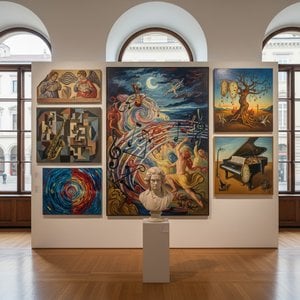
Explore the fascinating history of music's visual representation in art! From ancient symbolism to modern abstraction, discover how artists have captured sound and emotion on canvas. Expert insights & stunning examples.
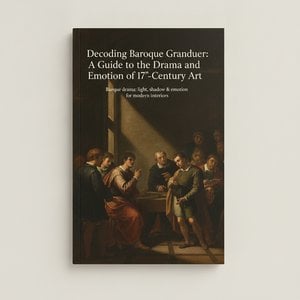
Explore the breathtaking drama of 17th-century Baroque art. Our expert guide decodes the use of chiaroscuro, emotional intensity, and historical grandeur to help you appreciate and curate timeless masterpieces for your collection.
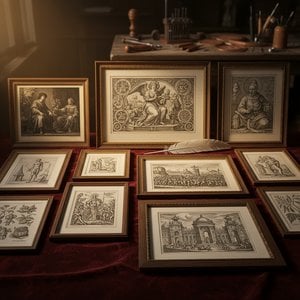
Journey through art history with our Top 10 Legendary Engravings! Explore masterpieces by Dürer, Rembrandt & Goya. Discover the stories behind these iconic prints and find museum-quality reproductions for your home at WahooArt.com.
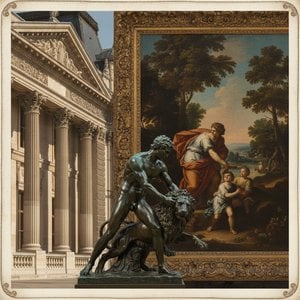
Explore the profound elegance of Baroque Classicism. Discover how 17th-century masters synthesized dramatic emotion with classical order through the lens of the Counter-Reformation and the works of legends like Carlo Maratta and Andrea Sacchi.

Explore the rich history of engraving with WahooArt. Discover techniques, iconic artists like Dürer & Callot, collecting tips, and expert guidance for preserving your art investment. Learn about intaglio printing & more!


最新の美術ニュース、限定オファー、そしてインテリアのアイデアをいち早くお届けします。
お客様のプロジェクトについてお聞かせください。当社の美術専門家が、お客様に合わせた3つのパーソナライズされた芸術提案をご提供いたします。
あなたにぴったりの3作品を無料で厳選いたします


 プレビュー
プレビュー
 プリントを購入
 シェアする
シェアする シェアする
シェアする
 詳細を見る
詳細を見る

 ダウンロード
 似ている作品
 X線調査
X線調査 スライドショー


 詳細を見る
詳細を見る









 ガラスオプションは、110cm未満のサイズでのみご利用いただけます。


