Viviano Codazzi: Architect of Baroque Visions
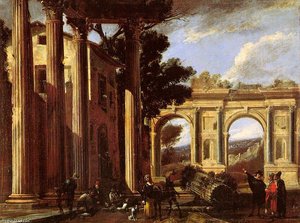
Viviano Codazzi (1604 – 1670) stands as a pivotal figure in the Italian Baroque, an artist whose meticulous architectural paintings and evocative capricci cemented his place within the artistic landscape of the era. Born in Valsassina near Bergamo, Italy, Codazzi’s early life was marked by familial relocation to Rome in 1605, setting him on a path toward mastering the burgeoning artistic currents of the city. While biographical details remain somewhat sparse, evidence suggests he received formal training in Rome, establishing himself as part of a vibrant artistic milieu that would shape his distinctive style and career trajectory. Codazzi’s fame rests primarily upon his architectural paintings – grand compositions depicting Roman ruins and idealized landscapes populated by figures rendered with remarkable realism. Unlike many of his contemporaries who focused on portraiture or mythological subjects, Codazzi dedicated himself to capturing the grandeur and complexity of the built environment, reflecting a fascination with classical antiquity that was characteristic of Baroque aesthetics. His approach distinguished him from others; he skillfully employed “bamboccianti,” specialized painters adept at creating realistic figures within architectural backgrounds—a technique championed by luminaries like Michelangelo Cerquozzi and Jan Melchior van Rossum. This collaborative method ensured the harmonious integration of human presence into monumental spaces, elevating Codazzi’s works beyond mere topographical representations. A significant commission arrived from Madrid in 1633 – a quartet of canvases portraying scenes from Roman history for the Buen Retiro palace, undertaken jointly with Domenico Gargiulo. Among these ambitious projects was an unforgettable depiction of gladiatorial combats within the Colosseum, showcasing Codazzi’s ability to convey dramatic narrative and visual splendor. This undertaking solidified his reputation as a master painter capable of tackling monumental undertakings and collaborating effectively with fellow artists. His artistic partnership with Gargiulo proved particularly fruitful, resulting in artworks that exemplify the Baroque ideal of combining grandeur and psychological depth. Codazzi's influence extended beyond individual commissions; he actively participated in shaping the visual culture of Rome during his time. Notably, he collaborated closely with Artemisia Gentileschi on several paintings featuring architectural settings—a testament to his contribution to the artistic dialogue of the period. The famed painter’s use of Codazzi’s skill in creating atmospheric backgrounds elevated her canvases and cemented his role as a respected artist within the Roman art scene. Furthermore, Codazzi's legacy endured through his son, Niccolò Codazzi (1642–1693), who followed in his father’s footsteps as a painter, ensuring that Codazzi’s artistic lineage continued for generations. Codazzi’s output spanned across several decades and encompassed collaborations with prominent figures like Vicente Giner and Andrea di Michele—artists who shared his dedication to capturing the beauty of architectural spaces. His work served as inspiration for subsequent artists, demonstrating the enduring impact of his stylistic innovations. Viviano Codazzi's contribution to Baroque art is undeniable; he remains a celebrated architect of visual grandeur whose paintings continue to captivate audiences today.- Notable Works:
- The Pantheon, Rome: A monumental depiction showcasing the architectural majesty of ancient Rome.
- Classical Ruins with Figures in the Evening: Codazzi’s masterful rendering captures the ethereal beauty of ruined temples bathed in twilight light.
- An Architectural Fantasy: Demonstrating his imaginative prowess, this painting presents idealized landscapes interwoven with architectural elements—a hallmark of Baroque artistic vision.
- Influences:
- Michelangelo Merisi da Caravaggio: Codazzi’s dramatic use of chiaroscuro – the interplay of light and shadow – reflects Caravaggio's revolutionary approach to painting.
- Collaborations:
- Domenico Gargiulo: Codazzi’s partnership with Gargiulo resulted in iconic artworks that exemplify the Baroque ideal of combining grandeur and psychological depth.
- Jan Melchior van Rossum: Together, they perfected the technique of *bamboccianti*, ensuring harmonious integration of human figures into monumental architectural spaces.
- Historical Significance:
- Codazzi’s work profoundly impacted the development of vedutism – the genre of landscape painting focused on accurately portraying urban vistas—establishing him as a cornerstone of Baroque artistic heritage.